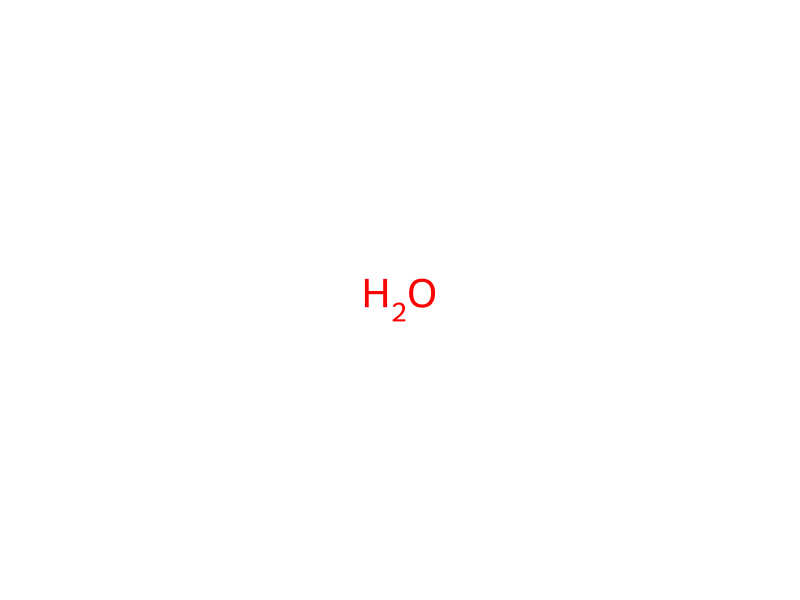
Water → (4-Benzyloxymethyl-1-phenylcyclohexyl)dimethylamine Hydrochloride
Reaction equation

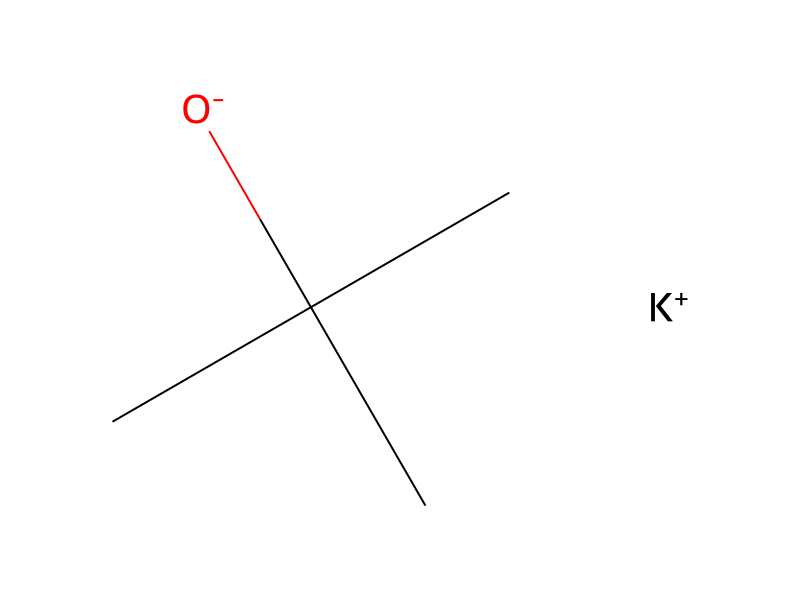
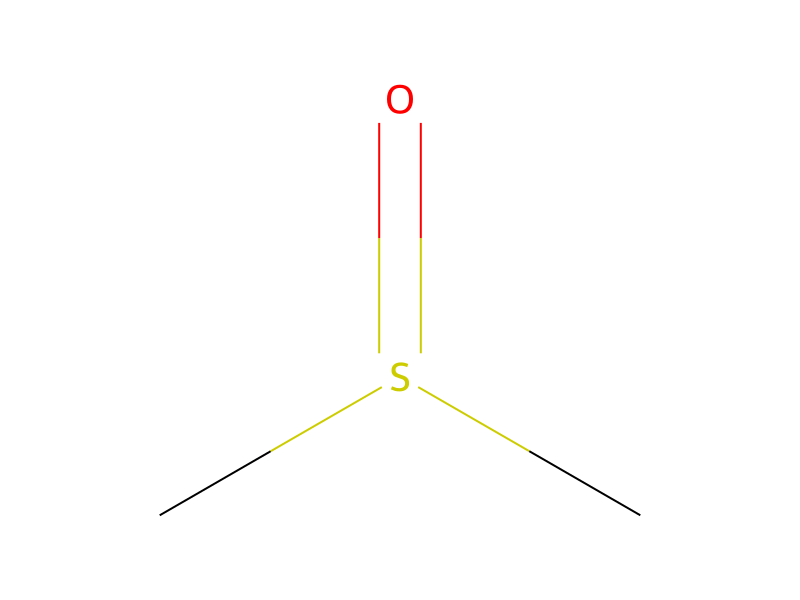
[CH3:1][N:2]([CH3:17])[C:3]1([C:11]2[CH:16]=[CH:15][CH:14]=[CH:13][CH:12]=2)[CH2:8][CH2:7][CH:6]([CH2:9][OH:10])[CH2:5][CH2:4]1.CC([O-])(C)C.[K+].[CH2:24]([Cl:31])[C:25]1[CH:30]=[CH:29][CH:28]=[CH:27][CH:26]=1.O>CS(C)=O>[ClH:31].[CH2:24]([O:10][CH2:9][CH:6]1[CH2:7][CH2:8][C:3]([N:2]([CH3:17])[CH3:1])([C:11]2[CH:16]=[CH:15][CH:14]=[CH:13][CH:12]=2)[CH2:4][CH2:5]1)[C:25]1[CH:30]=[CH:29][CH:28]=[CH:27][CH:26]=1Participants
Reactant 4


Product 1

Reagents, catalysts & solvents 1
Conditions
- Temperature
- 50 °C
Procedure
(4-Dimethylamino-4-phenylcyclohexyl)methanol (1.8 g, 7.7 mmol) was placed in abs. DMSO (10 ml), and a solution of potassium tert-butylate (1.73 g, 15.4 mmol) in DMSO (20 ml) was added dropwise over 15 min. The mixture was heated to 50° C. and stirred for 30 min, after which benzyl chloride (1.46 g, 11.6 mmol) in DMSO (10 ml) was added dropwise over 15 min. After stirring overnight at 50° C., water (20 ml) was added and the mixture was extracted with ether (3×30 ml) followed by DCM (3×30 ml). The combined extracts were washed with water (20 ml), dried, filtered and concentrated. The resulting residue (2.85 g) was heated to the reflux point with EE (30 ml) and filtered hot and the filtrate was kept overnight at 4° C. The solid which had precipitated out was filtered off with suction and dried (960 mg of a mixture of the diastereoisomeric target products), the mother liquor was concentrated to dryness and the resulting residue (1.37 g) was chromatographed on silica gel with ether to which an increasing amount of methanol was added. This gave 308 mg of the less polar diastereoisomer of (4-benzyloxymethyl-1-phenylcyclohexyl)dimethylamine, which was dissolved in 2-butanone (2 ml). The addition of chlorotrimethylsilane (129 μl) and water (9 μl) gave an oily residue, which yielded 258 mg of the corresponding hydrochloride after drying.
Workup
- stirringAfter stirring overnight at 50° C.
- extractionthe mixture was extracted with ether (3×30 ml)
- washThe combined extracts were washed with water (20 ml)
- customdried
- filtrationfiltered
- concentrationconcentrated
- temperatureThe resulting residue (2.85 g) was heated to the reflux point with EE (30 ml)
- filtrationfiltered hot
- waitthe filtrate was kept overnight at 4° C
- customThe solid which had precipitated out
- filtrationwas filtered off with suction
- dry with materialdried (960 mg of a mixture of the diastereoisomeric target products), the mother liquor
- concentrationwas concentrated to dryness
- customthe resulting residue (1.37 g) was chromatographed on silica gel with ether to which an increasing amount of methanol
- additionwas added
- dissolutionThis gave 308 mg of the less polar diastereoisomer of (4-benzyloxymethyl-1-phenylcyclohexyl)dimethylamine, which was dissolved in 2-butanone (2 ml)
- additionThe addition of chlorotrimethylsilane (129 μl) and water (9 μl)
- customgave an oily residue, which
Sources & evidence
- ORD record
- ord-807ffcf9c08349ef8b87914388969230
- Source dataset
- uspto-grants-2007_06
- Patent number
- US07232847B2
Reaction notes
Loading…