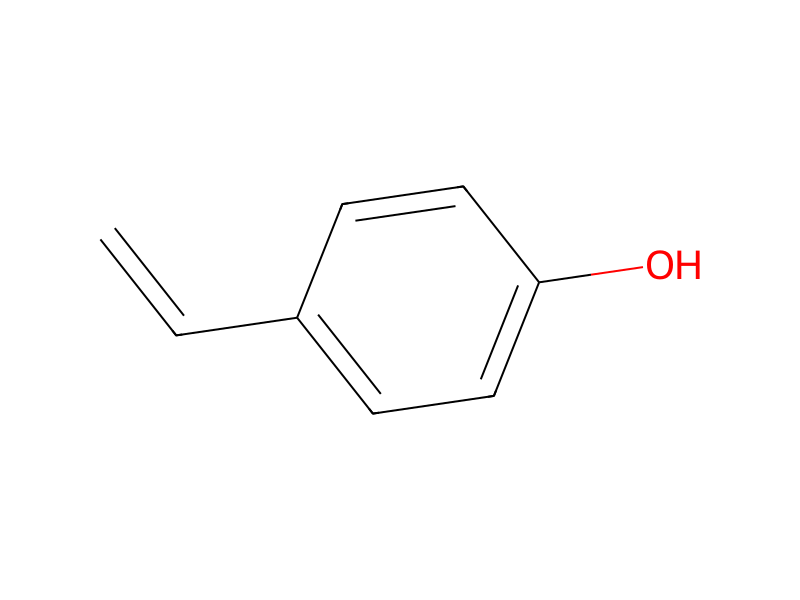
Potassium Hydroxide → 4-Vinylphenol
Reaction equation

[OH-].[K+].C(OC([O:10][C:11]1[CH:18]=[CH:17][C:14]([CH:15]=[CH2:16])=[CH:13][CH:12]=1)=O)(C)(C)C>O.CO.[OH-].C[N+](C)(C)C>[CH:15]([C:14]1[CH:17]=[CH:18][C:11]([OH:10])=[CH:12][CH:13]=1)=[CH2:16]Participants
6
Reactant 2


Product 1
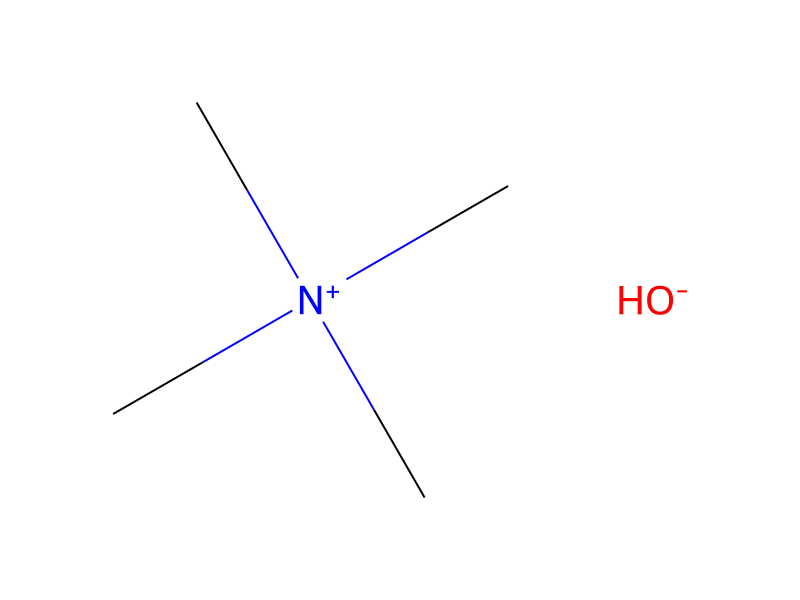
Reagents, catalysts & solvents 3


Procedure
In a 2 L Erlenmeyer flask, 140 g (2.5 mol) of KOH was dissolved in 250 mL of water, and the solution was diluted with 250 mL of methanol and 10 mL of tetramethylammoniumhydroxide. Then, 110 g (0.50 mol) of 4-(t-butyloxycarbonyloxy)styrene (tBOCstyrene) was added and the mixture heated to boiling. After 5-8 minutes, the mixture cleared to a yellow solution and was cooled by the addition of 500 mL of a 1/1 ice-water mixture. This mixture was washed with 250 mL of dichloromethane and 250 mL of ethyl ether. The pH of the aqueous solution was reduced to 11-12 by the addition of dry ice, resulting in the formation of a cream colored precipitate (4-vinylphenol) in a yellow solution.
Workup
- temperaturethe mixture heated to boiling
- washThis mixture was washed with 250 mL of dichloromethane and 250 mL of ethyl ether
- additionThe pH of the aqueous solution was reduced to 11-12 by the addition of dry ice
Sources & evidence
- ORD record
- ord-9067fac39d9c4e4c820a49b02559b1c7
- Source dataset
- uspto-grants-1995_01
- Patent number
- US05384192
Reaction notes
Loading…