2H-chromen-6-ol → 3,4-Dihydro-2H-1-benzopyran-6-ol
Reaction equation

[OH:1][C:2]1[CH:3]=[CH:4][C:5]2[O:10][CH2:9][CH:8]=[CH:7][C:6]=2[CH:11]=1>C1C=CC=CC=1.C1C=CC(P(C2C=CC=CC=2)C2C=CC=CC=2)=CC=1.C1C=CC(P(C2C=CC=CC=2)C2C=CC=CC=2)=CC=1.C1C=CC(P(C2C=CC=CC=2)C2C=CC=CC=2)=CC=1.[Cl-].[Rh]>[OH:1][C:2]1[CH:3]=[CH:4][C:5]2[O:10][CH2:9][CH2:8][CH2:7][C:6]=2[CH:11]=1Participants
Reactant 1

Product 1

Reagents, catalysts & solvents 2

Procedure
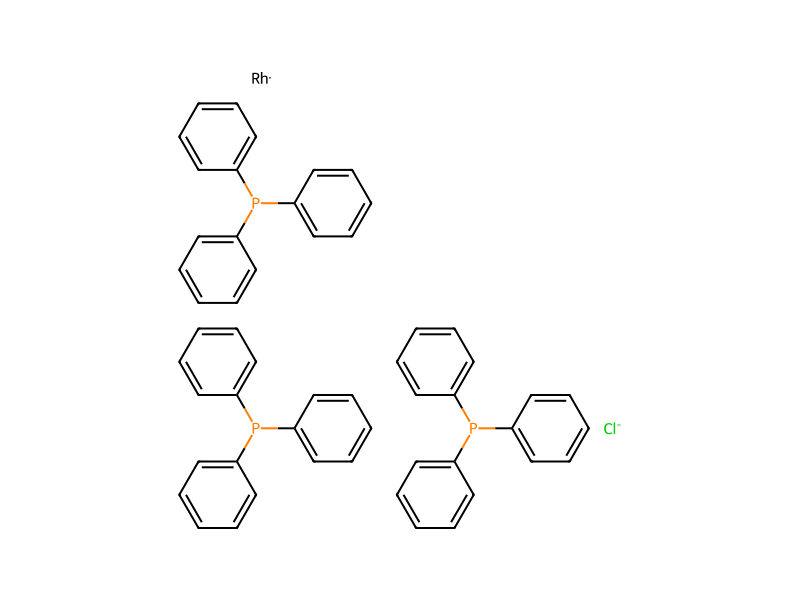
The 6-hydroxybenzopyran (1.5 g; 10 mM) was dissolved in 100 ml of anhydrous benzene along with Wilkinson's catalyst (280 mgs; 0.30 mM). This hydrogenation bottle containing this reaction mixture was first flushed with nitrogen and then with hydrogen. The bottle was pressurized to 40 psi in a Paar shaker and agitated for 40 minutes at which time the pressure in the bottle (400 ml dead volume) had dropeed to 30 psi and was dropping no further. The bottle was then flushed with nitrogen and the solvent was removed in vacuo. The residue was taken up in ether and filtered through a pad of celite. The solvent was removed and the oil was purified by flash chromatography on a 30 mm×6" column of silica gel eluted with 600 ml of 20% ethyl acetate in hexane. This purification produced 1.40 g (93%) of 2,3-dihydro-6-hydroxybenzopyran as a white crystalline solid.
Workup
- additionThis hydrogenation bottle containing this reaction mixture
- customwas first flushed with nitrogen
- customThe bottle was then flushed with nitrogen
- customthe solvent was removed in vacuo
- filtrationfiltered through a pad of celite
- customThe solvent was removed
- customthe oil was purified by flash chromatography on a 30 mm×6" column of silica gel
- washeluted with 600 ml of 20% ethyl acetate in hexane
- customThis purification
Sources & evidence
- ORD record
- ord-df11ba087625413d92e76cfa78b4056e
- Source dataset
- uspto-grants-1987_08
- Patent number
- US04686235
Reaction notes
Loading…