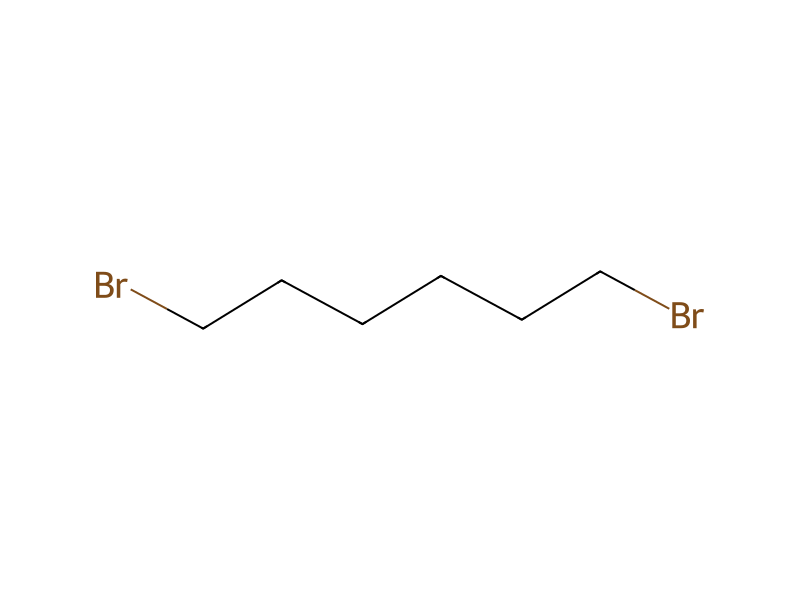
1,6-Dibromohexane → HCID 15067934, compound
Reaction equation

C(OP(CP(OC(C)C)(=O)OC(C)C)(OC(C)C)=O)(C)C.[C:22]1([P:39]([O:45]C(C)C)(=[O:44])[O:40]C(C)C)([P:29]([O:35]C(C)C)(=[O:34])[O:30]C(C)C)[CH2:28][CH2:27][CH2:26][CH2:25][CH2:24][CH2:23]1.BrCCCCCCBr.C(P(OC(C)C)(=O)OC(C)C)(P(OC(C)C)(=O)OC(C)C)CCCCCCC(P(OC(C)C)(=O)OC(C)C)P(OC(C)C)(=O)OC(C)C>C1(C)C=CC=CC=1>[C:22]1([P:39]([OH:45])(=[O:40])[OH:44])([P:29]([OH:34])(=[O:30])[OH:35])[CH2:23][CH2:24][CH2:25][CH2:26][CH2:27][CH2:28]1Participants
6



Procedure
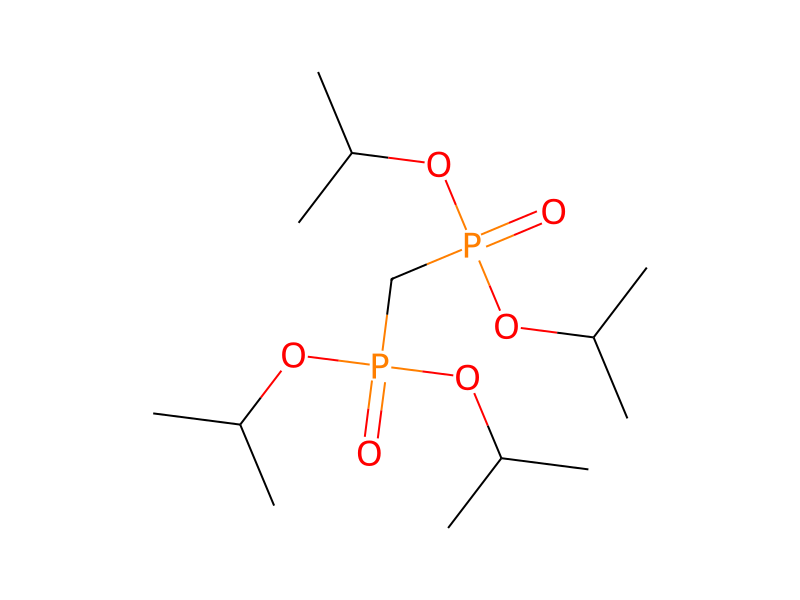
Using the same procedure as in Example I, tetraisopropyl methane diphosphonic acid was converted to tetraisopropyl cycloheptane-1,1-diphosphonate by reaction with 1,6-dibromohexane at 80° C. for 18 h. 31P NMR (toluene) indicated that the reaction solution contained a mixture of the desired tetraisopropyl cycloheptane-1,1-diphosphonate (25.3 ppm) and octaisopropyl octane-1,1,8,8-tetraphosphonate (22.1 ppm). The compounds were separated by chromatography (1:1 hexane:THF eluent) on silica gel, and the desired ester was hydrolyzed using 6N refluxing hydrochloric acid as in Example I.
Workup
- customThe compounds were separated by chromatography (1:1 hexane:THF eluent) on silica gel
- temperaturerefluxing hydrochloric acid as in Example I
Sources & evidence
- ORD record
- ord-4846f36cfef547aa941828cad3472d14
- Source dataset
- uspto-grants-1987_08
- Patent number
- US04687768
Reaction notes
Loading…