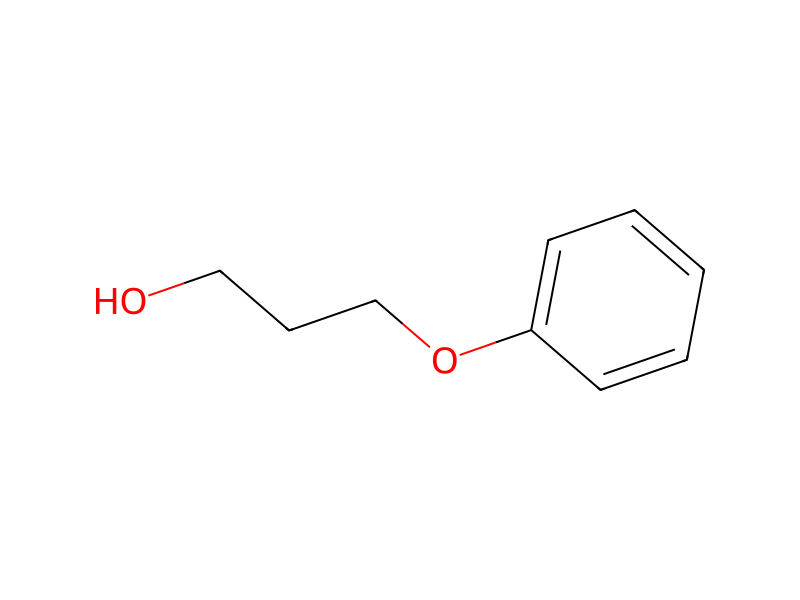
3-Phenoxy 1-propanol → HCID 131723549, compound
Reaction equation

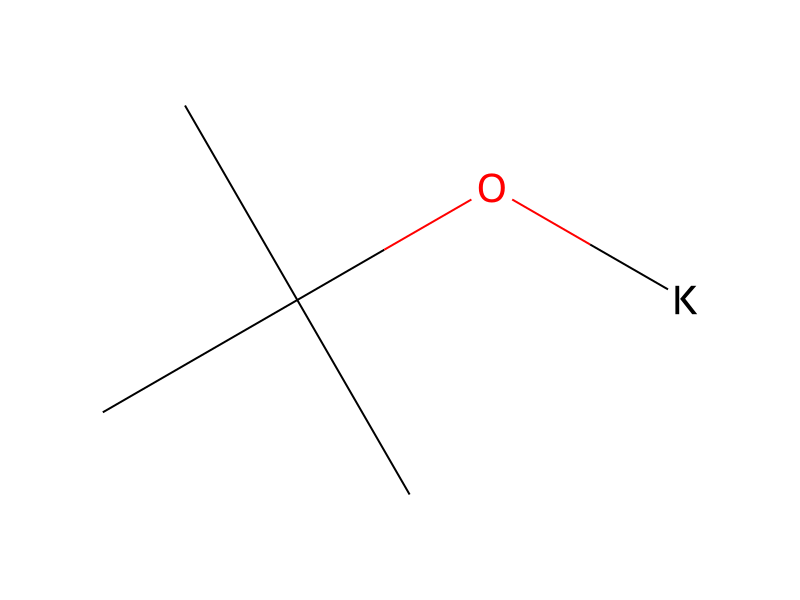
[Cl:1][C:2]1[C:7]([N:8]2[CH2:13][CH2:12][NH:11][CH2:10][CH2:9]2)=[N:6][CH:5]=[CH:4][N:3]=1.[O:14]([CH2:21][CH2:22][CH2:23][OH:24])[C:15]1[CH:20]=[CH:19][CH:18]=[CH:17][CH:16]=1.O(C(C)(C)C)[K]>O1CCOCC1>[ClH:1].[ClH:1].[N:8]1([C:7]2[C:2]([O:24][CH2:23][CH2:22][CH2:21][O:14][C:15]3[CH:20]=[CH:19][CH:18]=[CH:17][CH:16]=3)=[N:3][CH:4]=[CH:5][N:6]=2)[CH2:13][CH2:12][NH:11][CH2:10][CH2:9]1Participants
5
Reactant 3

Product 1

Reagents, catalysts & solvents 1

Conditions
- Temperature
- 95 °C
Procedure
2-Chloro-3-(1-piperazinyl)pyrazine (608 mg, 3.1 mmol; from Step 1 above) and 3-phenoxypropanol (570 mg, 3.7 mmol) was dissolved in dioxane (10 mL). KO-t-Bu (870 mg, 7.7 mmol) was added and the mixture was stirred at 95° C. for 6 h. The solvent was evaporated and the residue was purified by chromatography on silica gel using CH2Cl2/MeOH (9:1) as eluent to give the free base of the title compound as a yellow oil. The free base was converted to the dihydrochloride salt: yield 0.380 g (32%): mp 146-146.5° C. Anal. (C17H22N4O2.2HCl) C, H, N.
Workup
- customThe solvent was evaporated
- customthe residue was purified by chromatography on silica gel
Sources & evidence
- ORD record
- ord-a9ab22bf63e0436fb88454817f0f1a67
- Source dataset
- uspto-grants-2006_07
- Patent number
- US07071180B2
Reaction notes
Loading…