Boron tribromide → HCID 10171939, compound
Reaction equation

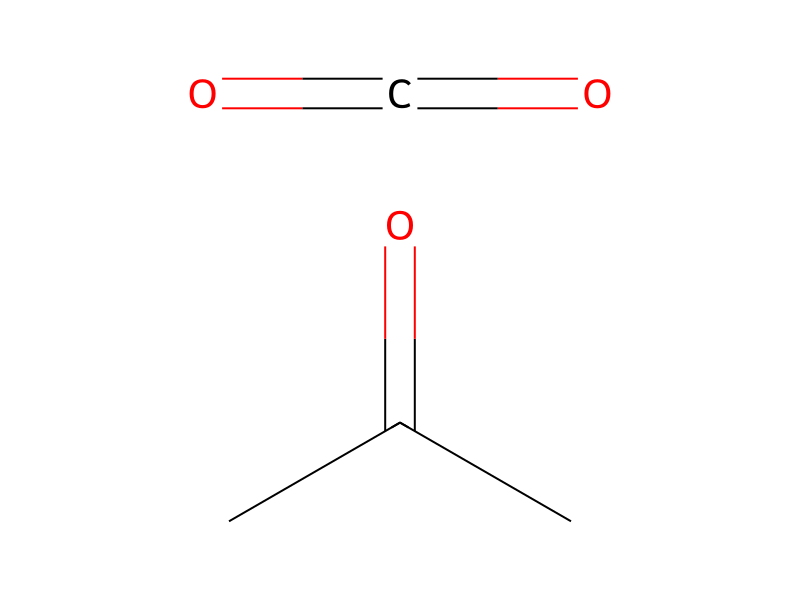
C[O:2][C:3]1[CH:4]=[C:5]([CH2:20]O)[C:6]2[O:10][C:9]([C:11]3[CH:16]=[CH:15][C:14]([O:17]C)=[CH:13][CH:12]=3)=[CH:8][C:7]=2[CH:19]=1.B(Br)(Br)[Br:23]>ClCCl.C(=O)=O.CC(C)=O>[Br:23][CH2:20][C:5]1[C:6]2[O:10][C:9]([C:11]3[CH:16]=[CH:15][C:14]([OH:17])=[CH:13][CH:12]=3)=[CH:8][C:7]=2[CH:19]=[C:3]([OH:2])[CH:4]=1Participants
Reactant 2


Product 1

Reagents, catalysts & solvents 2

Procedure
Benzyl Alcohol 3 (0.500 g, 1.759 mmole) was dissolved in dichloromethane (50 mL) and cooled to −78° C. in dry ice/acetone bath. To this solution, boron tribromide (1.0 M in dichloromethane), (7.04 mL, 7.05 mmole) was added drop wise over 15 minutes. After 30 minutes, the dark orange solution was allowed to come to room temperature and reacted for an additional 4 hours. The solution was concentrated and added to saturated sodium bicarbonate and extracted with ethyl acetate. Organic layers were combined and washed with water, brine, and dried over magnesium sulfate. The organic phases were concentrated and the residue was loaded on to silica gel and chromatographed with silica gel (hexanes:ethyl acetate, 7:3) to afford 0.495 g (88%) of benzyl bromide 4 as a white solid: Mp=337–339° C.; 1H NMR (DMSO-d6) δ 7.90 (s, 2 H),), 7.74 (d, 2 H, J=8.8 Hz), 7.06 (s, 1 H), 6.89 (d, 2 H, J=8.7 Hz), 6.86 (d, 1 H, J=2.5 Hz), 6.77 (d, 1 H, J=2.2 Hz); MS 317/319 (M+H)+.
Workup
- customto come to room temperature
- customreacted for an additional 4 hours
- concentrationThe solution was concentrated
- additionadded to saturated sodium bicarbonate
- extractionextracted with ethyl acetate
- washwashed with water, brine
- dry with materialdried over magnesium sulfate
- concentrationThe organic phases were concentrated
- customchromatographed with silica gel (hexanes:ethyl acetate, 7:3)
Sources & evidence
- ORD record
- ord-5edab520b80b4b43a7fe10772f7b449c
- Source dataset
- uspto-grants-2006_04
- Patent number
- US07022733B2
Reaction notes
Loading…