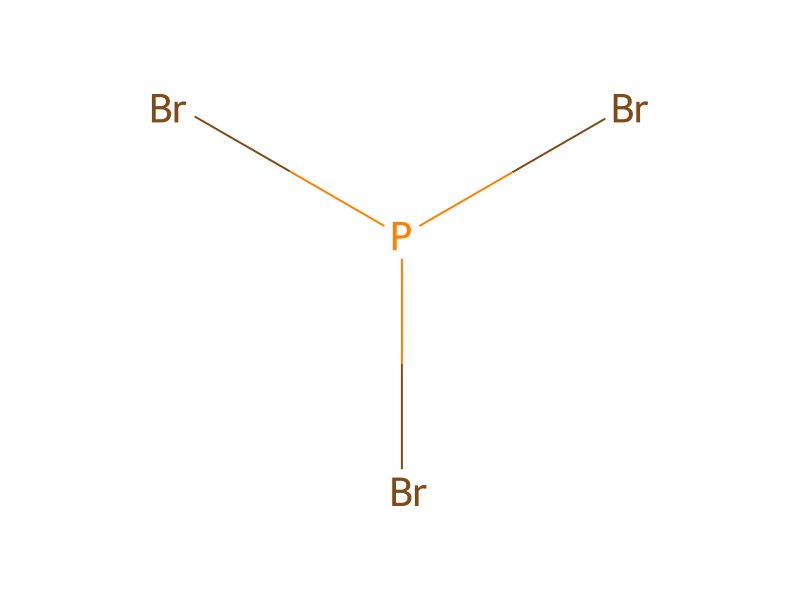
Phosphorus tribromide → 4-Bromo-7-(4-methoxy-2-methylphenyl)-2,6-dimethylpyrrolo[1,2-b]pyridazine
Reaction equation

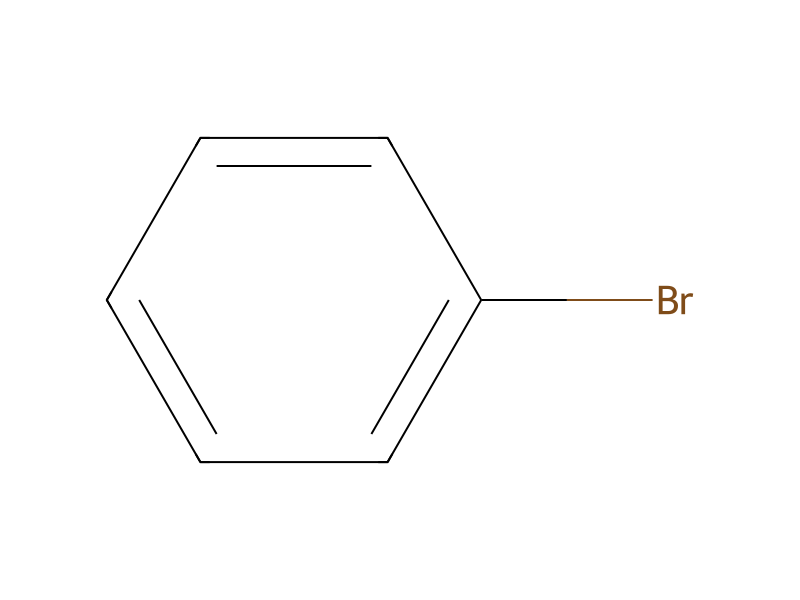
[CH3:1][O:2][C:3]1[CH:8]=[CH:7][C:6]([C:9]2[N:13]3[N:14]=[C:15]([CH3:19])[CH:16]=[C:17](O)[C:12]3=[CH:11][C:10]=2[CH3:20])=[C:5]([CH3:21])[CH:4]=1.P(Br)(Br)[Br:23].C([O-])(O)=O.[Na+]>BrC1C=CC=CC=1.C(Cl)(Cl)Cl>[Br:23][C:17]1[C:12]2[N:13]([C:9]([C:6]3[CH:7]=[CH:8][C:3]([O:2][CH3:1])=[CH:4][C:5]=3[CH3:21])=[C:10]([CH3:20])[CH:11]=2)[N:14]=[C:15]([CH3:19])[CH:16]=1Participants




Procedure
A solution of 7-(4-methoxy-2-methylphenyl)-2,6-dimethylpyrrolo[1,2-b]pyridazin-4-ol (0.16 g, 0.567 mmol) and phosphorus tribromide (0.27 mL, 2.83 mmol) in bromobenzene (3.0 mL) was refluxed for 5 h. After cooling down to room temperature, the mixture was diluted with CHCl3. Saturated NaHCO3 solution was added to neutralize and separated immediately. The aqueous layer was extracted with CHCl3 (2×). The combined CHCl3 solution was dried over MgSO4 and filtered. The filtrate was concentrated in vacuo to dryness. The residue was subjected to column chromatography (silica gel, 1/20 EtOAc/hexane) to afford 0.14 g (64%) of light yellow oil as the title compound: 1H NMR (400 MHz, CDCl3) δ 7.12 (d, J=8 Hz, 1H), 6.82 (d, J=3 Hz, 1H), 6.76 (dd, J=3, 8 Hz, 1H), 6.59 (s, 1H), 6.49 (s, 1H), 3.79 (s, 3H), 2.28 (s, 3H), 2.12 (s, 3H), 1.98 (s, 3H); MS m/z 347.1 (M++H).
Workup
- customseparated immediately
- extractionThe aqueous layer was extracted with CHCl3 (2×)
- dry with materialThe combined CHCl3 solution was dried over MgSO4
- filtrationfiltered
- concentrationThe filtrate was concentrated in vacuo to dryness
Sources & evidence
- ORD record
- ord-f5a076cfa30546699f4aa44e90557cac
- Source dataset
- uspto-grants-2006_04
- Patent number
- US07034023B2
Reaction notes
Loading…