Water → 2-(5-Bromo-pyridin-3-yl)-4-hydroxy-3,3-dimethyl-1,2,3,4-tetrahydro-quinoline-6-carboxylic acid ethyl ester
Reaction equation

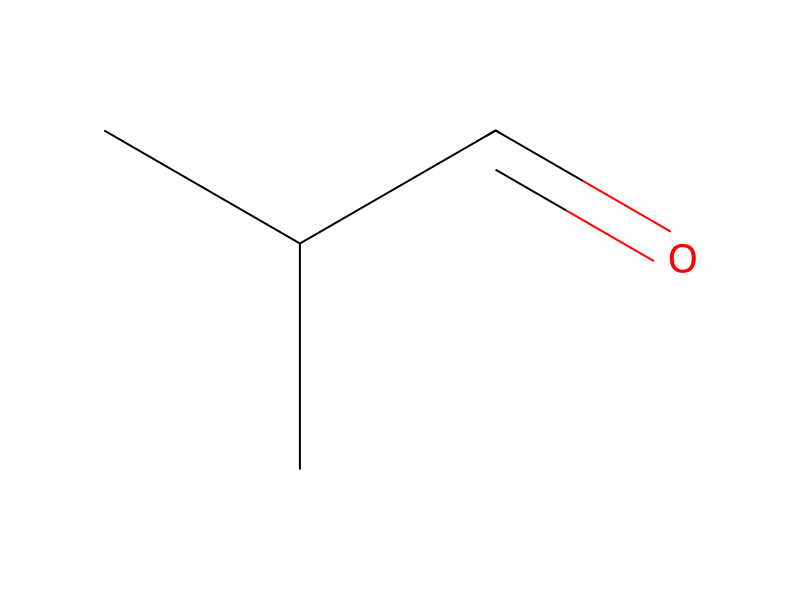
[CH2:1]([O:3][C:4](=[O:20])[C:5]1[CH:10]=[CH:9][C:8]([N:11]=[CH:12][C:13]2[CH:14]=[N:15][CH:16]=[C:17]([Br:19])[CH:18]=2)=[CH:7][CH:6]=1)[CH3:2].[CH:21](=[O:25])[CH:22]([CH3:24])[CH3:23].O>O1CCCC1.O.[O-]S(C(F)(F)F)(=O)=O.[Yb+3].[O-]S(C(F)(F)F)(=O)=O.[O-]S(C(F)(F)F)(=O)=O>[CH2:1]([O:3][C:4]([C:5]1[CH:10]=[C:9]2[C:8](=[CH:7][CH:6]=1)[NH:11][CH:12]([C:13]1[CH:14]=[N:15][CH:16]=[C:17]([Br:19])[CH:18]=1)[C:22]([CH3:24])([CH3:23])[CH:21]2[OH:25])=[O:20])[CH3:2]Participants
Reactant 3


Product 1

Reagents, catalysts & solvents 2


Conditions
- Temperature
- 25 °C
Procedure
To a mixture of 4-[(5-bromo-pyridin-3-ylmethylene)-amino]-benzoic acid ethyl ester (33.8 g, 100 mmol) and Ytterbium(III) triflate hydrate (6.2 g, 10 mmol) in dry tetrahydrofuran (100 mL) at 25° C. was added isobutyraldehyde (9.2 mL, 100 mmol) and water (1.8 mL, 100 mmol) dropwise. The reaction mixture was stirred at 25° C. for 16 h. Then the reaction mixture was concentrated in vacuo and the residue was extracted with ethyl acetate (2×200 mL), washed with brine, dried over anhydrous sodium sulfate and concentrated in vacuo to afford 2-(5-bromo-pyridin-3-yl)-4-hydroxy-3,3-dimethyl-1,2,3,4-tetrahydro-quinoline-6-carboxylic acid ethyl ester (42.2 g, quant.) as a light yellow oil which was used for next step without further purification: LC/MS m/e calcd for C19H21BrN2O3 (M+H)+: 406.29, observed: 405.0 & 406.9.
Workup
- concentrationThen the reaction mixture was concentrated in vacuo
- extractionthe residue was extracted with ethyl acetate (2×200 mL)
- washwashed with brine
- dry with materialdried over anhydrous sodium sulfate
- concentrationconcentrated in vacuo
Sources & evidence
- ORD record
- ord-ab4e1888ca8f40fe8e5ec9d1947e6eca
- Source dataset
- uspto-grants-2013_01
- Patent number
- US08344137B2
Reaction notes
Loading…