Pyridine → HCID 58537229, compound
Reaction equation

[F:1][C:2]([C:6]1[C:7]([C:17]([OH:19])=O)=[N:8][O:9][C:10]=1[C:11]1[CH:16]=[CH:15][CH:14]=[CH:13][CH:12]=1)([F:5])[CH2:3][CH3:4].N1C=CC=CC=1.N1C(F)=NC(F)=NC=1[F:28]>ClCCl>[F:1][C:2]([C:6]1[C:7]([C:17]([F:28])=[O:19])=[N:8][O:9][C:10]=1[C:11]1[CH:16]=[CH:15][CH:14]=[CH:13][CH:12]=1)([F:5])[CH2:3][CH3:4]Participants
5
Reactant 3

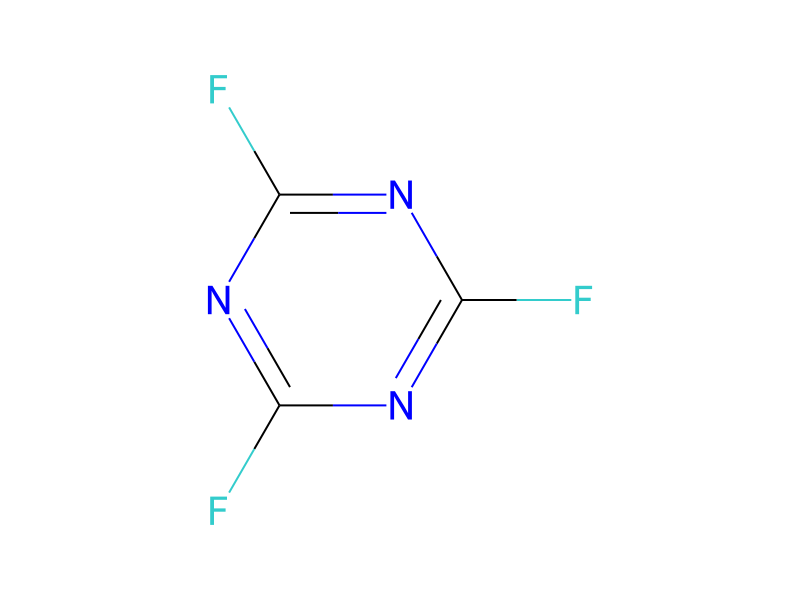

Product 1

Reagents, catalysts & solvents 1

Procedure
A solution of 4-(1,1-difluoropropyl)-5-phenylisoxazole-3-carboxylic acid (8.4 mg, 0.031 mmol) and pyridine (3.05 μL, 0.038 mmol) in dichloromethane (1 mL) was added cyanuric fluoride (3.18 μL, 0.038 mmol), and the reaction mixture was stirred at room temperature for 2 h. The reaction mixture was diluted with dichloromethane (2 mL) and washed with ice-water (2×1 mL). The aqueous layer was extracted with dichloromethane (2×1 mL), and the combined organic layers were washed brine (1 mL) and dried over anhydrous sodium sulfate. Concentration under reduced pressure afforded 4-(1,1-difluoropropyl)-5-phenylisoxazole-3-carbonyl fluoride (7.2 mg).
Workup
- washwashed with ice-water (2×1 mL)
- extractionThe aqueous layer was extracted with dichloromethane (2×1 mL)
- washthe combined organic layers were washed brine (1 mL)
- dry with materialdried over anhydrous sodium sulfate
- concentrationConcentration under reduced pressure
Sources & evidence
- ORD record
- ord-ba2271c28ba24cf88acedc3214030d4e
- Source dataset
- uspto-grants-2013_01
- Patent number
- US08354398B2
Reaction notes
Loading…