2-Aminopyridine → N-(2-pyridyl)-4-chlorophthalimide
Reaction equation

[Cl:1][CH:2]1[CH:12]=[CH:11][CH:5]2[C:6]([O:8][C:9](=[O:10])[CH:4]2[CH2:3]1)=O.[NH2:13][C:14]1[CH:19]=[CH:18][CH:17]=[CH:16][N:15]=1>ClC1C(Cl)=C(Cl)C=CC=1>[N:15]1[CH:16]=[CH:17][CH:18]=[CH:19][C:14]=1[N:13]1[C:9](=[O:10])[C:4]2=[CH:3][C:2]([Cl:1])=[CH:12][CH:11]=[C:5]2[C:6]1=[O:8]Participants
4
Reactant 2
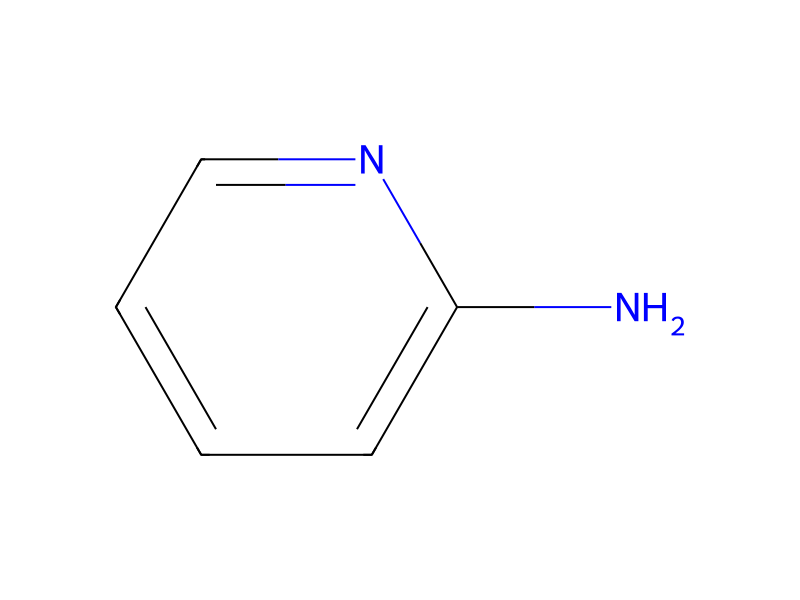

Product 1

Reagents, catalysts & solvents 1

Procedure
5.2 grams of 4-chlorotetrahydrophthalic anhydride, 2.6 grams of 2-aminopyridine, 50 milliliters of trichlorobenzene and 6.0 grams of Calgon Carbon S-Sorb was combined in a 3 neck flask. The flask was fitted with a reflux condenser and an inlet tube adjusted to deliver air as bubbles below the surface. The third neck was fitted with a drying tube to remove water. After about 9 hours, N-(2-pyridyl)-4-chlorophthalimide was formed in about 84% yield as determined by GC-MS.
Workup
- customThe flask was fitted with a reflux condenser and an inlet tube
- customThe third neck was fitted with a drying tube
- customto remove water
Sources & evidence
- ORD record
- ord-94035aa56f0d423395ae981a716e2d53
- Source dataset
- uspto-grants-2005_04
- Patent number
- US06881815B2
Reaction notes
Loading…