2,4-Dichlorobenzoyl chloride → HCID 45258955, compound
Reaction equation

[NH2:1][C:2]1[C:7]([N+:8]([O-:10])=[O:9])=[CH:6][CH:5]=[CH:4][C:3]=1[OH:11].[Cl:12][C:13]1[CH:21]=[C:20]([Cl:22])[CH:19]=[CH:18][C:14]=1[C:15](Cl)=[O:16]>CN(C)C1C=CN=CC=1.C(Cl)Cl>[NH2:1][C:2]1[C:7]([N+:8]([O-:10])=[O:9])=[CH:6][CH:5]=[CH:4][C:3]=1[O:11][C:15](=[O:16])[C:14]1[CH:18]=[CH:19][C:20]([Cl:22])=[CH:21][C:13]=1[Cl:12]Participants
5
Reactant 2
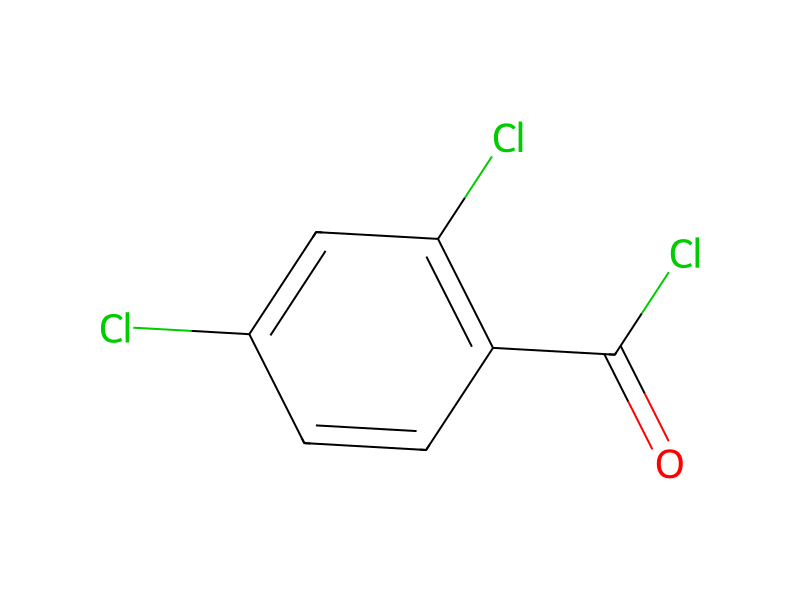

Product 1

Reagents, catalysts & solvents 2


Procedure
To a 500 mL, round-bottomed, one-necked flask equipped with a magnetic stir bar and a septum was added 2-amino-3-nitrophenol (4.25 g, 27.6 mmol), anhydrous CH2Cl2 (140 mL), 4-(dimethylamino)pyridine (3.37 g, 27.6 mmol) and 2,4-dichlorobenzoyl chloride (5.78 g, 3.87 mL, 27.6 mmol). The reaction mixture was allowed to stir at room temperature overnight. TLC analysis indicated the complete consumption of starting material. The reaction mixture was diluted with CH2Cl2 (300 mL) and the mixture was washed with H2O (2×200 mL), dried (Na2SO4), and concentrated to give 8.91 g (98.7%) of a yellow-orange solid. 1H NMR analysis indicated the material, I-113 was pure enough to carry on to the next step. 1H NMR (500 MHz, CDCl3).
Workup
- customTo a 500 mL, round-bottomed, one-necked flask equipped with a magnetic stir bar
- customthe complete consumption of starting material
- additionThe reaction mixture was diluted with CH2Cl2 (300 mL)
- washthe mixture was washed with H2O (2×200 mL)
- dry with materialdried (Na2SO4)
- concentrationconcentrated
Sources & evidence
- ORD record
- ord-397725855d914389b4a5f2125db34ddf
- Source dataset
- uspto-grants-2009_10
- Patent number
- US07598397B2
Reaction notes
Loading…