Isopropylamine → N-Isopropyl-2-nitroaniline
Reaction equation

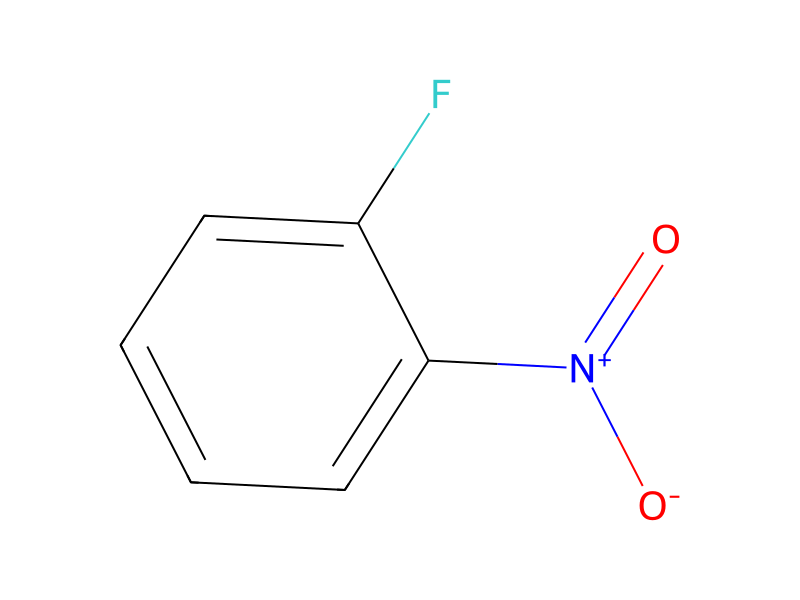
F[C:2]1[CH:7]=[CH:6][CH:5]=[CH:4][C:3]=1[N+:8]([O-:10])=[O:9].[CH:11]([NH2:14])([CH3:13])[CH3:12]>C(O)C>[CH:11]([NH:14][C:2]1[CH:7]=[CH:6][CH:5]=[CH:4][C:3]=1[N+:8]([O-:10])=[O:9])([CH3:13])[CH3:12]Participants
Reactant 2

Product 1

Reagents, catalysts & solvents 1

Conditions
- Temperature
- 55 °C
Procedure
To a solution of 1-fluoro-2-nitrobenzene (14.11 g, 100 mmol) in ethanol (50 mL) was added isopropylamine (30 mL, 350 mmol, 3.5 equiv.) and the mixture was heated at 55° C. with stirring in a sealed reaction vessel for 3 hours. All volatiles were removed under reduced pressure. The residue was dissolved in diethyl ether (300 mL) and the solution was washed with a saturated aqueous sodium bicarbonate solution, brine, dried (anhydrous sodium sulfate), and concentrated to give N-isopropyl-2-nitroaniline as a bright orange liquid. This was in ethanol (50 mL) and Raney nickel (2.8 g) was added. The mixture was stirred under a hydrogen atmosphere (30 psi) until all starting material was consumed (as evidenced by the disappearance of the bright orange color, ˜3 h). The reaction mixture was filtered through a pad of celite and concentrated to give 14.92 g (98%) N-isopropyl-1,2-phenylenediamine as a viscous black liquid.
Workup
- customAll volatiles were removed under reduced pressure
- dissolutionThe residue was dissolved in diethyl ether (300 mL)
- washthe solution was washed with a saturated aqueous sodium bicarbonate solution, brine
- dry with materialdried (anhydrous sodium sulfate)
- concentrationconcentrated
Sources & evidence
- ORD record
- ord-b95f73ca413640dba263b1e6a061d20c
- Source dataset
- uspto-grants-2009_10
- Patent number
- US07601744B2
Reaction notes
Loading…