Cesium carbonate → HCID 68982994, compound
Reaction equation

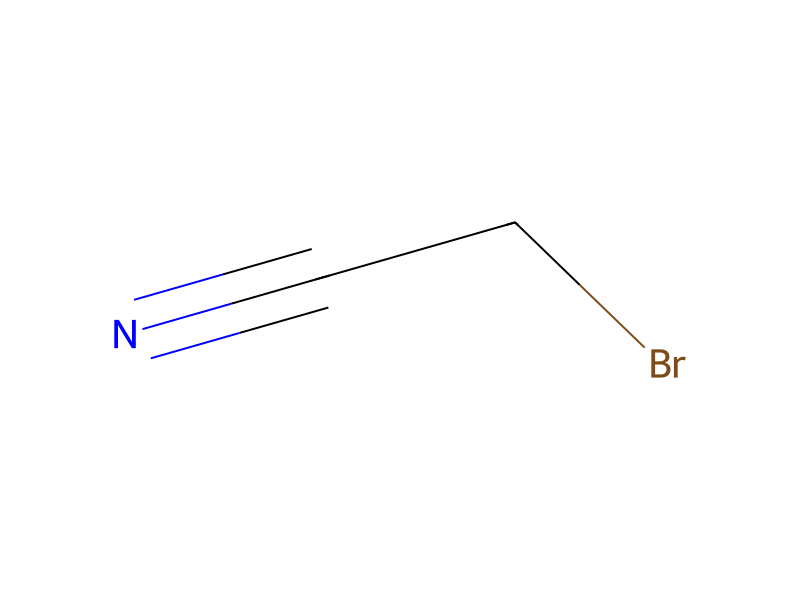
[Br:1][C:2]1[C:11]2[C:6](=[CH:7][C:8]([C:12]3[N:13]=[C:14]([C:17]4[CH:22]=[CH:21][CH:20]=[CH:19][CH:18]=4)[S:15][CH:16]=3)=[CH:9][CH:10]=2)[CH:5]=[CH:4][C:3]=1[OH:23].Br[CH2:25][C:26]#[N:27].C(=O)([O-])[O-].[Cs+].[Cs+]>CC(C)=O>[Br:1][C:2]1[C:11]2[C:6](=[CH:7][C:8]([C:12]3[N:13]=[C:14]([C:17]4[CH:22]=[CH:21][CH:20]=[CH:19][CH:18]=4)[S:15][CH:16]=3)=[CH:9][CH:10]=2)[CH:5]=[CH:4][C:3]=1[O:23][CH2:25][C:26]#[N:27]Participants
Reactant 3


Product 1

Reagents, catalysts & solvents 1

Procedure
A mixture of 1-bromo-6-(2-phenyl-1,3-thiazol-4-yl)-2-naphthol (351 mg, 0.918 mmol), prepared in step 1 of Example 3, bromoacetonitrile (77 μL, 1.11 mmol) and cesium carbonate (1.505 g, 4.62 mmol) in 25 mL of acetone was stirred under nitrogen at room temperature for 19 h (overnight). The reaction was concentrated under reduced pressure to remove the acetone. The residue was partitioned between methylene chloride and water. The aqueous layer was separated and extracted three times with methylene chloride. The combined extracts were dried (MgSO4), filtered and the solvent removed under reduced pressure to give {[1-bromo-6-(2-phenyl-1,3-thiazol-4-yl)-2-naphthyl]oxy}acetonitrile (382 mg, 99%) as a light tan solid, mp 157-160° C. Elemental Analysis for C21H13BrN2OS Calc'd: C, 59.87; H, 3.11; N, 6.65. Found: C, 59.56; H, 3.28; N, 6.56.
Workup
- concentrationThe reaction was concentrated under reduced pressure
- customto remove the acetone
- customThe residue was partitioned between methylene chloride and water
- customThe aqueous layer was separated
- extractionextracted three times with methylene chloride
- dry with materialThe combined extracts were dried (MgSO4)
- filtrationfiltered
- customthe solvent removed under reduced pressure
Sources & evidence
- ORD record
- ord-dc59c67bc27d45b2abd55ffe91570872
- Source dataset
- uspto-grants-2009_10
- Patent number
- US07605172B2
Reaction notes
Loading…