Sodium Chloride → 2-[2,4-Dinitrophenylsulfonyl]ethyl hydrogen sulfate
Reaction equation

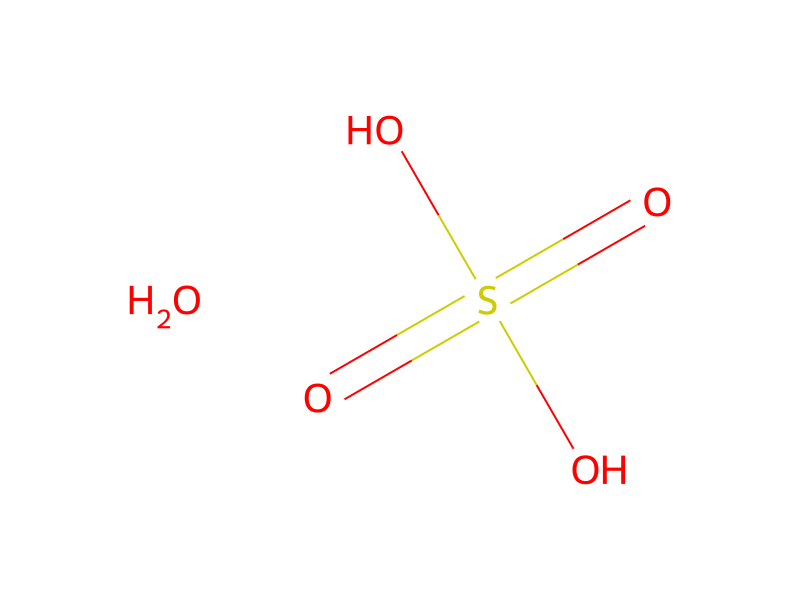
[N+:1]([C:4]1[CH:9]=[C:8]([N+:10]([O-:12])=[O:11])[CH:7]=[CH:6][C:5]=1[S:13]([CH2:16][CH2:17][OH:18])(=[O:15])=[O:14])([O-:3])=[O:2].O.[S:20](=O)(=[O:23])([OH:22])[OH:21].[Cl-].[Na+]>>[S:20]([OH:23])([O:18][CH2:17][CH2:16][S:13]([C:5]1[CH:6]=[CH:7][C:8]([N+:10]([O-:12])=[O:11])=[CH:9][C:4]=1[N+:1]([O-:3])=[O:2])(=[O:15])=[O:14])(=[O:22])=[O:21]Participants
4



Procedure
105 parts of 2-[2,4-dinitrophenylsulfonyl]ethanol are slowly introduced, at from 0 to 5° C., into 380 parts of sulfuric acid monohydrate and stirring is carried out for 14 hours at that temperature. The brown solution obtained is then slowly discharged onto a mixture of ice and 20% sodium chloride solution, whereupon a yellowish suspension is formed. The precipitate is filtered off and washed first with 1000 parts of cold 20% sodium chloride solution and then with 200 parts of ice-water. After drying, 2-[2,4-dinitrophenylsulfonyl]ethyl hydrogen sulfate is obtained in a very good yield and very good purity.
Workup
- customThe brown solution obtained
- customis formed
- filtrationThe precipitate is filtered off
- washwashed first with 1000 parts of cold 20% sodium chloride solution
- customAfter drying
Sources & evidence
- ORD record
- ord-fcc68c99e3a549e29ddbcd505136256a
- Source dataset
- uspto-grants-2006_05
- Patent number
- US07038024B2
Reaction notes
Loading…