Formaldehyde → HCID 22066088, compound
Reaction equation

[Cl:1][C:2]1[CH:7]=[C:6]([Cl:8])[CH:5]=[CH:4][C:3]=1[C:9]([CH:11]([C:13]1[CH:18]=[CH:17][C:16]([Cl:19])=[CH:15][C:14]=1[Cl:20])[OH:12])=O.C=O.[CH:23]([NH2:25])=O>O>[Cl:1][C:2]1[CH:7]=[C:6]([Cl:8])[CH:5]=[CH:4][C:3]=1[C:9]1[N:25]=[CH:23][O:12][C:11]=1[C:13]1[CH:18]=[CH:17][C:16]([Cl:19])=[CH:15][C:14]=1[Cl:20]Participants
5
Reactant 3

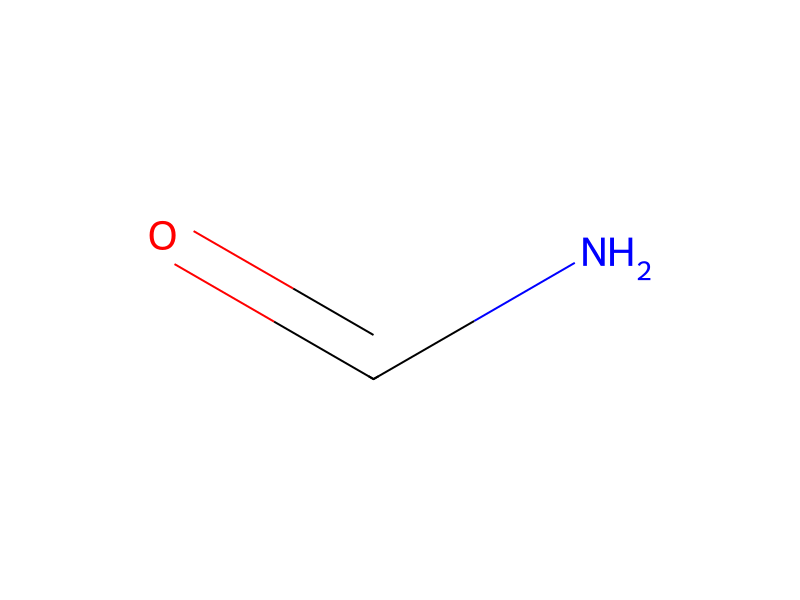

Product 1

Reagents, catalysts & solvents 1

Procedure
A mixture of (+/−)-2,2′,4,4′-tetrachlorobenzoin (1.0 gm, 2.9 mmol) from Step A and paraformaldehyde (0.70 gm, 24 mmol) in formamide (20 mL) was heated to 200–210° C. for 3 hr. The reaction was cooled to rt, diluted with water, and extracted twice with ethyl acetate. The organic layers were washed with brine, dried over sodium sulfate, and evaporated. The residue was purified by flash chromatography, eluting first with 10% ethyl acetate in hexanes to afford 4,5-di-(2,4-dichlorophenyl)oxazole as a higher Rf byproduct and then with 75% ethyl acetate in hexanes to elute the title compound as an oil. HPLC/MS: 357 (M+1), 359 (100%, M+3), 361 (M+5); Rt=2.72 min.
Workup
- temperaturewas heated to 200–210° C. for 3 hr
- extractionextracted twice with ethyl acetate
- washThe organic layers were washed with brine
- dry with materialdried over sodium sulfate
- customevaporated
- customThe residue was purified by flash chromatography
- washeluting first with 10% ethyl acetate in hexanes
Sources & evidence
- ORD record
- ord-47db3c9988af4ba785bdb6a03bc0070b
- Source dataset
- uspto-grants-2006_06
- Patent number
- US07057051B2
Reaction notes
Loading…