Hydrogen Bromide → 3,4-Dihydroxyphenyl propylamine
Reaction equation

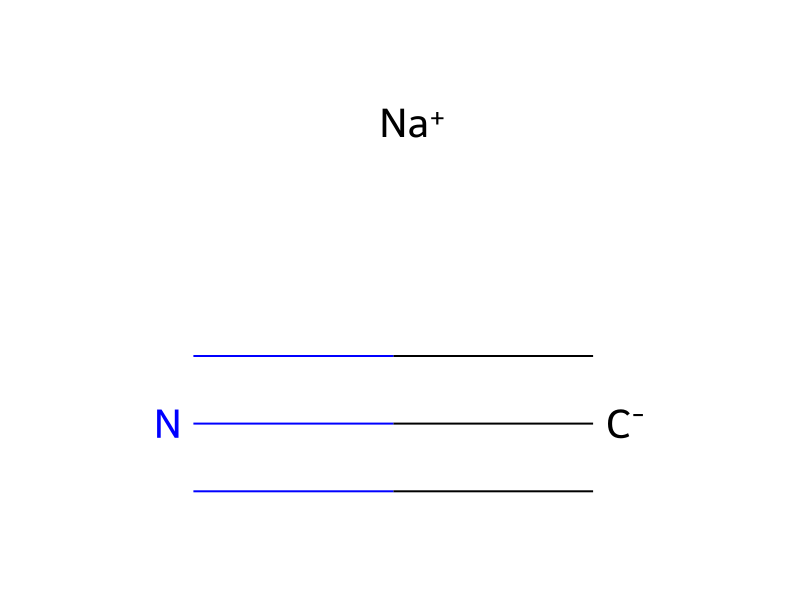
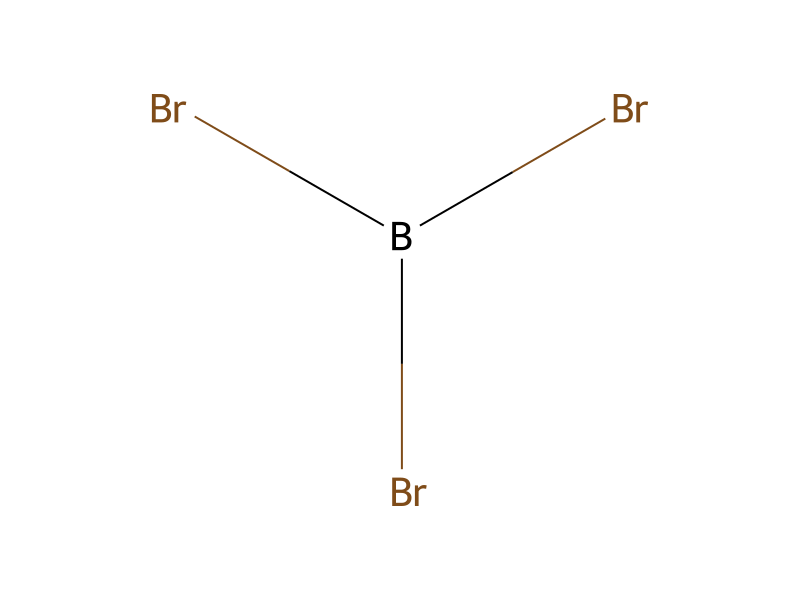
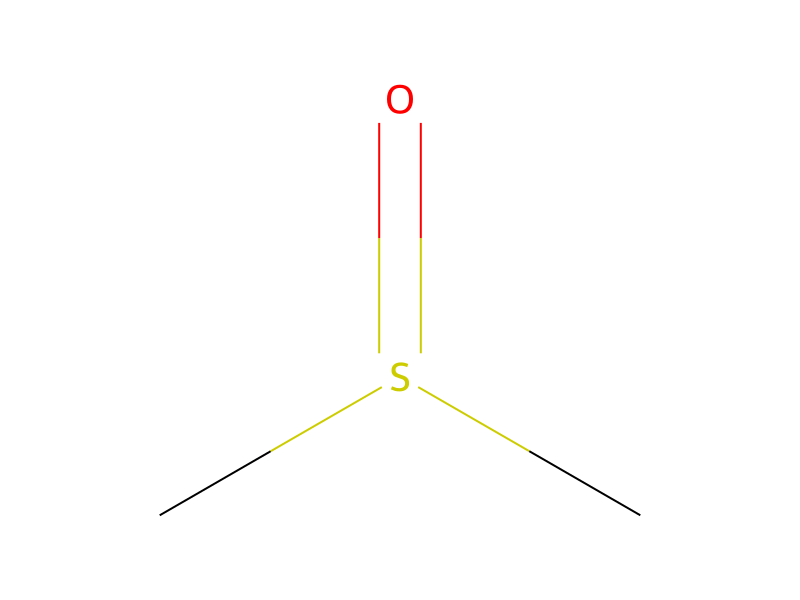
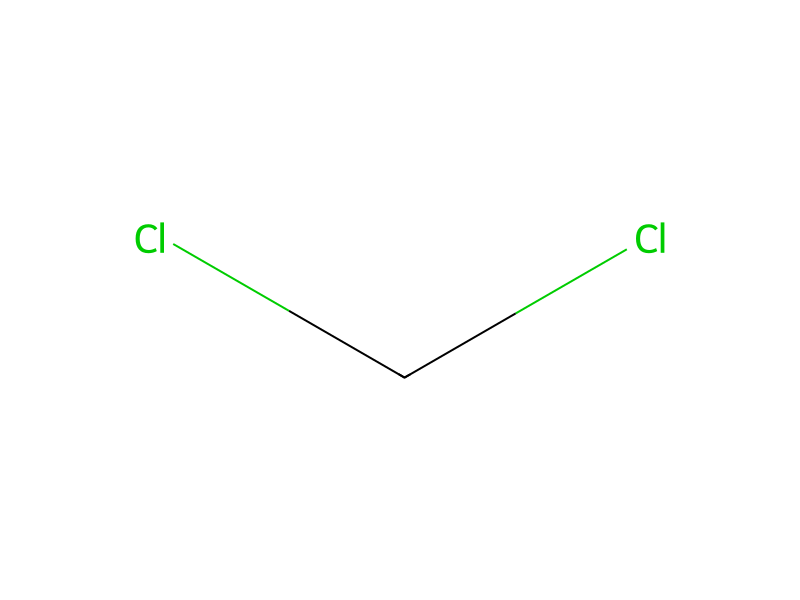
C[O:2][C:3]1[CH:4]=[C:5]([NH:11][CH2:12][CH2:13][CH3:14])[CH:6]=[CH:7][C:8]=1[O:9]C.B(Br)(Br)Br.C[Si](I)(C)C.[S-]CC.[Na+].[S-]C1C=CC=CC=1.[K+].[C-]#N.[Na+].Br>ClCCl.CS(C)=O.[Br-].[Br-].[Br-].[Al+3].C(S)C>[OH:2][C:3]1[CH:4]=[C:5]([NH:11][CH2:12][CH2:13][CH3:14])[CH:6]=[CH:7][C:8]=1[OH:9]Participants
Reactant 7



Product 1

Reagents, catalysts & solvents 4


Procedure
In general, reductive amination of 3,4-dimethoxyphenyl acetone (see FIG. 1) is carried out by using an appropriate amine (ammonia, methylamine, or ethylamine) in the presence of a reducing agent, preferably sodium borohydride or sodium cyanoborohydride, at a temperature from 0° C. to 25° C. to give the desired 3,4-dimethoxyphenyl propylamine (1A). The latter intermediate is then demethylated to give the 3,4-dihydroxyphenyl propylamine. Typically, demethylation of phenolic derivatives is carried out by reaction with boron tribromide in dichloromethane at −70° C. to room temperature. A variety of demethylation reactions are known in the art, for example, trimethylsilyl-iodide, sodium thioethoxide, potassium thiophenoxide, sodium cyanide in DMSO, aluminium tribromide in ethanethiol, and hydrobromic acid (Greene, T. and Wuts, P., “Protective groups in organic synthesis”, 2nd edition, Wiley-Intersciences, 1991). Preferably the demethylation of the 3,4-dimethoxyphenyl propylamine derivative (1A) is carried out in the presence of 48% HBr under reflux conditions for 3-4 hours to give 1B. The amino group of the 3,4-dihydroxyphenyl propylamine 1B is then protected.
Sources & evidence
- ORD record
- ord-c76f4353ec494e47826db12dc869f633
- Source dataset
- uspto-grants-2006_06
- Patent number
- US07060847B2
Reaction notes
Loading…