Diethyl Ether → 3-(2-Bromoethyl)indole
Reaction equation

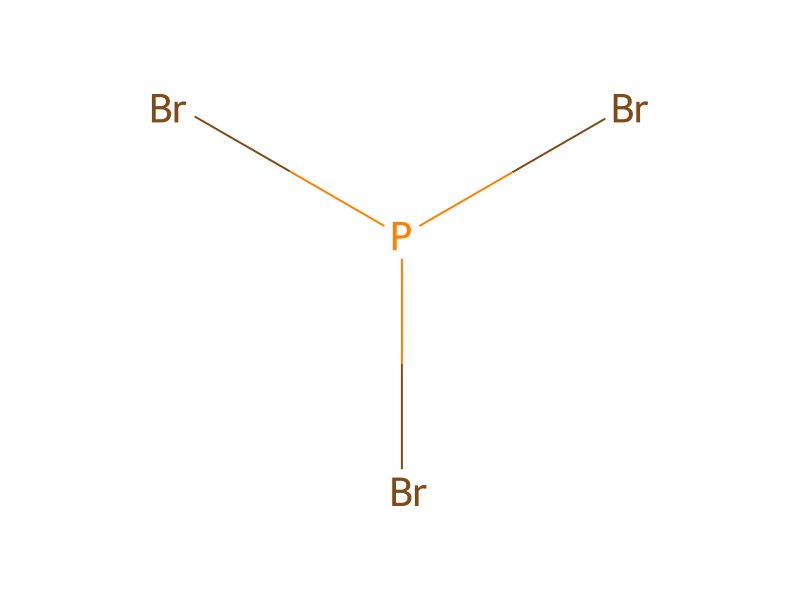
[NH:1]1[C:9]2[C:4](=[CH:5][CH:6]=[CH:7][CH:8]=2)[C:3]([CH2:10][CH2:11]S)=[CH:2]1.P(Br)(Br)[Br:14].CCOCC>C(Cl)Cl>[Br:14][CH2:11][CH2:10][C:3]1[C:4]2[C:9](=[CH:8][CH:7]=[CH:6][CH:5]=2)[NH:1][CH:2]=1Participants
Reactant 3


Product 1

Reagents, catalysts & solvents 1

Procedure
The starting materials of formula II in which X1 is mercapto, --S--SO3Na or --S--SO3K, and R2, R3, R4, R5, R6 and R7 are as defined in the first instance are obtained by the following process: The appropriate compound of formula 11 (X1 =OH) described above, is treated with phosphorus tribromide in an inert solvent, for example, ether or methylene chloride to afford the corresponding 3-(2-bromoethyl)-indole derivative. The latter compound is then converted to the desired starting material of formula II (X1 = SH) by a procedure similar to that described by N. N. Suvorov and V. N. Buyanov, Khim.-Farm. Zh., 1, (1967), [Chem. Abstr. 67, 73474a (1967)], for converting 3-(2-bromoethyl)-indole to indole-3-ethanethiol (II; R2, R3,R4, R5 and R6 = H and X1 = SH). Accordingly, the appropriate 3-(2-bromoethyl)-indole derivative is treated with sodium or potassium thiosulfate to afford the corresponding sodium or potassium β-(3-indoly)ethyl thiosulfate derivative, respectively; namely the desired starting materials of formula II (X=--S--SO3Na or --S--SO3K). Treatment of the latter product with strong alkali, for example, sodium or potassium hydroxide, yields the corresponding bis[ω-(3-indolyl)ethyl]-disulfide derivative. Reduction of the latter compound with lithium aluminum hydride gives the desired compounds of formula II (X1 = SH).
Workup
- customare obtained by the following process
Sources & evidence
- ORD record
- ord-8d0583d4f5714373a4529ff2d744609f
- Source dataset
- uspto-grants-1978_01
- Patent number
- US04066779
Reaction notes
Loading…