Chloroform → 2-[N-(benzenesulfonyl)anilino]acetic acid
Reaction equation

[C:1]1([NH:7][CH2:8][C:9]([OH:11])=[O:10])[CH:6]=[CH:5][CH:4]=[CH:3][CH:2]=1.[OH-].[Na+].C(Cl)(Cl)Cl.[C:18]1([S:24](Cl)(=[O:26])=[O:25])[CH:23]=[CH:22][CH:21]=[CH:20][CH:19]=1>O>[C:18]1([S:24]([N:7]([C:1]2[CH:6]=[CH:5][CH:4]=[CH:3][CH:2]=2)[CH2:8][C:9]([OH:11])=[O:10])(=[O:26])=[O:25])[CH:23]=[CH:22][CH:21]=[CH:20][CH:19]=1Participants
6
Reactant 4

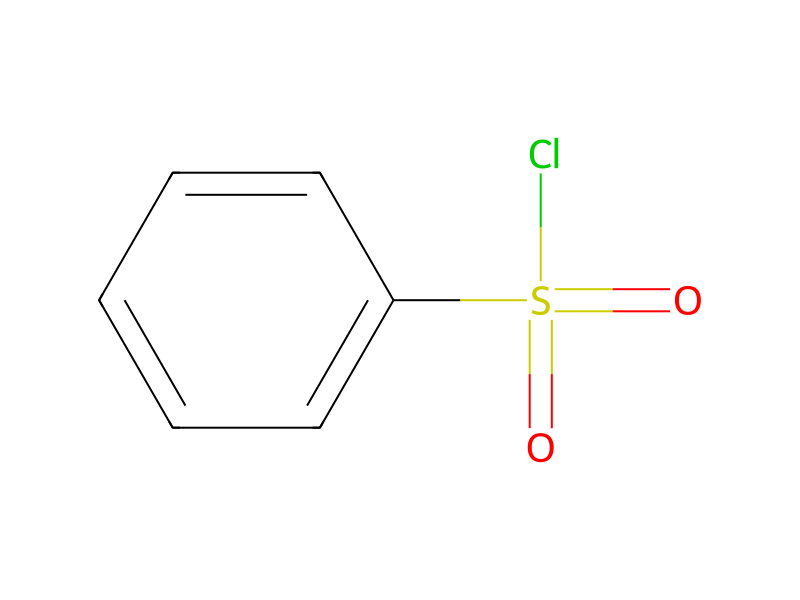


Product 1

Reagents, catalysts & solvents 1

Procedure
7.7 Parts of N-phenylglycine and 5 parts of sodium hydroxide are dissolved in 30 parts of water. Into the resulting solution, 5 parts of chloroform containing 10 parts of benzenesulfonyl chloride is dropped with stirring. After the dropping, the resulting mixture is stirred at room temperature for 4 hours and then at 50° C for 30 minutes. Subsequently, the aqueous layer is separated from the reaction mixture and then acidified with hydrochloric acid to form an oily substance. By rubbing on the inner wall of a flask with spatula, crystallized products are formed. The crystals are recrystallized from a mixed solvent comprising methanol and water to obtain 4.2 parts of N-benzenesulfonyl-N-phenylglycine, m.p. 166°-167° C.
Workup
- stirringAfter the dropping, the resulting mixture is stirred at room temperature for 4 hours
- customSubsequently, the aqueous layer is separated from the reaction mixture
- customto form an oily substance
- customBy rubbing on the inner wall of a flask with spatula
- customcrystallized products
- customare formed
- customThe crystals are recrystallized from a mixed solvent
Sources & evidence
- ORD record
- ord-d8301f324c3648688deea2176b899628
- Source dataset
- uspto-grants-1978_01
- Patent number
- US04070176
Reaction notes
Loading…