2-Vinylpyridine → Benzene, ethenyl-, polymer with 1,3-butadiene
Reaction equation

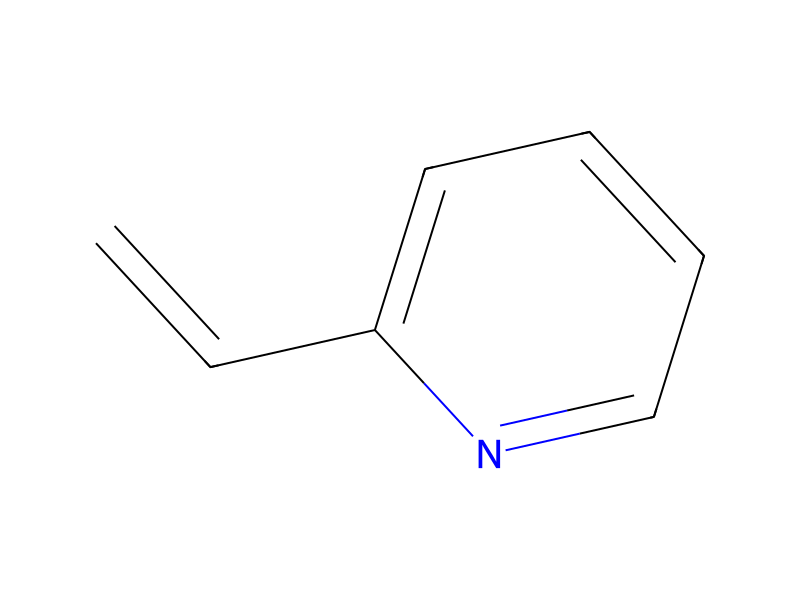
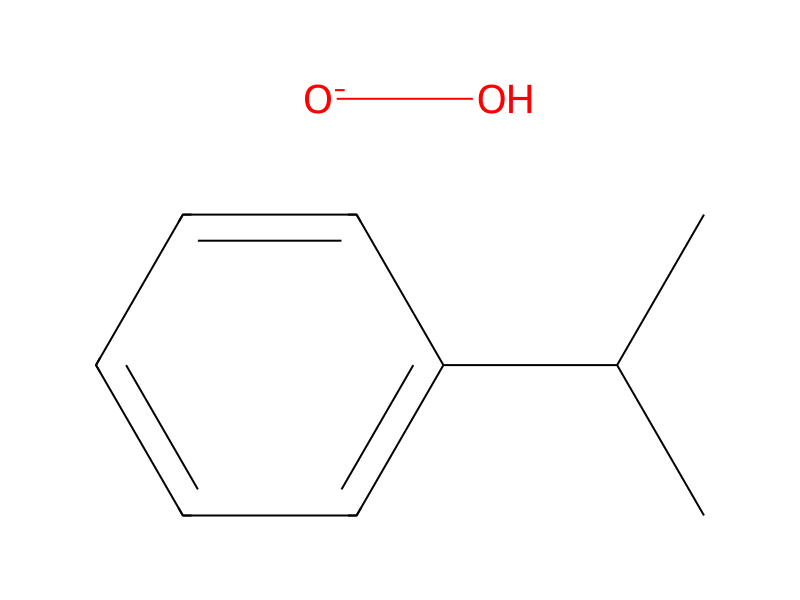
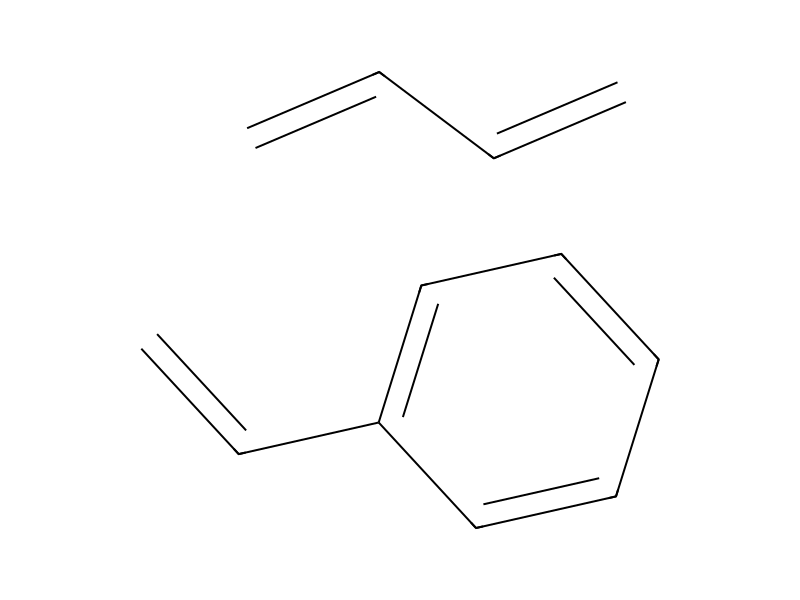
[CH:1]([C:3]1[CH:8]=CC=CN=1)=[CH2:2].[O-]O.[C:11]1([CH:17](C)[CH3:18])[CH:16]=[CH:15][CH:14]=[CH:13][CH:12]=1.NCCNCCNCCNCCN.[K]>O>[CH2:2]=[CH:1][CH:3]=[CH2:8].[CH2:18]=[CH:17][C:11]1[CH:16]=[CH:15][CH:14]=[CH:13][CH:12]=1Participants
Reactant 4


Product 1
Reagents, catalysts & solvents 1

Procedure
In a laboratory Banbury 100 grams of butadienestyrene copolymer rubber (SBR 1502), 40 grams of 2-vinylpyridine, 3 grams of cumene hydroperoxide and 1 gram of tetraethylenepentamine were mixed for 3 minutes at temperatures in excess of 325° F to cause polar grafting of the batch of rubber. This grafting operation was repeated to produce 3 more batches and the four batches of grafted product were cooled and dissolved in 16 kilograms of mixed xylenes, with the aid of agitation, over a period of 12 hours. To the grafted SB-R cement was added 240 grams of the potassium salt of coconut oil fatty acids and 20 liters of water and after mixing a coarse emulsion was formed. The coarse emulsion was converted to a fine emulsion of precursor latex sized particles ready for stripping by twice passing through the homogenizing apparatus employed in Example 2 hereof. Further treatment by the procedures of Example 1, produced a substantially quantitative yield, dry solids basis, of dilute and concentrated latices of 2-vinyl pyridine grafted butadiene-styrene rubber.
Workup
- customto produce 3 more batches
- temperaturethe four batches of grafted product were cooled
- additionafter mixing a coarse emulsion
- customwas formed
- customFurther treatment by the procedures of Example 1, produced a substantially quantitative yield
- customdry solids basis
- additionof dilute
- concentrationconcentrated latices of 2-vinyl pyridine
Sources & evidence
- ORD record
- ord-4742d49c8b4e4b1c90935f7eb44def9f
- Source dataset
- uspto-grants-1978_01
- Patent number
- US04070325
Reaction notes
Loading…