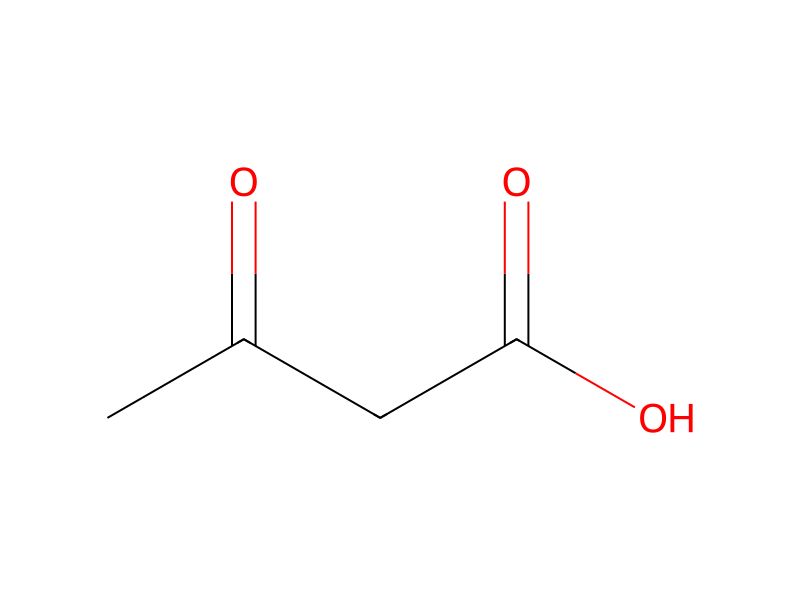
Dichloromethane → Acetoacetic Acid
Reaction equation

[C:1]([C:4]1[CH:9]=[CH:8][C:7]([OH:10])=[CH:6][CH:5]=1)([CH3:3])=[CH2:2].C(Cl)Cl.C([O:17][C:18](=[O:20])[CH3:19])(=O)C>[OH-].[Na+]>[CH3:6][C:7]([CH2:19][C:18]([OH:17])=[O:20])=[O:10].[C:1]([C:4]1[CH:9]=[CH:8][C:7]([OH:10])=[CH:6][CH:5]=1)([CH3:3])=[CH2:2]Participants
6
Reactant 3



Product 2
Reagents, catalysts & solvents 1

Conditions
- Temperature
- 10 °C
Procedure
240 g (0.9 mol) of dimeric p-isopropenyl phenol are dissolved under nitrogen in 800 g of 10% by weight aqueous sodium hydroxide. 400 ml of methylene chloride are then added and the reaction mixture is cooled to 10° C. 375 g (3.6 mols) of acetic acid anhydride are added dropwise with stirring at that temperature, and the mixture subsequently stirred for another hour at 5° to 10° C. The aqueous phase is then separated off, the organic phase is washed with water, bicarbonate solution and again with water and then dried over calcined sodium sulphate. Removal of the solvent by distillation is followed by distillation in a high vacuum, giving 285 g (90% of the theoretical) of diacetate of dimeric p-isopropenyl phenol.
Workup
- stirringthe mixture subsequently stirred for another hour at 5° to 10° C
- customThe aqueous phase is then separated off
- washthe organic phase is washed with water, bicarbonate solution and again with water
- customdried
- customRemoval of the solvent
- distillationby distillation
- distillationis followed by distillation in a high vacuum
Sources & evidence
- ORD record
- ord-1589125b6ca54662b300ca70b64aed91
- Source dataset
- uspto-grants-1978_01
- Patent number
- US04070392
Reaction notes
Loading…