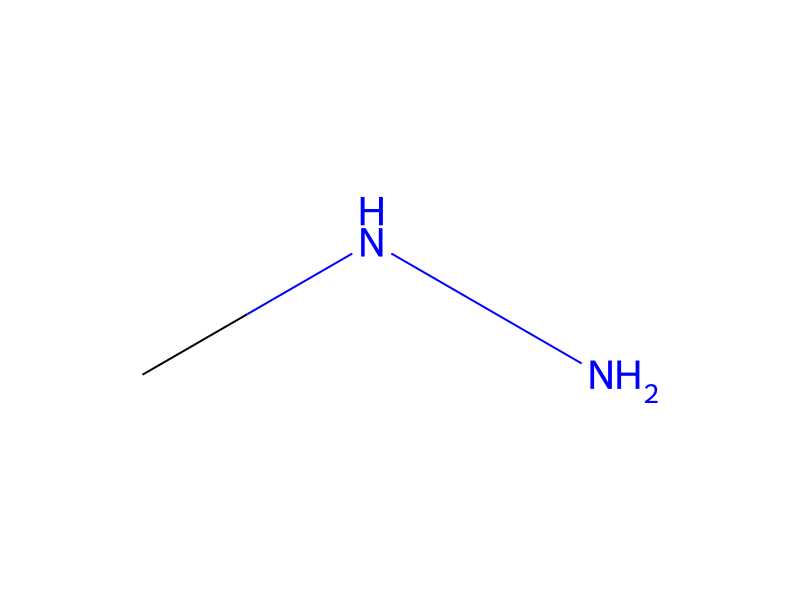
Methylhydrazine → 2,3-Dihydro-2-methyl-6-(1-naphthalenylmethyl)-1H-pyrrolo[3,4-d]pyridazin-1,4(6H)-dione
Reaction equation

[CH3:1][NH:2][NH2:3].[C:4]1([CH2:14][N:15]2[CH:19]=[C:18]([C:20](OCC)=[O:21])[C:17]([C:25](OCC)=[O:26])=[CH:16]2)[C:13]2[C:8](=[CH:9][CH:10]=[CH:11][CH:12]=2)[CH:7]=[CH:6][CH:5]=1>C(O)C>[CH3:1][N:2]1[C:25](=[O:26])[C:17]2=[CH:16][N:15]([CH2:14][C:4]3[C:13]4[C:8](=[CH:9][CH:10]=[CH:11][CH:12]=4)[CH:7]=[CH:6][CH:5]=3)[CH:19]=[C:18]2[C:20](=[O:21])[NH:3]1Participants
4



Conditions
- Temperature
- 200 °C
Procedure
Methyl hydrazine (0.55 ml) was added to a solution of diethyl 1-(1-naphthalenylmethyl)pyrrole-3,4-dicarboxylate (1.00 g) in ethanol (10 ml). The mixture was heated at 200° C. in a sealed tube for 3 days. The mixture was evaporated and the residue was purified by column chromatography, eluting with ethyl acetate:methanol (19:1). The resulting solid was suspended in ethyl acetate (25 ml), heated to reflux, and allowed to cool to ambient temperature. The title compound (0.105 g) was collected by filtration.
Workup
- customThe mixture was evaporated
- customthe residue was purified by column chromatography
- washeluting with ethyl acetate:methanol (19:1)
- temperatureheated
- temperatureto reflux
- temperatureto cool to ambient temperature
- filtrationThe title compound (0.105 g) was collected by filtration
Sources & evidence
- ORD record
- ord-d616436f19a0493ab55b9218d141bc9f
- Source dataset
- uspto-grants-2004_08
- Patent number
- US06770646B2
Reaction notes
Loading…