Aniline → HCID 60088383, compound
Reaction equation

[NH2:1][C:2]1[CH:3]=[C:4]2[C:9]3=[C:10]([CH2:12][CH2:13][CH2:14][N:8]3[CH2:7][C@@H:6]3[CH2:15][N:16](C(OC(C)(C)C)=O)[CH2:17][C@@H:5]23)[CH:11]=1.CC(C)([O-])C.[Na+].Br[C:32]1[CH:33]=[C:34]([C:39]([F:42])([F:41])[F:40])[CH:35]=[CH:36][C:37]=1[Cl:38].C1C=CC(P(C2C(C3C(P(C4C=CC=CC=4)C4C=CC=CC=4)=CC=C4C=3C=CC=C4)=C3C(C=CC=C3)=CC=2)C2C=CC=CC=2)=CC=1.NC1C=CC=CC=1>C1(C)C=CC=CC=1.CCOCC.C1C=CC(/C=C/C(/C=C/C2C=CC=CC=2)=O)=CC=1.C1C=CC(/C=C/C(/C=C/C2C=CC=CC=2)=O)=CC=1.C1C=CC(/C=C/C(/C=C/C2C=CC=CC=2)=O)=CC=1.[Pd].[Pd]>[Cl:38][C:37]1[CH:32]=[CH:33][C:34]([C:39]([F:40])([F:41])[F:42])=[CH:35][C:36]=1[NH:1][C:2]1[CH:3]=[C:4]2[C:9]3=[C:10]([CH2:12][CH2:13][CH2:14][N:8]3[CH2:7][C@@H:6]3[CH2:15][NH:16][CH2:17][C@@H:5]23)[CH:11]=1Participants
Reactant 5




Product 1

Reagents, catalysts & solvents 3



Conditions
- Temperature
- 0 °C
Procedure
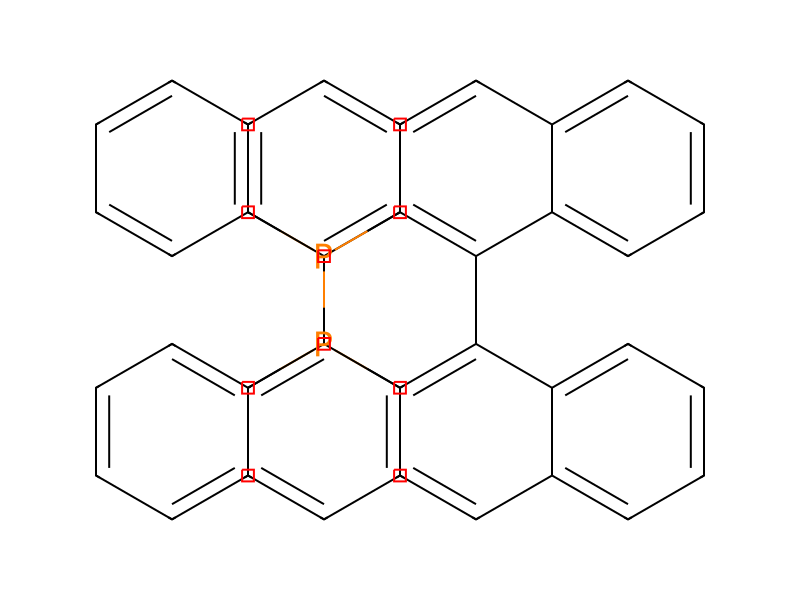
A solution of (±)-trans tert-butyl 2-amino-5,6,8a,9,11,11a-hexahydro-4H-pyrido[3,2,1-ij]pyrrolo[3,4-c]quinoline-10(8H)-carboxylate (100 mg, 0.304 mmol), sodium tert-butoxide (58 mg, 0.608 mmol), and 3-bromo-4-chlorobenzotrifluoride (95 mg, 0.365 mmol) in anhydrous toluene (6 mL) were degassed with argon at 85° C. for 15 min. The solution was cooled slightly, and a mixture of solid Pd2(dba)3 (5.6 mg, 6.1 μmol) and solid BINAP (11 mg, μmol) were added to the solution. The flask was capped under a positive pressure of Ar and heating was continued at 85° C. overnight. After the reaction was complete as evidenced by the lack of starting aniline by TLC analysis, the solution was cooled and diluted with ether. The red slurry was filtered through Celite 521® and concentrated under reduced pressure to give crude N-Boc protected biarylamine as a red oil (101 mg). The crude product was purified by silica gel chromatography on the Isco Combi-flash unit using a 10-g RediSep cartridge and a gradient elution of ethyl acetate in hexanes from 5% to 75%. A CH2Cl2 (4 mL) solution of the N-Boc protected product was cooled to 0° C. and treated with trifluoroacetic acid (TFA) (250 μL). The disappearance of N-Boc protected material was followed by TLC analysis (1:1 hexanes:EtOAc) over 8 h. The TFA solution was then basified with 3 N NaOH to pH >12 and extracted with CH2Cl2. Evaporations of the extracts gave 21 mg of the title compound of EXAMPLE 72 as an off-white powder. 1H NMR (500 MHz, CDCl3) δ 1.26 (br s, 1H), 1.95 (m, 1H), 2.0 (m, 1H), 2.15 (m, 1H), 2.74 (m, 4H), 2.90 (t, 1H, J=1.9 Hz), 3.29 (m, 1H), 3.33 (m, 4H), 3.51 (t, 1H, J=1.9 Hz), 5.96 (s, 1H), 6.52 (s, 1H), 6.69 (s, 1H), 6.86 (m, 1H), 7.07 (s, 1H), 7.34 (m, 1H). LRMS (ES)+: 408 (M+H)+.
Workup
- temperatureThe solution was cooled slightly
- additionwere added to the solution
- customThe flask was capped under a positive pressure of Ar
- temperatureheating
- temperaturethe solution was cooled
- filtrationThe red slurry was filtered through Celite 521®
- concentrationconcentrated under reduced pressure
- customto give crude N-Boc
- customThe crude product was purified by silica gel chromatography on the Isco Combi-flash unit
- washa gradient elution of ethyl acetate in hexanes from 5% to 75%
- additiontreated with trifluoroacetic acid (TFA) (250 μL)
- waitThe disappearance of N-Boc protected material was followed by TLC analysis (1:1 hexanes:EtOAc) over 8 h
- extractionextracted with CH2Cl2
Sources & evidence
- ORD record
- ord-d46a4df5136149ae819fa2503eaf21c9
- Source dataset
- uspto-grants-2004_08
- Patent number
- US06777406B2
Reaction notes
Loading…