Toluene → HCID 178435349, compound
Reaction equation

[C:1]12[CH:24]=[C:22]3[N:23]=[C:19]([CH:20]=[CH:21]3)[CH:18]=[C:16]3[NH:17][C:13]([CH:14]=[CH:15]3)=[CH:12][C:10]3=[N:11][C:7]([CH:8]=[CH:9]3)=[CH:6][C:4]([NH:5]1)=[CH:3][CH:2]=2.[OH-].[Na+].[C:27]1(C)C=CC=C[CH:28]=1>>[C:27]([C:3]1[CH:2]=[C:1]2[CH:24]=[C:22]3[N:23]=[C:19]([CH:18]=[C:16]4[NH:17][C:13](=[CH:12][C:10]5[CH:9]=[CH:8][C:7](=[CH:6][C:4]=1[NH:5]2)[N:11]=5)[CH:14]=[CH:15]4)[CH:20]=[CH:21]3)#[CH:28]Participants


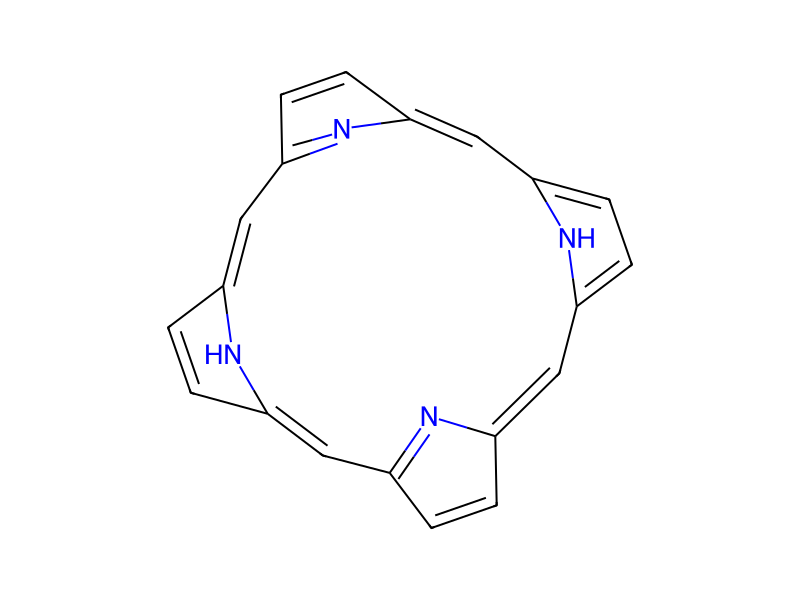

Procedure
In order to obtain the deprotected ethyne, porphyrin 20 was first metalated with zinc (J. Rodriquez et al., J. Chem. Soc. Perkin Trans I 1997, 709-714) under standard conditions giving porphyrin 23 (FIG. 30). Deprotection of the ethyne by refluxing-with sodium hydroxide in toluene (L. Della Ciana and A. Haim, J. Heterocyclic Chem. 1984, 21, 607-608) (98% yield) gave building block 24. Demetalation of 24 with TFA (J. Lindsey et al., Tetrahedron 1994, 50, 8941-8968) afforded free base mono-ethynyl porphyrin 14 in 83% yield (FIG. 30). The metalation step was performed in order to suppress possible decomposition of the free base porphyrin upon exposure to sodium hydroxide. Subsequently, and to our surprise, we found that reaction of porphyrin 20 with sodium hydroxide in refluxing toluene proceeded smoothly to give porphyrin 14 in 90% yield.
Sources & evidence
- ORD record
- ord-c0fdd87f0a024cdab8ff6d2a77f81d2a
- Source dataset
- uspto-grants-2004_08
- Patent number
- US06777516B2
Reaction notes
Loading…