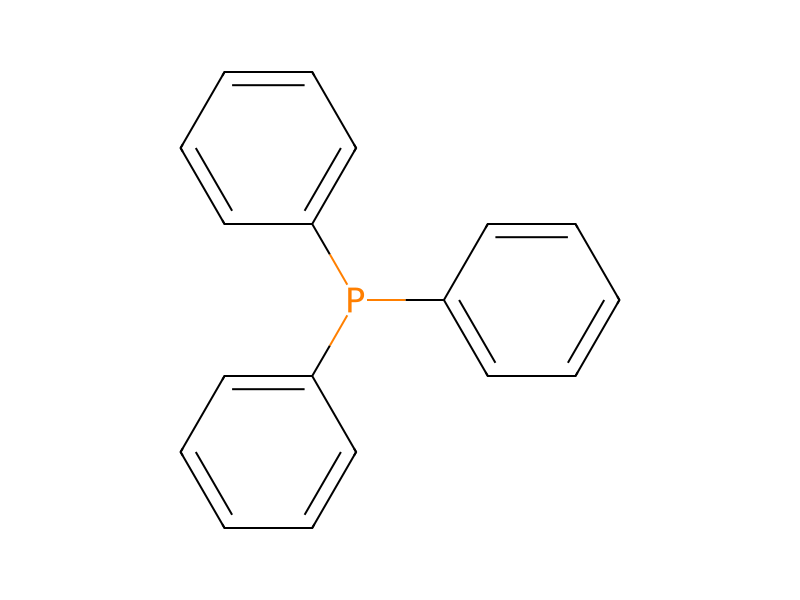
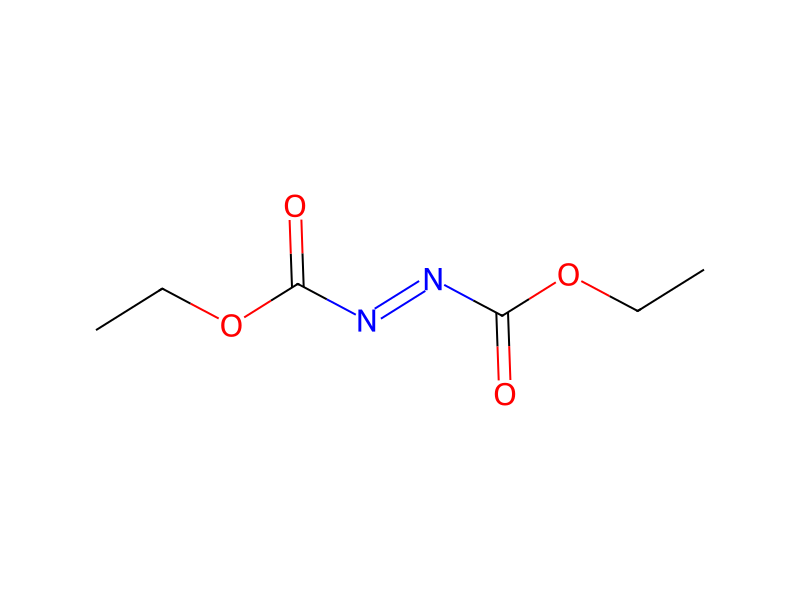
Triphenylphosphine → (S)-4-(4-chloro-2-fluoroanilino)-7-(3-(2-(N,N-dimethylcarbamoyl)pyrrolidin-1-yl)propoxy)-6-methoxyquinazoline hydrochloride
Reaction equation

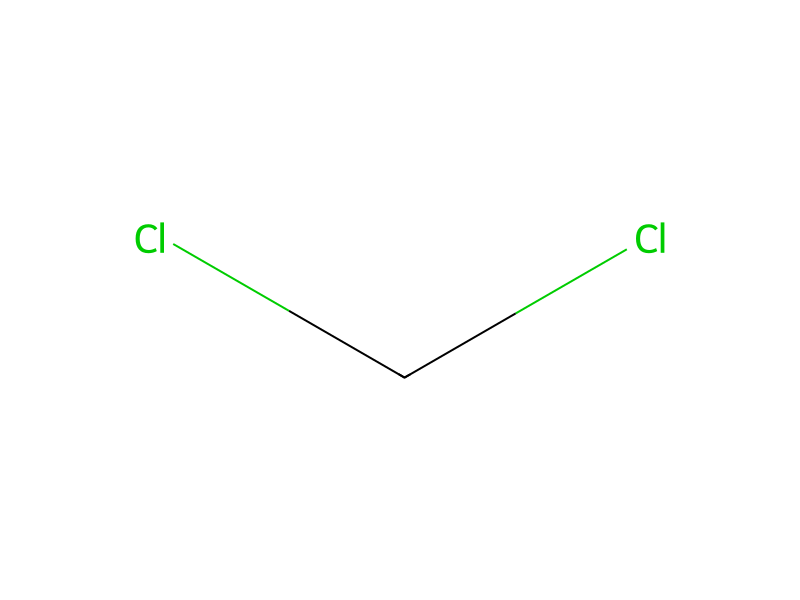
N(C(OCC)=O)=NC(OCC)=O.[Cl:13][C:14]1[CH:33]=[CH:32][C:17]([NH:18][C:19]2[C:28]3[C:23](=[CH:24][C:25]([OH:31])=[C:26]([O:29][CH3:30])[CH:27]=3)[N:22]=[CH:21][N:20]=2)=[C:16]([F:34])[CH:15]=1.C1(P(C2C=CC=CC=2)C2C=CC=CC=2)C=CC=CC=1.O[CH2:55][CH2:56][CH2:57][N:58]1[CH2:62][CH2:61][CH2:60][C@H:59]1[C:63](=[O:67])[N:64]([CH3:66])[CH3:65]>C(Cl)Cl>[ClH:13].[Cl:13][C:14]1[CH:33]=[CH:32][C:17]([NH:18][C:19]2[C:28]3[C:23](=[CH:24][C:25]([O:31][CH2:55][CH2:56][CH2:57][N:58]4[CH2:62][CH2:61][CH2:60][C@H:59]4[C:63](=[O:67])[N:64]([CH3:65])[CH3:66])=[C:26]([O:29][CH3:30])[CH:27]=3)[N:22]=[CH:21][N:20]=2)=[C:16]([F:34])[CH:15]=1Participants
Reactant 4


Product 1

Reagents, catalysts & solvents 1
Conditions
- Temperature
- 0 °C
Procedure
Diethyl azodicarboxylate (0.18 ml, 1.14 mmol) was added dropwise to a mixture of 4-(4-chloro-2-fluoroanilino)-7-hydroxy-6methoxyquinazoline (111 mg, 0.35 mmol), (prepared as described for the starting material in Example 2), triphenylphosphine (312 mg, 1.19 mmol) and (S)-1-(3-hydroxypropyl)-2-(N,N-dimethylcarbamoyl)pyrrolidine (84 mg, 0.42 mmol) in methylene chloride (10 ml) cooled at 0° C. under nitrogen. The mixture was stirred for 15 minutes at 0° C., the mixture was allowed to warm to ambient temperature and was then stirred for 22 hours. Further (S)-1-(3-hydroxypropyl)-2(N,N-dimethylcarbamoyl)pyrrolidine (10 mg, 0.05 mmol), triphenylphosphine (35 mg, 0.13 mmol) and diethyl azodicarboxylate (20 μl, 0.13 mmol) were added and the mixture was stirred for a further 2 hours. The mixture was partitioned between water and methylene chloride and the aqueous phase was adjusted to pH2 with 2M hydrochloric acid. The aqueous layer was separated, adjusted to pH9 with sodium hydrogen carbonate and was extracted with methylene chloride. The combined organic extracts were washed with water and then brine, dried (MgSO4) and the solvent removed by evaporation. The residue was purified by column chromatography on silica eluting with methylene chloride/methanol (85/15 followed by 75/25 and 60/40). The purified product was dissolved in methylene chloride (5 ml) and methanol (1 ml), 3.9M ethereal hydrogen chloride (0.5 ml) was added and the mixture was diluted with ether. The resulting precipitate was collected by filtration, washed with ether, and dried under vacuum to give (S)4(4-chloro2-fluoroanilino)-7(3-(2-(N,N-dimethylcarbamoyl)pyrrolidin-1-yl)propoxy)-6-methoxyquinazoline hydrochloride (86 mg, 32%).
Workup
- custom(prepared
- temperatureto warm to ambient temperature
- stirringwas then stirred for 22 hours
- stirringthe mixture was stirred for a further 2 hours
- customThe mixture was partitioned between water and methylene chloride
- customThe aqueous layer was separated
- extractionwas extracted with methylene chloride
- washThe combined organic extracts were washed with water
- dry with materialbrine, dried (MgSO4)
- customthe solvent removed by evaporation
- customThe residue was purified by column chromatography on silica eluting with methylene chloride/methanol (85/15 followed by 75/25 and 60/40)
- dissolutionThe purified product was dissolved in methylene chloride (5 ml)
- additionmethanol (1 ml), 3.9M ethereal hydrogen chloride (0.5 ml) was added
- additionthe mixture was diluted with ether
- filtrationThe resulting precipitate was collected by filtration
- washwashed with ether
- customdried under vacuum
Sources & evidence
- ORD record
- ord-71e59d4971234fa7afd7c1dc8172c16d
- Source dataset
- uspto-grants-2004_01
- Patent number
- US06673803B2
Reaction notes
Loading…