5-Bromo-2-nitropyridine → [3-(6-Nitro-pyridin-3-yl)-3-aza-bicyclo[3.1.0]hex-1-yl]-carbamic acid tert-butyl ester
Reaction equation

Br[C:2]1[CH:3]=[CH:4][C:5]([N+:8]([O-:10])=[O:9])=[N:6][CH:7]=1.[C:11]12([NH:17][C:18](=[O:24])[O:19][C:20]([CH3:23])([CH3:22])[CH3:21])[CH2:16][CH:15]1[CH2:14][NH:13][CH2:12]2>>[C:20]([O:19][C:18](=[O:24])[NH:17][C:11]12[CH2:16][CH:15]1[CH2:14][N:13]([C:2]1[CH:7]=[N:6][C:5]([N+:8]([O-:10])=[O:9])=[CH:4][CH:3]=1)[CH2:12]2)([CH3:23])([CH3:21])[CH3:22]Participants
3
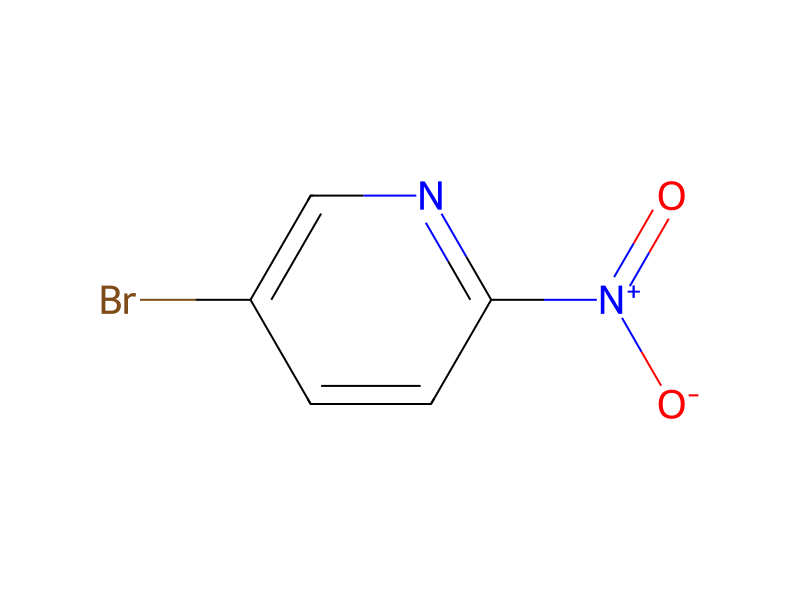


Procedure
Following general N—C coupling procedure 1, 5-bromo-2-nitropyridine (50 mg, 0.246 mmol), was combined with tert-butyl 3-azabicyclo[3.1.0]hexan-1-ylcarbamate (48.8 mg, 0.246 mmol), which gave 75 mg of [3-(6-Nitro-pyridin-3-yl)-3-aza-bicyclo[3.1.0]hex-1-yl]-carbamic acid tert-butyl ester in 95% yield. MS (ESI) m/e (M+H+): 321.3
Sources & evidence
- ORD record
- ord-bbefc9abc47440f89cc191a5458f0042
- Source dataset
- uspto-grants-2015_02
- Patent number
- US08957074B2
Reaction notes
Loading…