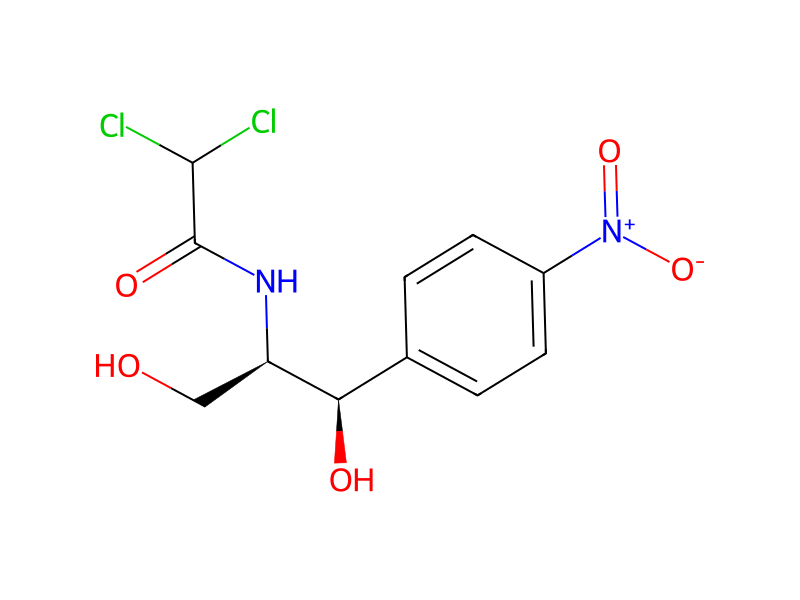
Chloramphenicol → Kanamycin
Reaction equation

C1C([C@@H](O)[C@H](NC(C(Cl)Cl)=O)CO)=CC=C([N+]([O-])=O)C=1.[CH2:21]1[C@H:26]([NH2:27])[C@@H:25]([O:28][C@H:29]2[O:34][C@H:33]([CH2:35][NH2:36])[C@@H:32]([OH:37])[C@H:31]([OH:38])[C@H:30]2[OH:39])[C@H:24]([OH:40])[C@@H:23]([O:41][C@H:42]2[O:47][C@H:46]([CH2:48][OH:49])[C@@H:45]([OH:50])[C@H:44]([NH2:51])[C@H:43]2[OH:52])[C@@H:22]1[NH2:53].Cl>>[CH2:21]1[C@H:26]([NH2:27])[C@@H:25]([O:28][C@H:29]2[O:34][C@H:33]([CH2:35][NH2:36])[C@@H:32]([OH:37])[C@H:31]([OH:38])[C@H:30]2[OH:39])[C@H:24]([OH:40])[C@@H:23]([O:41][C@H:42]2[O:47][C@H:46]([CH2:48][OH:49])[C@@H:45]([OH:50])[C@H:44]([NH2:51])[C@H:43]2[OH:52])[C@@H:22]1[NH2:53]Participants


Procedure
Competent cells of MG1655/pSTV28-Ptac-Ttrp, MG1655/pSTV28-Ptac-IspSK, MG1655/pSTV28-Ptac-IspSM, or further MG1655/pSTV28-Ptac-IspSP strain were prepared, and pMW219-dxs was introduced therein by an electroporation method. The cells were evenly applied onto the LB medium containing 60 mg/L of chloramphenicol and 50 mg/L of kanamycin hydrochloride, and the cells were cultured at 37° C. for 18 hours. Transformants that were resistant to chloramphenicol and kanamycin were obtained from the resulting LB plates. Strains in which pMW219-dxs had been introduced into MG1655/pSTV28-Ptac-Ttrp, MG1655/pSTV28-Ptac-IspSK, MG1655/pSTV28-Ptac-IspSM, or further MG1655/pSTV28-Ptac-IspSP strain were designated as MG1655/pSTV28-Ptac-Ttrp/pMW219-dxs, MG1655/pSTV28-Ptac-IspSK/pMW219-dxs, MG1655/pSTV28-Ptac-IspSM/pMW219-dxs, or further MG1655/pSTV28-Ptac-IspSP/pMW219-dxs strain, respectively.
Workup
- additionpMW219-dxs was introduced
Sources & evidence
- ORD record
- ord-7d276868dc084f64a50bf47f404bae5d
- Source dataset
- uspto-grants-2015_02
- Patent number
- US08962296B2
Reaction notes
Loading…