4-Chloro-4'-isopropylbutyrophenone → 1-Butanone, 1-[4-(1-bromo-1-methylethyl)phenyl]-4-chloro-
Reaction equation

[Cl:1][CH2:2][CH2:3][CH2:4][C:5]([C:7]1[CH:12]=[CH:11][C:10]([CH:13]([CH3:15])[CH3:14])=[CH:9][CH:8]=1)=[O:6].[Br:16]([O-])(=O)=O.[Na+].[Br-].[Na+]>C(Cl)Cl.O.S(S([O-])(=O)=O)([O-])(=O)=O.[Na+].[Na+]>[Br:16][C:13]([C:10]1[CH:9]=[CH:8][C:7]([C:5](=[O:6])[CH2:4][CH2:3][CH2:2][Cl:1])=[CH:12][CH:11]=1)([CH3:15])[CH3:14]Participants
7
Reactant 3


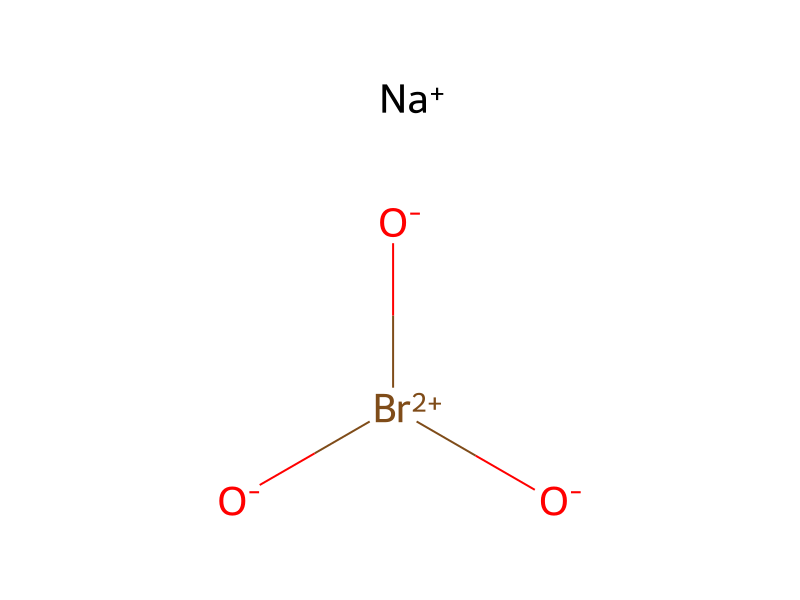
Product 1

Reagents, catalysts & solvents 3



Conditions
- Temperature
- 10 °C
Procedure
Dissolve 4-chloro-1-(4-isopropyl-phenyl)-butan-1-one (74.7 g, 333 mmol) in methylene chloride (250 mL) and add sodium bromate (17.6 g, 117 mmol) in water (75 mL) in a three-necked Morton flask equipped with an overhead stirrer. Cool the solution to 10° C. and irradiate with two 150 W incandescent flood lamps. Add, by dropwise addition, a solution of sodium bromide (24 g, 233 mmol) and stir for 2 hours. Illuminate for another 30 minutes, add sodium dithionate (2.0 g), separate the organic phase, dry (MgSO4) and evaporate the solvent in vacuo to give the title compound (100 g, 99%).
Workup
- customequipped with an overhead stirrer
- customirradiate with two 150 W incandescent flood lamps
- additionAdd, by dropwise addition
- customIlluminate for another 30 minutes
- customseparate the organic phase
- dry with materialdry (MgSO4)
- customevaporate the solvent in vacuo
Sources & evidence
- ORD record
- ord-e4625cfbec054fb29c75d16fe941f212
- Source dataset
- uspto-grants-2000_11
- Patent number
- US06147216
Reaction notes
Loading…