Ammonia → HCID 20393008, compound
Reaction equation

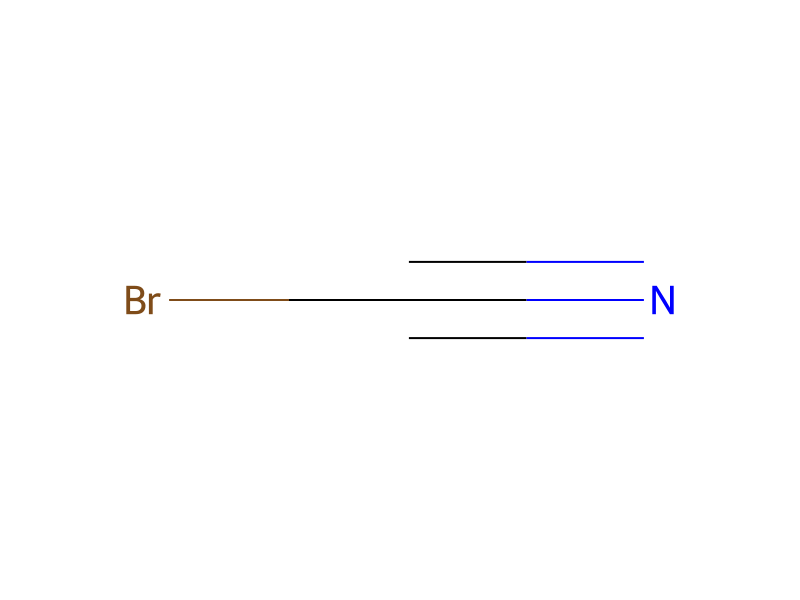
[NH2:1][C:2]1[CH:7]=[C:6]([O:8][CH:9]([CH3:11])[CH3:10])[C:5]([O:12][CH:13]([CH3:15])[CH3:14])=[CH:4][C:3]=1[NH2:16].[N:17]#[C:18]Br.N.C(Cl)(Cl)Cl>CO.O>[NH2:17][C:18]1[NH:16][C:3]2[CH:4]=[C:5]([O:12][CH:13]([CH3:15])[CH3:14])[C:6]([O:8][CH:9]([CH3:11])[CH3:10])=[CH:7][C:2]=2[N:1]=1Participants
Reactant 4



Product 1

Reagents, catalysts & solvents 2


Procedure
A solution of 1,2-diamino-4,5-di-isopropoxybenzene (2.24 g.) in methanol (40 ml.) was added to a mixture of cyanogen bromide (1.6 g.) in water (40 ml.). The mixture was stirred at 20°-25° C. for 70 hours and then basified by addition of an excess of aqueous ammonia solution (density 0.88). The mixture was then separated by filtration and the filtrate evaporated. The residue which was obtained was mixed with water (50 ml.) and chloroform (50 ml.). The chloroform phase was separated, dried (MgSO4) and evaporated. The residual gum obtained, was purified by chromatography on a column of silica gel (40 g.) using methanol-chloroform (1:3 v/v) as eluant, to give 2-amino-5,6-di-isopropoxybenzimidazole as a sticky solid (1.2 g.), having characteristic absorption bands at ν 3400, 3320, 3080, 1660 and 1565 cm-1, in the infra-red (IR) spectrum.
Workup
- customThe mixture was then separated by filtration
- customthe filtrate evaporated
- customThe residue which was obtained
- customThe chloroform phase was separated
- dry with materialdried (MgSO4)
- customevaporated
- customThe residual gum obtained
- customwas purified by chromatography on a column of silica gel (40 g.)
Sources & evidence
- ORD record
- ord-74b706814d4e47a1a40de4a7bb6596e8
- Source dataset
- uspto-grants-1979_09
- Patent number
- US04167569
Reaction notes
Loading…