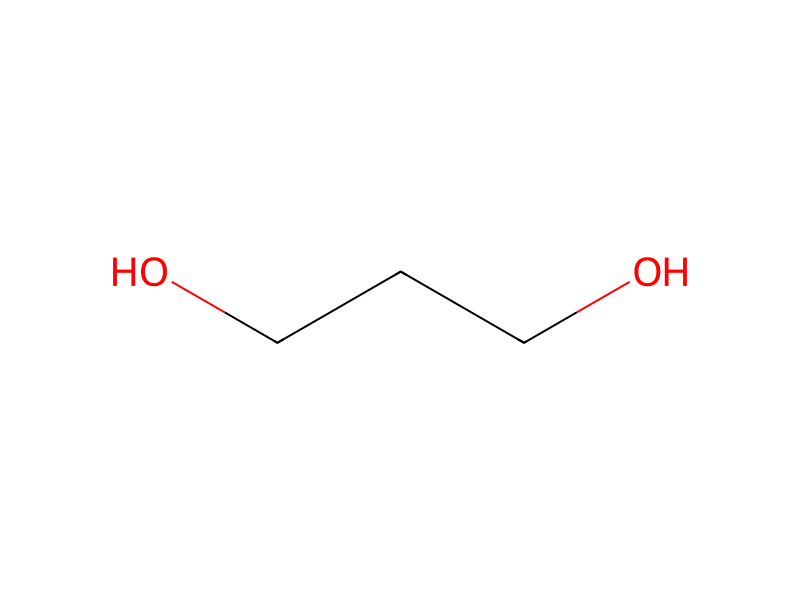
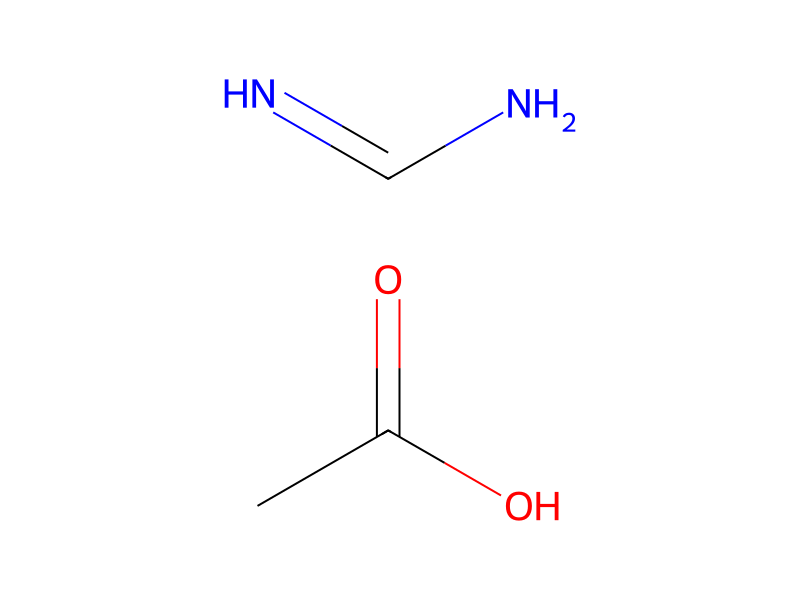
1,3-Propanediol → 7-Fluoroquinazolin-4(3H)-one
Reaction equation

[NH2:1][C:2]1[CH:10]=[C:9]([F:11])[CH:8]=[CH:7][C:3]=1[C:4](O)=[O:5].C(O)CCO.C(O)(=O)C.[CH:21](N)=[NH:22]>>[F:11][C:9]1[CH:10]=[C:2]2[C:3]([C:4](=[O:5])[NH:22][CH:21]=[N:1]2)=[CH:7][CH:8]=1Participants


Conditions
- Temperature
- 120 °C
Procedure
2-Amino-4-fluorobenzoic acid and 1,3-propanediol were stirred together and heated to 120° C. Formamidine acetate was added and the mixture stirred for 3.5 hour to yield 7-fluoroquinazoline-4-one. A solution of potassium hydroxide in 1,3-propanediol was then added to the mixture over a period of 2 hours and 50 minutes, which was then cooled 15° C. Following this, the mixture was heated to 125° C. for 5 hour before cooling to 75° C. Dilute hydrochloric acid (about 6% w/w) was gradually added to the reaction mixture until pH 4.5 was achieved. The mixture was cooled to 0° C. over 6 hour and maintained at that temperature for a further hour prior to isolation of the crude product by centrifugation. The crude material was washed with water and dried in vacuo before dissolving in methanol at gentle reflux and partially concentrating under reduced pressure at a temperature of 42° C. This solution was then cooled to 0° C. over a period of 3 hour and the resultant product was isolated by filtration, prior to drying in vacuo. 7-(3-Hydroxypropoxy)quinazolin-4(3H)-one was recovered in a 73% yield.
Sources & evidence
- ORD record
- ord-bc235c841d954bb48ea4123dbed4476a
- Source dataset
- uspto-grants-2009_12
- Patent number
- US07625910B2
Reaction notes
Loading…