Sodium Hydroxide → Tert-Butylhydroquinone
Reaction equation

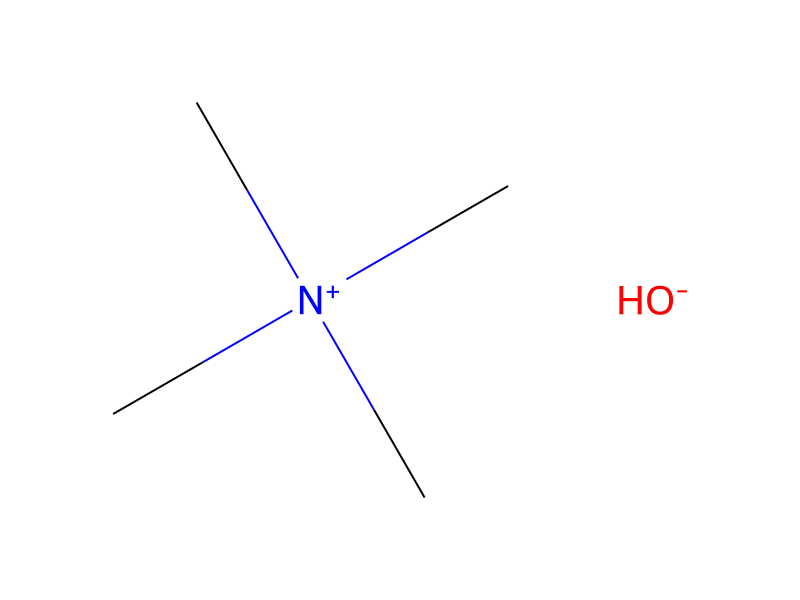
[OH-].C[N+](C)(C)C.[OH-].[Na+].CC(C1C=CC(O)=CC=1)(C1C=CC(O)=CC=1)C.[C:26]([C:30]1[CH:36]=[C:35]([OH:37])[CH:34]=[CH:33][C:31]=1[OH:32])([CH3:29])([CH3:28])[CH3:27]>>[C:26]([C:30]1[CH:36]=[C:35]([OH:37])[CH:34]=[CH:33][C:31]=1[OH:32])([CH3:29])([CH3:27])[CH3:28]Participants



Conditions
- Temperature
- 170 °C
Procedure
An 80/20 (mol/mol) polycarbonate copolymer of tert-butyl hydroquinone and BPA was made via the BMSC/melt reactive extrusion process. The samples were synthesized as follows. A stainless steel stirred tank reactor was charged with 6100 g BPA, 17767 g TBHQ, and 44971 g BMSC to give a molar ratio of [carbonate]/[diol] equal to about 1.017. Also added to the reactor was an aqueous catalyst solution of tetramethylammonium hydroxide (TMAH) and sodium hydroxide (NaOH) in an amount corresponding to 5.0×10⁻⁵ moles TMAH and 4.0×10⁻⁶ moles of NaOH per total number of moles of BPA/TBHQ. The reactor was then evacuated and purged with nitrogen three times to remove residual oxygen and then held at a constant vacuum pressure of 800 mbar. The reactor was then heated to 170° C. in order to melt and react the mixture. After approximately 4 hr 15 min from the start of heating (of the reactor tank), the reactor was pressurized with nitrogen to a constant overpressure of 0.9 bar, and the molten reaction mixture was fed through a 170° C. heat feed-line into an extruder at a rate of about 10 kg/h. 15 minutes before starting the feed to the extruder an aqueous catalyst solution of sodium hydroxide (NaOH) in an amount corresponding to 17.0×10⁻⁶ moles of NaOH per total number of moles of BPA/TBHQ. The extruder is a W&P ZSK25WLE 25 mm 13-barrel twin-screw extruder with an L/D-59. The feed into the extruder comprised a flash-valve to prevent boiling of the molten mixture. The reaction mixture was reactively extruded at a screw speed of 300 rpm. The extruder was equipped with five forward vacuum vents and one back-vent. The methyl salicylate byproduct is removed via devolatilization through these vents. The vacuum pressure of the back-vent was 11 mbar. The vacuum pressure of the first forward vent was 3 mbar. The vacuum pressure of the final four forward vents was less than 1 mbar. This TBHQ/BPA (80/20) copolymer has been made with all the extruder barrels at a temperature of 270° C. and the extruder die head at a temperature of 280° C. The polymer prepared had the following properties: Mw=37351; Mn=17019; and polydispersity=2.19.
Workup
- additionAlso added to the reactor
- customThe reactor was then evacuated
- custompurged with nitrogen three times
- customto remove residual oxygen
- customreact the mixture
- temperatureAfter approximately 4 hr 15 min from the start of heating (of the reactor tank), the reactor
- customthe molten reaction mixture
- customwas fed through a 170° C.
- temperatureheat feed-line into an extruder at a rate of about 10 kg/h
- custom15 minutes
- customThe extruder was equipped with five forward vacuum vents and one back-vent
- customThe methyl salicylate byproduct is removed via devolatilization through these vents
- customat a temperature of 270° C.
- customat a temperature of 280° C
- customThe polymer prepared
Sources & evidence
- ORD record
- ord-cdcf34beb0e9490e926b81023246e1a1
- Source dataset
- uspto-grants-2009_12
- Patent number
- US07629432B2
Reaction notes
Loading…