1-Aminohydantoin hydrochloride → HCID 69030389, compound
Reaction equation

[N:1]([C:4]1[O:8][C:7]([CH:9]=O)=[CH:6][CH:5]=1)=[N+]=[N-].Cl.[NH2:12][N:13]1[CH2:19][C:17](=[O:18])[NH:16][C:14]1=[O:15]>C(O)C.C(O)C.O>[O:15]=[C:14]1[NH:16][C:17](=[O:18])[CH2:19][N:13]1[N:12]=[CH:9][C:7](=[O:8])[CH:6]=[CH:5][C:4]#[N:1]Participants
Reactant 2


Product 1

Reagents, catalysts & solvents 2

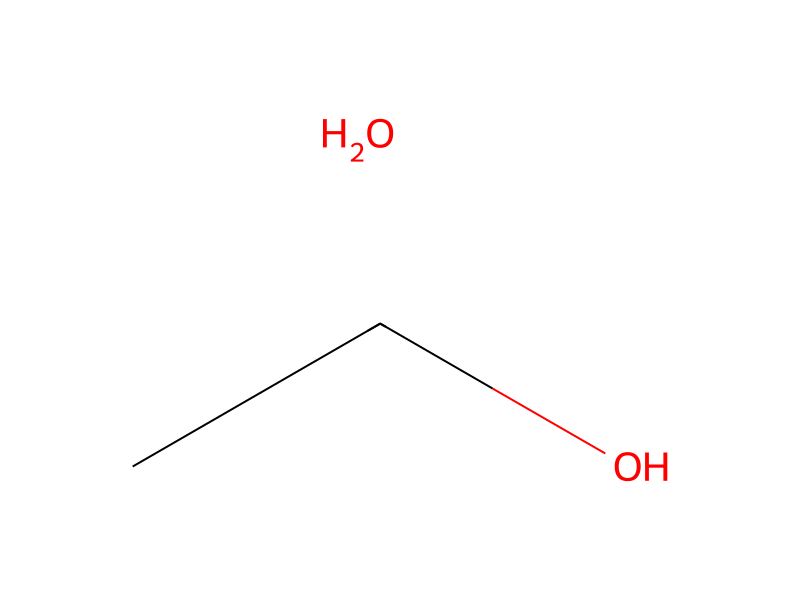
Conditions
- Temperature
- 60 °C
Procedure
A solution of 5-azido-2-furaldehyde (240 mg, 1.75 millimole (mmole)) in 20 milliliters (ml) of ethanol was added dropwise over 10-20 minutes to a solution of 1-aminohydantoin hydrochloride (320 mg, 2.1 mmole) in 25 ml of ethanol:water (4:1) and the mixture was chilled in an ice bath. The reaction mixture turned into a yellow-orange suspension within thirty minutes and was gradually heated to about 60° C. to form a complete solution. The heating continued for another 24 hours after which time it was allowed to cool and evaporated to dryness. The dark residue was triturated with 4-5 portions (15 ml each) of acetonitrile to obtain a suspension which was then filtered through a filter paper. The filtrate was evaporated to dryness. The residue was dissolved in 3 ml of acetone and streaked on two preparative silica gel TLC plates (EM Science, Cat # 5717-7) and developed with ethyl acetate: petroleum ether (3:1). The fast moving major band (Rf around 0.51) detected under UV light was stripped, and the silica gel was ground to a fine powder and eluted with acetone. The acetone eluent was evaporated to give a pale yellow solid which showed a homogeneous single spot on TLC (137 mg, 0.67 mmole, 38% yield). Alternatively the crude reaction product can be purified by silica gel column chromatography and further recrystallized from 30% ethyl acetate/hexanes to give the pure desired product (mp 171-173° C.). Elemental analysis supported a molecular formula of C8H6N4O3. 0.15 EtOAc. The structure of compound 1 was established by 1H and 13C NMR analysis as shown in FIGS. 1-4. 1H NMR analysis of 1 revealed that the acrylonitrile moiety has a trans (E)-configuration (coupling constant J=16.5 Hz). MALDI-TOF mass spectral analysis confirmed structure 1 with the M+1 peak of 207.22
Workup
- temperaturethe mixture was chilled in an ice bath
- waitThe reaction mixture turned into a yellow-orange suspension within thirty minutes
- customto form a complete solution
- temperatureto cool
- customevaporated to dryness
- customThe dark residue was triturated with 4-5 portions (15 ml each) of acetonitrile
- customto obtain a suspension which
- filtrationwas then filtered through a filter paper
- customThe filtrate was evaporated to dryness
- dissolutionThe residue was dissolved in 3 ml of acetone
- washeluted with acetone
- customThe acetone eluent was evaporated
- customto give a pale yellow solid which
- customAlternatively the crude reaction product
- customcan be purified by silica gel column chromatography
- customfurther recrystallized from 30% ethyl acetate/hexanes
Sources & evidence
- ORD record
- ord-9b5ff9792f02426da8078c5332f3a27a
- Source dataset
- uspto-grants-2009_12
- Patent number
- US07632928B2
Reaction notes
Loading…