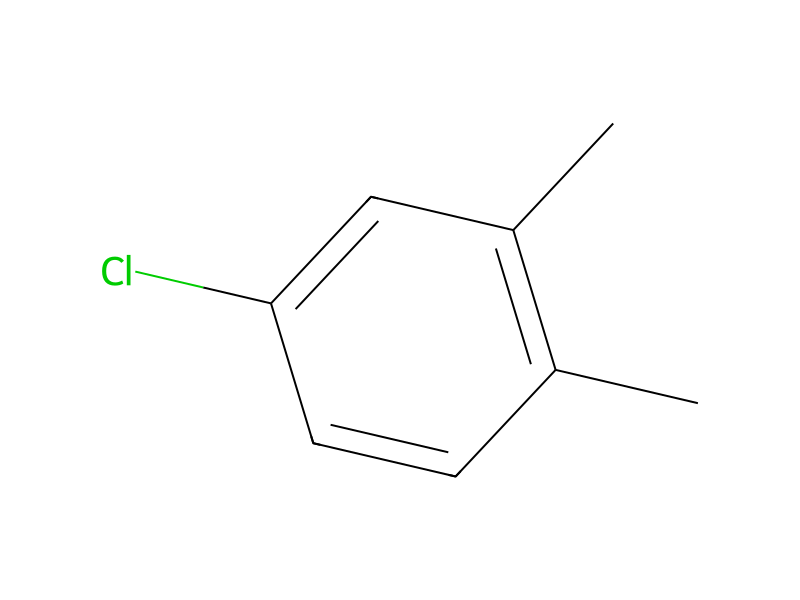
4-Chloro-o-xylene → HCID 18696680, compound
Reaction equation

[Cl:1][C:2]1[CH:3]=[C:4]([CH3:9])[C:5]([CH3:8])=[CH:6][CH:7]=1.[CH3:10][C:11]([CH3:18])([C:15](Cl)=[O:16])[C:12](Cl)=[O:13].[Al+3].[Cl-].[Cl-].[Cl-]>ClCCl>[Cl:1][C:2]1[CH:3]=[C:4]([CH3:9])[C:5]([CH3:8])=[C:6]2[C:7]=1[C:15](=[O:16])[C:11]([CH3:18])([CH3:10])[C:12]2=[O:13]Participants
5
Reactant 3


Product 1

Reagents, catalysts & solvents 1

Procedure
To a mixture of 35.5 ml of 4-chloro-o-xylene and 29.84 g of dimethylmalonyl chloride in 150 ml of dry dichloromethane was added slowly 34.7 g of AlCl3 under the current of nitrogen gas at -10° C. The reaction mixture was stirred at room temperature for 2 hours, quenched with 200 g of ice, and separated the organic layer. The aqueous layer was extracted with dichloromethane. The combined organic layer was dried over anhydrous magnesium sulfate, filtered and evaporated under reduced pressure. The residue was purified by silica-gel column chromatography to afford 34.99 g of the title compound as yellow solid.
Workup
- customquenched with 200 g of ice
- customseparated the organic layer
- extractionThe aqueous layer was extracted with dichloromethane
- dry with materialThe combined organic layer was dried over anhydrous magnesium sulfate
- filtrationfiltered
- customevaporated under reduced pressure
- customThe residue was purified by silica-gel column chromatography
Sources & evidence
- ORD record
- ord-b3f21784b0d7430d8b970bda37694360
- Source dataset
- uspto-grants-2000_08
- Patent number
- US06096930
Reaction notes
Loading…