Isoprene → HCID 19842620, compound
Reaction equation

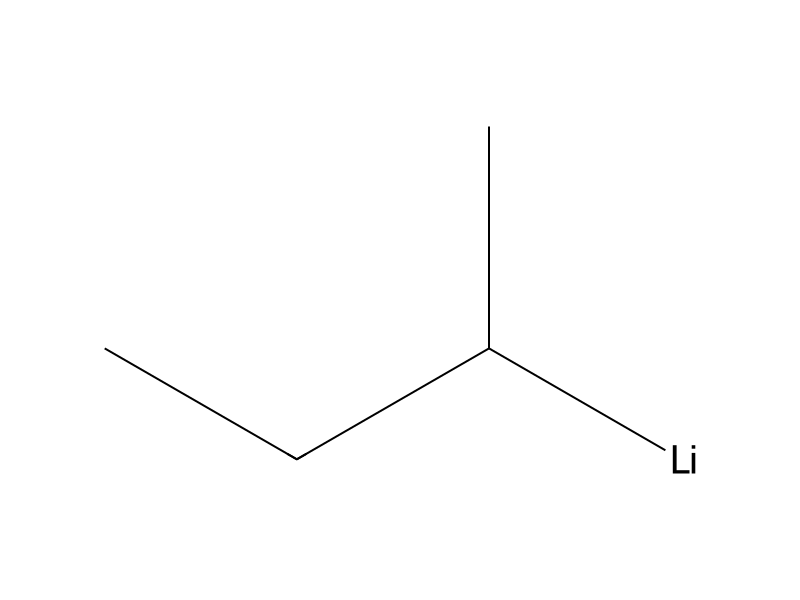
[CH2:1]=[CH:2][C:3]1[CH:8]=[CH:7][CH:6]=[CH:5][CH:4]=1.C([Li])(CC)C.[CH2:14]=[CH:15][C:16](=[CH2:18])[CH3:17].C=CC(=C)C.[CH2:24]=[CH:25][C:26]1[CH:31]=[CH:30][CH:29]=[CH:28][CH:27]=1>C1CCCCC1>[CH2:1]=[CH:2][C:3]1[CH:8]=[CH:7][CH:6]=[CH:5][CH:4]=1.[CH2:14]=[CH:15][C:16](=[CH2:17])[CH3:18].[CH2:24]=[CH:25][C:26]1[CH:31]=[CH:30][CH:29]=[CH:28][CH:27]=1Participants
Reactant 4


Product 1

Reagents, catalysts & solvents 1

Conditions
- Temperature
- 60 °C
Procedure
To a 2.6 liter autoclave were charged 1900 ml of cyclohexane and 88.1 gm of styrene monomer. The mixture was heated to 60° C. and 3.7 ml of a 1.4 molar solution of sec-butyllithium initiator in cyclohexane was added. After 40 minutes, when analysis of the reaction mixture indicated that polymerization of the styrene monomer was complete, the reaction temperature was reduced to 50° C., and 116.7 gm of isoprene was added. After 45 minutes, no unreacted isoprene was detected. The living styrene-isoprene diblock polymer was then coupled to form a styrene-isoprene-styrene triblock polymer by adding 32.0 ml of 0.12M 1,2-dibromoethane in cyclohexane over a period of 11 minutes. Analysis of the product by gel-permeation chromatography (GPC) indicated that the triblock polymer had a peak molecular weight of 76,800, and contained approximately 12% residual diblock. From the proton NMR spectrum of the product, it was determined that it contained 41.7 wt. % styrene. The solvent was removed from the polymer solution under vacuum at 90° C.
Workup
- customwas reduced to 50° C.
- waitAfter 45 minutes
Sources & evidence
- ORD record
- ord-79199ad2da624389bf315a6b0e8b3fa5
- Source dataset
- uspto-grants-1992_09
- Patent number
- US05143968
Reaction notes
Loading…