Formaldehyde → 3-Hydroxy-2,2-dimethylpropyl hydroxypivalate
Reaction equation

[CH2:1]=[O:2].[CH:3](=[O:7])[CH:4]([CH3:6])[CH3:5].CN(C)C>C(O)=O>[OH:7][CH2:3][C:4]([CH3:1])([CH3:6])[C:5]([O:2][CH2:1][C:4]([CH3:6])([CH3:5])[CH2:3][OH:7])=[O:2]Participants
Reactant 3


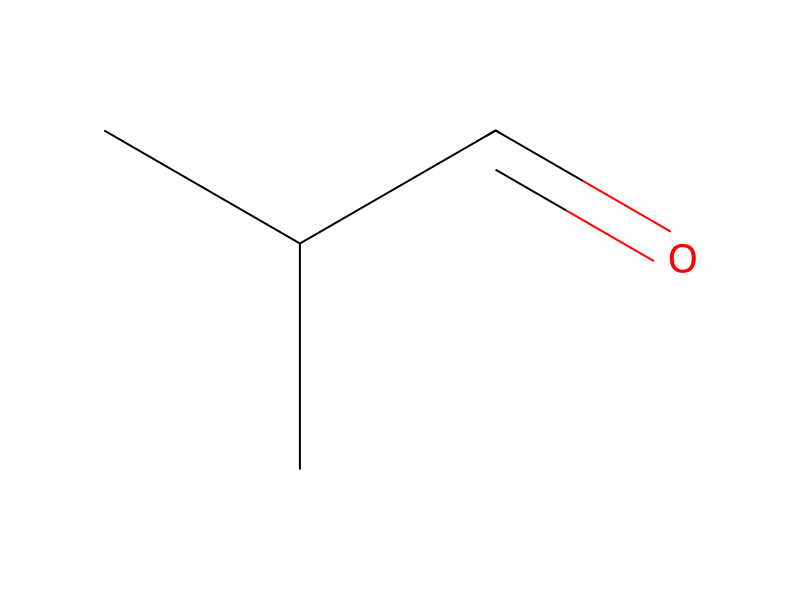
Product 1

Reagents, catalysts & solvents 1

Conditions
- Temperature
- 60 °C
Procedure
101 g (1.25 mol) of 37% strength aqueous formaldehyde solution and 99 g (1.37 mol) of isobutyraldehyde were mixed at 40° C. under nitrogen with 4.2 g (0.03 mol) of 40% strength aqueous trimethylamine solution by stirring. The temperature of the mixture rose to 93° to 94° in the course of from 15 to 20 minutes. The mixture was stirred at that temperature for a further 10 minutes, and the trimethylamine, excess isobutyraldehyde and 58 g of water were then distilled off under reduced pressure. The remaining solution of hydroxypivalinaldehyde was then cooled down to 60° C., and 1.9 g (0.025 mol) of finely pulverulent calcium hydroxide were then added with vigorous stirring. After the exothermic reaction had ceased and a further, short period of stirring, 2.5 g (0.054 mol) of 100% strength formic acid were added at 70° C., and the mixture was stirred 70° C. for 10 minutes. The aqueous phase was then separated off, and the organic phase was subjected to fractional distillation. 110 g (0.54 mol) were isolated of 2,2-dimethyl-1,3-propanediol hydroxypivalate, corresponding to 86.5% of theory, based on starting formaldehyde.
Workup
- customrose to 93° to 94° in the course of from 15 to 20 minutes
- stirringThe mixture was stirred at that temperature for a further 10 minutes
- distillationthe trimethylamine, excess isobutyraldehyde and 58 g of water were then distilled off under reduced pressure
- addition1.9 g (0.025 mol) of finely pulverulent calcium hydroxide were then added with vigorous stirring
- customAfter the exothermic reaction
- stirringa further, short period of stirring
- stirringthe mixture was stirred 70° C. for 10 minutes
- customThe aqueous phase was then separated off
- distillationthe organic phase was subjected to fractional distillation
Sources & evidence
- ORD record
- ord-34359c4966084c9f859c27d79cb23210
- Source dataset
- uspto-grants-1989_06
- Patent number
- US04837357
Reaction notes
Loading…