Pyridine → Triethoxy(3-isocyanatopropyl)silane
Reaction equation

[C:1](Cl)(Cl)=[O:2].[CH2:5]([O:7][Si:8]([O:16][CH2:17][CH3:18])([O:13][CH2:14][CH3:15])[CH2:9][CH2:10][CH2:11][NH2:12])[CH3:6].N1C=CC=CC=1>C(OCC)C>[CH2:14]([O:13][Si:8]([O:16][CH2:17][CH3:18])([O:7][CH2:5][CH3:6])[CH2:9][CH2:10][CH2:11][N:12]=[C:1]=[O:2])[CH3:15]Participants
5
Reactant 3


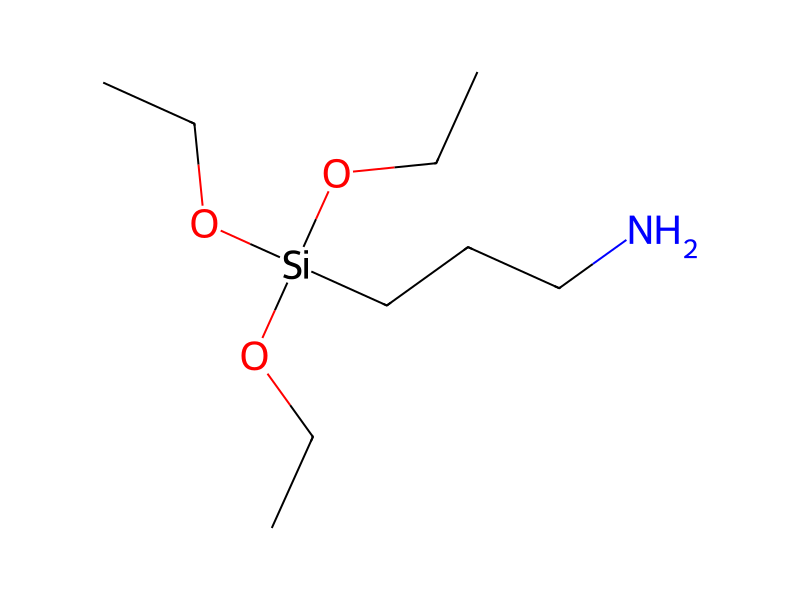
Product 1

Reagents, catalysts & solvents 1

Procedure
In 150 ml of ethyl ether was dissolved 9.9 g of carbonyl chloride, and a solution of 22.1 g of γ-triethoxysilylpropylamine and 18.2 g of pyridine in 50 ml of ethyl ether was dropped into the above solution at -5° C. to -10° C. over a period of 3 hours to effect reaction. After the reaction, the crystal of pyridine hydrochloride was removed by filtration and the filtrate was distilled to recover ethyl ether, whereby 17.3 g of γ-triethoxysilylpropyl isocyanate was obtained as a fraction having a boiling point of 95° C. to 100° C. under 8 mmHg.
Workup
- customreaction
- customAfter the reaction
- customthe crystal of pyridine hydrochloride was removed by filtration
- distillationthe filtrate was distilled
- customto recover ethyl ether
Sources & evidence
- ORD record
- ord-15c8711211a54f6faac01c8e81fc3cb0
- Source dataset
- uspto-grants-1987_03
- Patent number
- US04654428
Reaction notes
Loading…