Chloroform → 1-(2-bromoethyl)-5-(bromomethyl)-3-nitro-1H-pyrazole
Reaction equation

[Br:1][CH2:2][CH2:3][N:4]1[C:8]([CH2:9]O)=[CH:7][C:6]([N+:11]([O-:13])=[O:12])=[N:5]1.C(Cl)(Cl)Cl.P(Br)(Br)[Br:19]>C(Cl)Cl>[Br:1][CH2:2][CH2:3][N:4]1[C:8]([CH2:9][Br:19])=[CH:7][C:6]([N+:11]([O-:13])=[O:12])=[N:5]1Participants

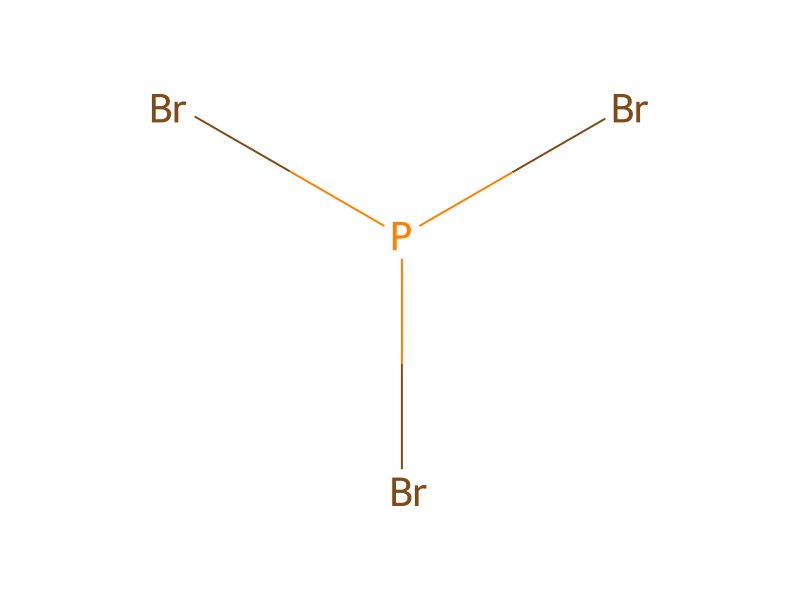



Conditions
- Temperature
- -5 °C
Procedure
A 500-mL three-necked round-bottomed, flask equipped with a magnetic stirrer, nitrogen inlet and reflux condenser was purged with nitrogen and charged with (1-(2-bromoethyl)-3-nitro-1H-pyrazol-5-yl)methanol (37.0 g, 148 mmol) and chloroform (160 mL). The reaction was cooled to −5° C. using an ice/acetone bath and phosphorous tribromide (40.0 g, 148 mmol) was added portionwise. The cooling bath was removed and the reaction stirred at reflux for 2 h. After this time, the reaction was cooled to −5° C. and saturated aqueous sodium bicarbonate (250 mL) was added until a pH of 8.5 was reached. The mixture was extracted with ethyl acetate (3×150 mL) and the combined organic layers were washed with saturated aqueous sodium carbonate (2×50 mL), brine (75 mL), dried over sodium sulfate and the drying agent was removed by filtration. The filtrate was concentrated under reduced pressure to afford a yellow residue that was dissolved with gentle heating in methylene chloride (60 mL). Hexanes (approximately 20 mL) was added and the solution became cloudy. The mixture was heated until a solid precipitate formed, methylene chloride (9 mL) was added and the solution became clear. The solution was left to cool to room temperature and after 4 h the resulting crystals were collected by vacuum filtration. The filter cake was washed with a ice cold 1:2 mixture of methylene chloride:hexanes (2×20 mL) to afford 1-(2-bromoethyl)-5-(bromomethyl)-3-nitro-1H-pyrazole (19.7 g). The combined filtrates were evaporated and the procedure was performed again to afford an additional 9.70 g of 1-(2-bromoethyl)-5-(bromomethyl)-3-nitro-1H-pyrazole. The solids were combined and dried under high vacuum for 18 h to afford a 57% yield (26.0 g) of 1-(2-bromoethyl)-5-(bromomethyl)-3-nitro-1H-pyrazole as white crystals: mp 95-97° C.; 1H NMR (300 MHz, CDCl3) δ 6.93 (s, 1H), 4.63 (t, 2H, J=6.0 Hz), 4.54 (s, 214), 3.86 (t, 2H, J=6.0 HZ).
Workup
- customA 500-mL three-necked round-bottomed, flask equipped with a magnetic stirrer, nitrogen inlet
- temperaturereflux condenser
- customwas purged with nitrogen
- customThe cooling bath was removed
- temperatureat reflux for 2 h
- temperatureAfter this time, the reaction was cooled to −5° C.
- additionsaturated aqueous sodium bicarbonate (250 mL) was added until a pH of 8.5
- extractionThe mixture was extracted with ethyl acetate (3×150 mL)
- washthe combined organic layers were washed with saturated aqueous sodium carbonate (2×50 mL), brine (75 mL)
- dry with materialdried over sodium sulfate
- customthe drying agent was removed by filtration
- concentrationThe filtrate was concentrated under reduced pressure
- customto afford a yellow residue that
- dissolutionwas dissolved
- temperatureThe mixture was heated until a solid precipitate
- customformed
- waitThe solution was left
- temperatureto cool to room temperature and after 4 h the resulting crystals
- filtrationwere collected by vacuum filtration
- washThe filter cake was washed with a ice cold 1:2 mixture of methylene chloride
Sources & evidence
- ORD record
- ord-33552e0933824bce9fc9f9d0b8b06378
- Source dataset
- uspto-grants-2013_12
- Patent number
- US08598174B2
Reaction notes
Loading…