1-Bromo-2-Chloroethane → 1-(2-Chloroethyl)-4-(3,4-dichlorophenyl)piperazine
Reaction equation

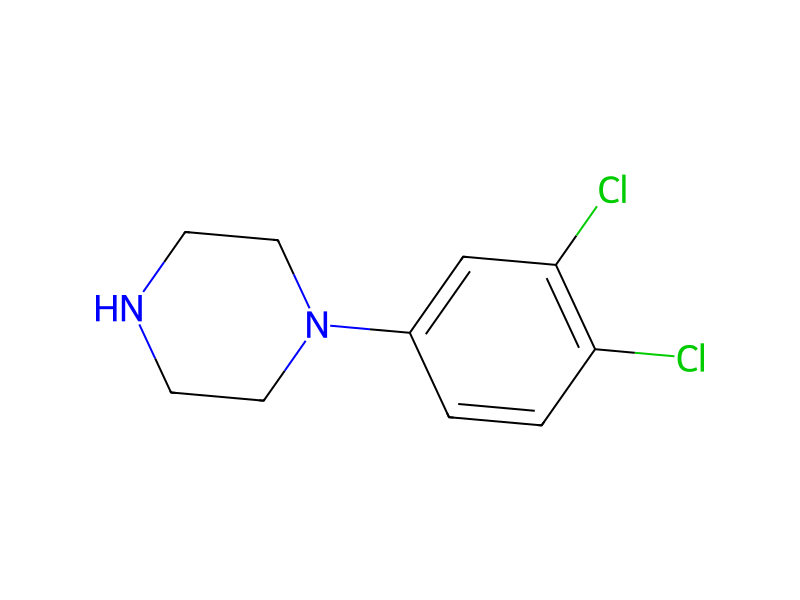
[Cl:1][C:2]1[CH:3]=[C:4]([N:9]2[CH2:14][CH2:13][NH:12][CH2:11][CH2:10]2)[CH:5]=[CH:6][C:7]=1[Cl:8].[OH-].[Na+].Br[CH2:18][CH2:19][Cl:20]>CS(C)=O>[Cl:20][CH2:19][CH2:18][N:12]1[CH2:13][CH2:14][N:9]([C:4]2[CH:5]=[CH:6][C:7]([Cl:8])=[C:2]([Cl:1])[CH:3]=2)[CH2:10][CH2:11]1Participants
5




Procedure
A mixture of (3,4-dichlorophenyl)piperazine (500 mg) and powdered sodium hydroxide (87 mg) in DMSO (5 mL) was treated with 2-bromo-1-chloroethane (387 mg) and stirred at ambient temperature for 16 hours. The reaction was poured into ice cold water (15 mL) and stirred for 0.5 hours. A solid mass formed and was separated by decanting the water. The aqueous layer was extracted with dichloromethane (5 mL). The solid mass was dissolved with dichloromethane (5 mL) and the combined organics were dried with sodium sulfate, filtered and the solvent removed under vacuum. Flash chromatography (dichloromethane:methanol 1:0 to 10:1) yielded an oil (230 mg) as the titled compound.
Workup
- stirringstirred for 0.5 hours
- customA solid mass formed
- customwas separated
- customby decanting the water
- extractionThe aqueous layer was extracted with dichloromethane (5 mL)
- dissolutionThe solid mass was dissolved with dichloromethane (5 mL)
- dry with materialthe combined organics were dried with sodium sulfate
- filtrationfiltered
- customthe solvent removed under vacuum
Sources & evidence
- ORD record
- ord-b4462ccafec74b5bb474c18f6dc4c928
- Source dataset
- uspto-grants-2013_12
- Patent number
- US08598180B2
Reaction notes
Loading…