1,4-Dibromobenzene → 2,5-Dibromobenzenesulfonyl chloride
Reaction equation

[Br:1][C:2]1[CH:7]=[CH:6][C:5]([Br:8])=[CH:4][CH:3]=1.[Cl:9][S:10](O)(=[O:12])=[O:11]>>[Br:1][C:2]1[CH:7]=[CH:6][C:5]([Br:8])=[CH:4][C:3]=1[S:10]([Cl:9])(=[O:12])=[O:11]Participants

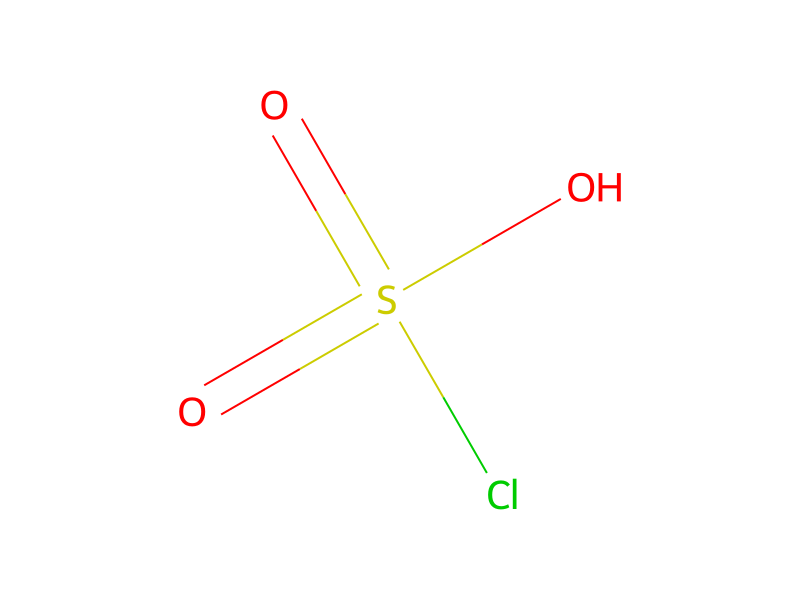

Conditions
- Temperature
- 90 °C
Procedure
A modification of the published procedures of Moroni et al. in Macromolecules 1994, 27, 562 was used. A 300 mL round-bottom flask equipped with a reflux condenser, stirring bar, and gas inlet was charged with 1,4-dibromobenzene (50 g, 0.21 moles) and chlorosulfonic acid (100 mL). The mixture was heated to 90° C. for 2 hours under nitrogen to give a clear solution. The solution was cooled to room temperature and carefully poured onto ice (1 kg) to give a precipitate. The solids were collected by vacuum filtration, washed well with water, and air dried on the filter then dried under vacuum at 50° C. to give 68.36 g. The product was recrystallized from cyclohexane after treating with decolorizing carbon, collected by vacuum filtration, and dried at 50° C. under vacuum to give 55.37 g (79% yield) of 2,5-dibromobenzenesulfonyl chloride. 1H NMR (CDCl3): 7.66 (dd, 8.4, 2.3 Hz, 1H), 7.72 (d, 8.4 Hz, 1H), 8.30 (d, 2.3 Hz, 1H).
Workup
- customA 300 mL round-bottom flask equipped with a reflux condenser
- customto give a clear solution
- temperatureThe solution was cooled to room temperature
- additioncarefully poured onto ice (1 kg)
- customto give a precipitate
- filtrationThe solids were collected by vacuum filtration
- washwashed well with water, and air
- customdried on the
- filtrationfilter
- customthen dried under vacuum at 50° C.
- customto give 68.36 g
- customThe product was recrystallized from cyclohexane
- additionafter treating with decolorizing carbon
- filtrationcollected by vacuum filtration
- customdried at 50° C. under vacuum
Sources & evidence
- ORD record
- ord-30b435fb6af747e29b40e6467bb224ab
- Source dataset
- uspto-grants-2013_12
- Patent number
- US08609804B2
Reaction notes
Loading…