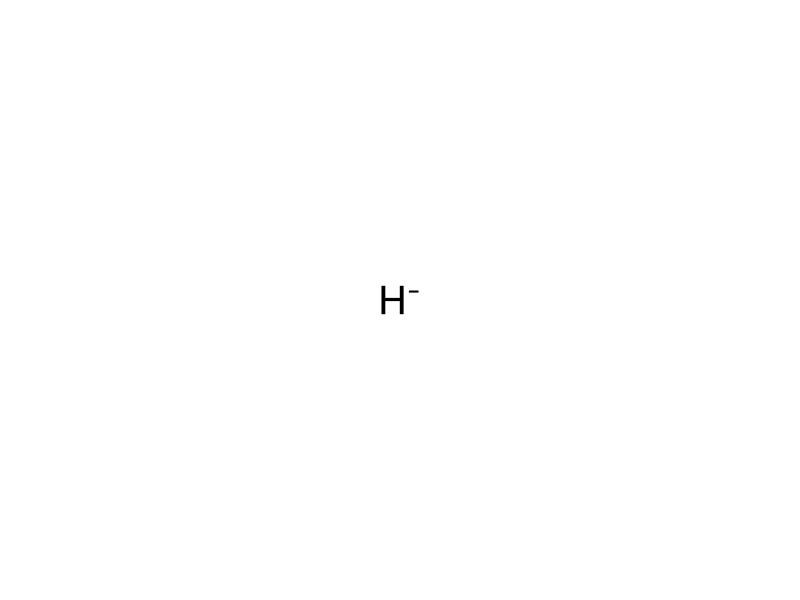
Hydride → (S)-3-Chloro-1-(thiophen-2-yl)propan-1-ol
Reaction equation

[H-].ClCC(=O)CC1SC=CC=1.[Cl:12][CH2:13][CH2:14][CH:15]([C:17]1[S:18][CH:19]=[CH:20][CH:21]=1)[OH:16]>>[Cl:12][CH2:13][CH2:14][C@@H:15]([C:17]1[S:18][CH:19]=[CH:20][CH:21]=1)[OH:16]Participants


Procedure
In this example, thiophene is used as the starting material to be acylated by Friedel-Crafts reaction so as to form 3-chloro-1-(2-thienyl)-propanone. Hydride reduction of this propanone forms racemic 3-chloro-1-(2-thienyl)-propan-1-ol. Racemic 3-chloro-1-(2-thienyl)-propan-1-ol is then resolved via enzymatic transesterification to form (S)-(−)-3-chloro-1-(2-thienyl)-propan-1-ol. Subsequently, the resulting chiral chloropropanol is aminated to form (S)-(−)-3-methylamino-1-(2-thienyl)-propan-1-ol with methylamine. In this process, the yield of enzymatic resolution is very low (35%). In addition, large excess, 20 equivalents, of methylamine is required for the amination reaction and the overall yield is low (24%), which renders this process economically less competitive.
Sources & evidence
- ORD record
- ord-db71678f82d247d2beb5a5d274e55989
- Source dataset
- uspto-grants-2012_05
- Patent number
- US08168805B2
Reaction notes
Loading…