Isopropyl Acetate → 4-Fluoro-3-(trifluoromethylsulfonyl)benzenesulfonyl chloride
Reaction equation

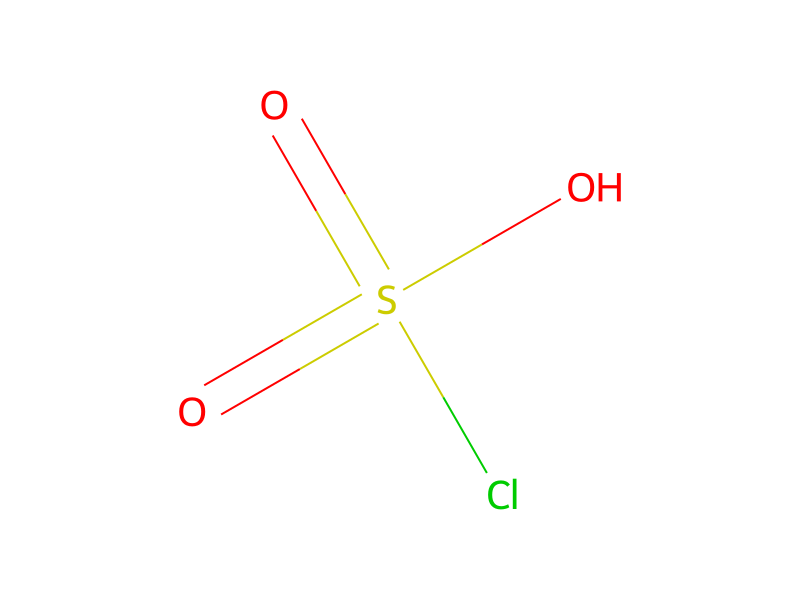
[F:1][C:2]1[CH:7]=[CH:6][CH:5]=[CH:4][C:3]=1[S:8]([C:11]([F:14])([F:13])[F:12])(=[O:10])=[O:9].[Cl:15][S:16](O)(=[O:18])=[O:17].S(Cl)(Cl)=O.C(OC(C)C)(=O)C>O>[F:1][C:2]1[CH:7]=[CH:6][C:5]([S:16]([Cl:15])(=[O:18])=[O:17])=[CH:4][C:3]=1[S:8]([C:11]([F:12])([F:13])[F:14])(=[O:9])=[O:10]Participants





Conditions
- Temperature
- 120 °C
Procedure
EXAMPLE 13 (80 g) was charged to a reactor fitted with overhead stirrer, nitrogen inlet, condenser, scrubber, temperature probe and heating bath. Chlorosulfonic acid (307 g) was added slowly through an additional funnel. The mixture was then heated up to 120° C. and held for 22 hours at 120° C. The mixture was cooled down to room temperature. Thionyl chloride (118 g) was added to the reaction mixture in one portion at ambient temperature. The mixture was stirred at 25° C. for 24 hours. A sample was pulled and HPLC showed the reaction was completed with 1.1% of the sulfonic acid left. Isopropyl acetate (775 g) was cooled down to −50° C. Water (600 g) was charged to isopropyl acetate solution. The reaction mixture was transferred slowly to the isopropyl acetate/ice mixture through an additional funnel. The internal temperature increased to 0.8° C. during the addition. The cold reaction mixture was warmed up 15° C. and layers were separated. The organic layer was used in the next step (EXAMPLE 15) without isolation.
Workup
- customfitted with overhead stirrer, nitrogen inlet, condenser
- temperaturescrubber, temperature probe and heating bath
- temperatureThe mixture was cooled down to room temperature
- waitleft
- temperatureThe internal temperature increased to 0.8° C. during the addition
- customThe cold reaction mixture
- temperaturewas warmed up 15° C.
- customlayers were separated
Sources & evidence
- ORD record
- ord-5d3d2c5771ba44bbbe56e6008f84aabd
- Source dataset
- uspto-grants-2012_05
- Patent number
- US08168784B2
Reaction notes
Loading…