Ammonia → HCID 178511881, compound
Reaction equation

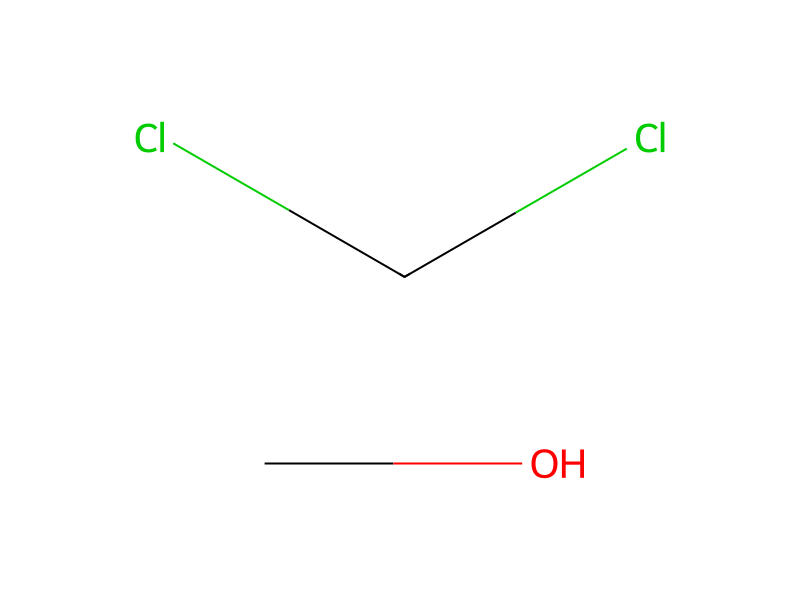
[NH2:1][C:2]1[CH:3]=[C:4]2[C:9](=[CH:10][CH:11]=1)[N:8]([CH2:12][CH2:13][N:14]1[CH2:19][CH2:18][CH2:17][CH2:16][CH2:15]1)[C:7](=[O:20])[CH2:6][CH2:5]2.I.[S:22]1[CH:26]=[CH:25][CH:24]=[C:23]1[C:27](SC)=[NH:28].N>CCO.CO.C(Cl)Cl>[O:20]=[C:7]1[CH2:6][CH2:5][C:4]2[C:9](=[CH:10][CH:11]=[C:2]([NH:1][C:27]([C:23]3[S:22][CH:26]=[CH:25][CH:24]=3)=[NH:28])[CH:3]=2)[N:8]1[CH2:12][CH2:13][N:14]1[CH2:15][CH2:16][CH2:17][CH2:18][CH2:19]1Participants



Procedure
A solution of 6-amino-1-(2-(piperidin-1-yl)ethyl)-3,4-dihydroquinolin-2(1H)-one (225 mg, 0.82 mmol) in 10 mL EtOH was treated with methyl thiophene-2-carbimidothioate hydroiodide (470 mg, 1.65 mmol) and stirred overnight at room temperature. A TLC analysis indicated that the starting amine is still present. An additional 235 mg of methyl thiophene-2-carbimidothioate hydroiodide was added and stirring was continued for 1 day. Argon was bubbled through the mixture for 20 minutes then it was concentrated to give a brownish oil. This residue was partitioned between CH2Cl2 (50 mL) with 10% MeOH and saturated sodium bicarbonate (20 mL). The aqueous layer was extracted with an additional 50 mL CH2Cl2. The combined organic layers were washed with brine, dried over sodium sulfate and concentrated to give a brown residue which was subjected to flash chromatography on silica gel using 5% MeOH/CH2Cl2 to 10% 2M NH3 in MeOH/CH2Cl2 to give a yellow solid which contained a mixture of starting amine and the desired product. This mixture was then subjected to preparative TLC using 10% MeOH:10% Et3N:80% EtOAc as eluant. A small amount of product was obtained in pure form (analyzed by HPLC). This compound was converted to the dihydrochloride salt by dissolving in 10 mL of a 10% MeOH/CH2Cl2 solution, cooled to 0° C. and treated with 0.5 mL of a 1M HCl in Et2O solution. The solution was stirred for 20 minutes then concentrated to give a yellow-brown oil. A yellow solid was obtained after drying under high vacuum overnight. Yield: 12 mg of compound 1. HPLC analysis indicated that the product is >99% pure. 1H-NMR (MeOH-d4) δ: 8.08-8.05 (m, 2H), 7.40-7.38 (m, 4H), 4.42 (t, J=6.7 Hz, 2H), 3.77-3.73 (m, 2H), 3.41 (t, J=6.7 Hz, 2H), 3.32-3.02 (m, 4H), 2.76-2.72 (m, 2H), 2.00-1.53 (m, 6H); MS (ESI): 383.2 (M+1), 30%, 192.1 (M+2), 100%. ESI-HRMS calculated for C21H27N4OS (MH+): 383.1900, Observed: 383.1908.
Workup
- stirringstirring
- waitwas continued for 1 day
- customArgon was bubbled through the mixture for 20 minutes
- concentrationit was concentrated
- customto give a brownish oil
- customThis residue was partitioned between CH2Cl2 (50 mL) with 10% MeOH and saturated sodium bicarbonate (20 mL)
- extractionThe aqueous layer was extracted with an additional 50 mL CH2Cl2
- washThe combined organic layers were washed with brine
- dry with materialdried over sodium sulfate
- concentrationconcentrated
- customto give a brown residue which
- customto give a yellow solid which
Sources & evidence
- ORD record
- ord-ba3e1ee71104492cbd702cfe71a2174e
- Source dataset
- uspto-grants-2012_05
- Patent number
- US08173813B2
Reaction notes
Loading…