Pyridine → HCID 59180461, compound
Reaction equation

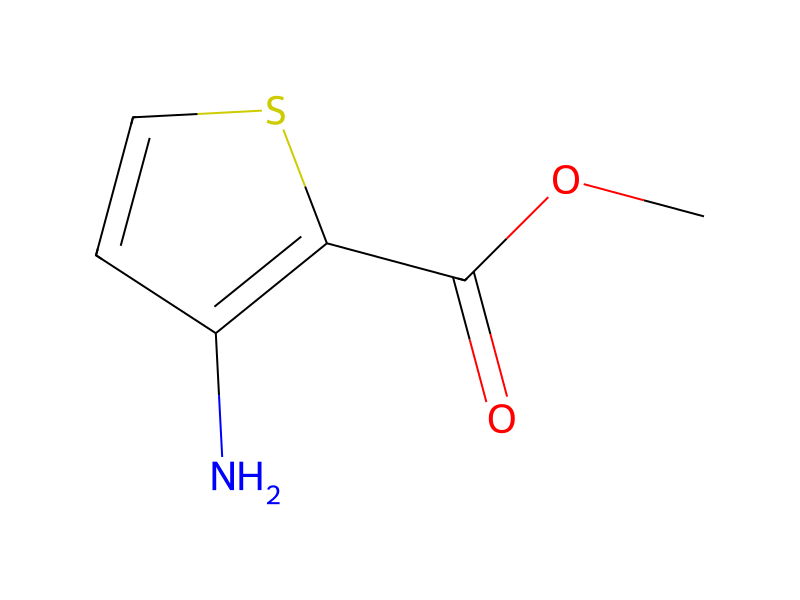
[N:1]1([C:6]2[CH:11]=[CH:10][C:9]([S:12](Cl)(=[O:14])=[O:13])=[CH:8][CH:7]=2)[CH:5]=[CH:4][CH:3]=[N:2]1.[NH2:16][C:17]1[CH:21]=[CH:20][S:19][C:18]=1[C:22]([O:24][CH3:25])=[O:23].N1C=CC=CC=1>ClCCl>[N:1]1([C:6]2[CH:11]=[CH:10][C:9]([S:12]([NH:16][C:17]3[CH:21]=[CH:20][S:19][C:18]=3[C:22]([O:24][CH3:25])=[O:23])(=[O:14])=[O:13])=[CH:8][CH:7]=2)[CH:5]=[CH:4][CH:3]=[N:2]1Participants
Reactant 3


Product 1

Reagents, catalysts & solvents 1

Procedure
To a solution of 4-(1H-pyrazol-1-yl)benzene-1-sulfonyl chloride (0.5 g; 2.0 mmol) in dichloromethane (4.5 mL) at room temperature, was added methyl 3-aminothiophene-2-carboxylate (0.27 g; 1.7 mmol) followed by pyridine (0.27 g; 3.4 mmol) and then stirred at room temperature under a nitrogen atmosphere for 24 hours. The reaction mixture was concentrated under reduced pressure and then taken up in ethyl acetate (50 mL) and washed with water. The aqueous layer separated and extracted with ethyl acetate (2×50 mL). The combined organic phases were successively washed with water and aqueous saturated sodium chloride, dried over magnesium sulfate, filtered and concentrated under reduced pressure. The crude residue was recrystallized from ethyl acetate/hexanes (1:9, v/v) to yield the title product as a tan/yellow solid (404 mg).
Workup
- concentrationThe reaction mixture was concentrated under reduced pressure
- washwashed with water
- customThe aqueous layer separated
- extractionextracted with ethyl acetate (2×50 mL)
- washThe combined organic phases were successively washed with water and aqueous saturated sodium chloride
- dry with materialdried over magnesium sulfate
- filtrationfiltered
- concentrationconcentrated under reduced pressure
- customThe crude residue was recrystallized from ethyl acetate/hexanes (1:9, v/v)
Sources & evidence
- ORD record
- ord-2eeae8598da54c0e90ccf3bd85c2e152
- Source dataset
- uspto-grants-2012_05
- Patent number
- US08178699B2
Reaction notes
Loading…