Hexane → Zifrosilone
Reaction equation

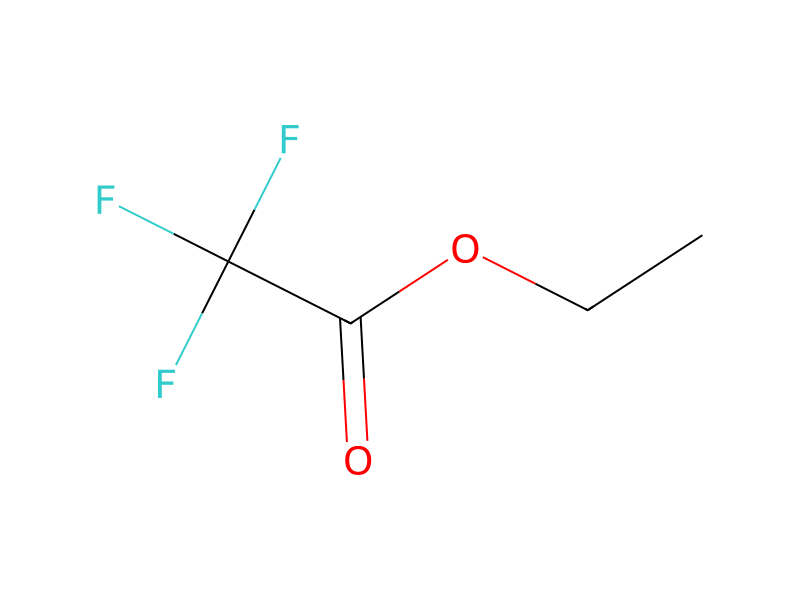
[CH3:1][Si:2]([CH3:11])([CH3:10])[C:3]1[CH:4]=[C:5](Br)[CH:6]=[CH:7][CH:8]=1.C([Li])CCC.CCCCCC.C([O:25][C:26](=O)[C:27]([F:30])([F:29])[F:28])C>C(OCC)C.C1CCCCC1.C(OCC)C>[F:28][C:27]([F:30])([F:29])[C:26]([C:5]1[CH:6]=[CH:7][CH:8]=[C:3]([Si:2]([CH3:11])([CH3:10])[CH3:1])[CH:4]=1)=[O:25]Participants






Conditions
- Temperature
- -78 °C
Procedure
To a solution of 3-trimethylsilyl-bromobenzene (7.62 g, 33.3 mmol) in diethyl ether (35 ml) was added at 0° C. 1.5M n-butyllithium in hexane (22.2 ml, 33.3 mmol) over 10 min. Then the mixture was allowed to react 15 min at room temperature, cooled to -78° C. and ethyltrifluoroacetate (14.2 g, 100 mmol) was added over 5 min. Then the mixture was allowed to react 15 min at -78° C., the cooling bath was removed and when the temperature rose to 0° C. 3N HCl (35 ml) was added dropwise. The organic layer was separated, washed with water, brine, dried over MgSO4 and concentrated. Chromatography (silica gel, cyclohexane/diethyl ether: 90/10) followed by distillation under reduced pressure afforded the expected compound as a colorless oil (4.32 g, 53% yield), b.p. 120° C., Rf: 0.28 (cyclohexane/diethyl ether: 95/5).
Workup
- customto react 15 min at room temperature
- customto react 15 min at -78° C.
- customthe cooling bath was removed
- customrose to 0° C
- addition3N HCl (35 ml) was added dropwise
- customThe organic layer was separated
- washwashed with water, brine
- dry with materialdried over MgSO4
- concentrationconcentrated
- distillationChromatography (silica gel, cyclohexane/diethyl ether: 90/10) followed by distillation under reduced pressure
Sources & evidence
- ORD record
- ord-7f1371f063b945518115580ca4601ce9
- Source dataset
- uspto-grants-1997_12
- Patent number
- US05693668
Reaction notes
Loading…