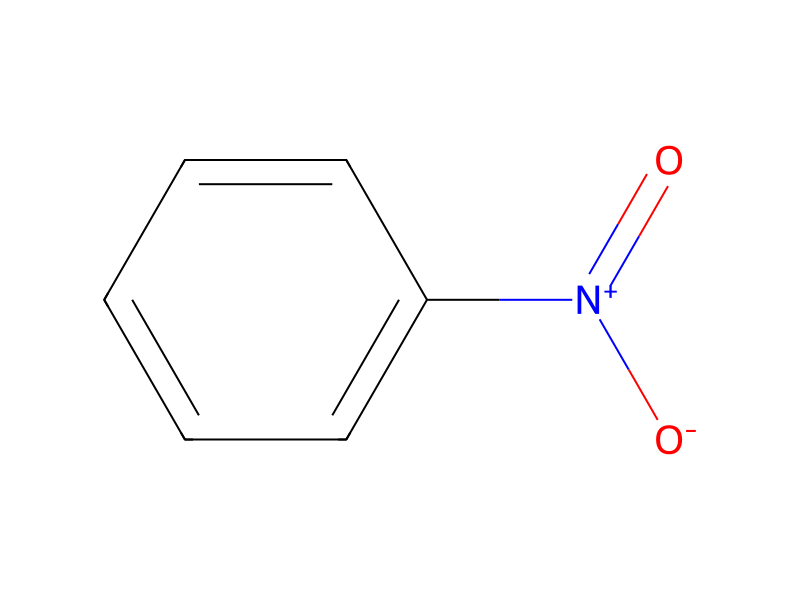
Nitrobenzene → HCID 21460010, compound
Reaction equation

[CH3:1][C:2]1[S:3][CH:4]=[CH:5][C:6]=1[CH3:7].[N+]([C:11]1C=CC=CC=1)([O-])=O.C[CH:18]1[CH:24]([CH3:25])[CH2:23][C:22](=[O:26])[O:21][C:19]1=[O:20].[Cl-].[Al+3].[Cl-].[Cl-]>>[CH3:1][C:2]1[S:3][C:4]([C:22](=[O:26])[CH2:23][C:24]([CH3:25])([CH3:11])[CH2:18][C:19]([OH:21])=[O:20])=[CH:5][C:6]=1[CH3:7]Participants



Procedure
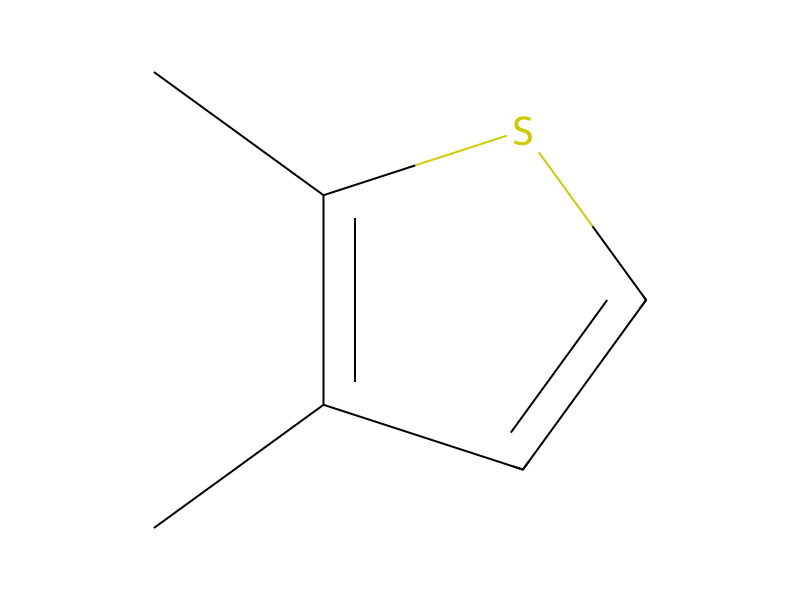
40 g (0.355 mol) of 2,3-dimethylthiophene, 630 ml of nitrobenzene and 55.5 g (0.390 mol) of 2,3-dimethylglutaric anhydride are introduced into a 2 liter three-necked flask fitted with a mechanical stirrer. The mixture is brought to 0° C. and 71 g (0.532 mol) of aluminum chloride are added in portions while maintaining the temperature below 5° C. After 10 hours' stirring at room temperature, the mixture is hydrolysed with water/ice/concentrated HCl (500 g/500 g/170 ml) for 15 minutes. The nitrobenzene is then stripped off with steam and the residue is extracted 3 times with 100 ml of CH2Cl2 each time. The combined organic phases are washed with dilute HCl and then with H2O, dried over MgSO4, rendered colourless with carbon black and concentrated to yield 73.4 g of 2,3-dimethyl-5-(4-carboxy-3,3-dimethylbutanoyl)thiophene in the form of a pale yellow oil, yield: 81%.
Workup
- customfitted with a mechanical stirrer
- customis brought to 0° C.
- temperaturewhile maintaining the temperature below 5° C
- extractionthe residue is extracted 3 times with 100 ml of CH2Cl2 each time
- washThe combined organic phases are washed with dilute HCl
- dry with materialwith H2O, dried over MgSO4
- concentrationconcentrated
Sources & evidence
- ORD record
- ord-dc258e873b174a44867849f9e3263553
- Source dataset
- uspto-grants-1997_12
- Patent number
- US05703074
Reaction notes
Loading…