Ammonium Chloride → (RS)-5-(3-bromo-phenyl)-5-(4-difluoromethoxy-3-methyl-phenyl)-5,6-dihydro-2H-[1,4]oxazin-3-ylamine
Reaction equation

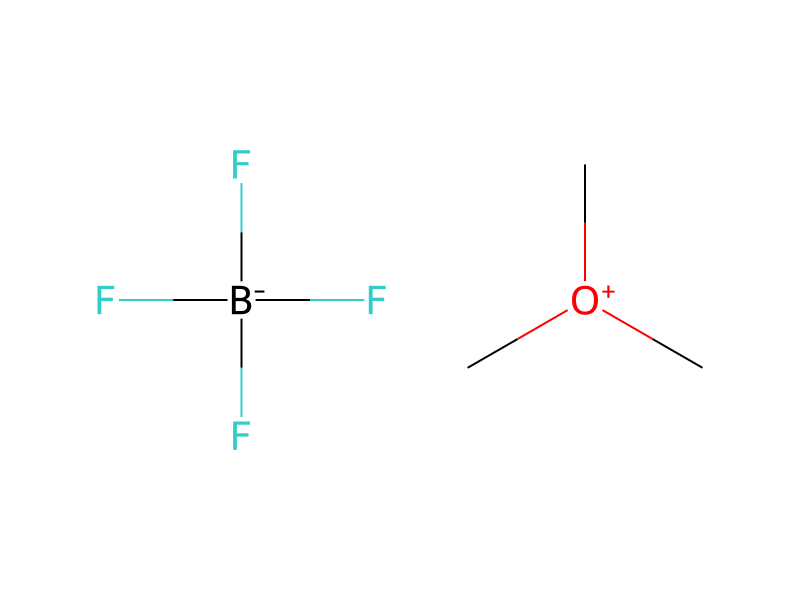
[Br:1][C:2]1[CH:3]=[C:4]([C:8]2([C:15]3[CH:20]=[CH:19][C:18]([O:21][CH:22]([F:24])[F:23])=[C:17]([CH3:25])[CH:16]=3)[NH:13][C:12](=O)[CH2:11][O:10][CH2:9]2)[CH:5]=[CH:6][CH:7]=1.F[B-](F)(F)F.C[O+](C)C.[Cl-].[NH4+:36]>ClCCl>[Br:1][C:2]1[CH:3]=[C:4]([C:8]2([C:15]3[CH:20]=[CH:19][C:18]([O:21][CH:22]([F:24])[F:23])=[C:17]([CH3:25])[CH:16]=3)[CH2:9][O:10][CH2:11][C:12]([NH2:36])=[N:13]2)[CH:5]=[CH:6][CH:7]=1Participants
Reactant 3


Product 1

Reagents, catalysts & solvents 1

Procedure
In a vacuum dried flask under an argon atmosphere, a solution of (RS)-5-(3-bromo-phenyl)-5-(4-difluoromethoxy-3-methyl-phenyl)-morpholin-3-one (2.5 g, 1 eq) in dichloromethane (80 ml) was treated with trimethyloxonium tetrafluoroborate (2.7 g, 3 eq). The reaction mixture was stirred at room temperature overnight. The incomplete reaction was then washed with a saturated solution of sodium hydrogen carbonate (50 ml). The organic layer was dried over sodium sulfate and evaporated. The crude was dissolved in methanol (15 ml) and the solution transferred under an nitrogen atmosphere into a dried pressure tube. After the addition of ammonium chloride (0.182 g, 3.4 mmol) the sealed pressure tube was heated at 100° C. for 16 hours. After cooling, the reaction mixture was filtered and evaporated to dryness, taken up with dichloromethane (30 ml) and filtered again. The solvent was removed and the residue was passed through a SCX (50 g) cartridge, washing with a mixture of dichloromethane and methanol. The product was recovered eluting with a solution of ammonia (2M) in methanol. 1.45 g of the (RS)-5-(3-bromo-phenyl)-5-(4-difluoromethoxy-3-methyl-phenyl)-5,6-dihydro-2H-[1,4]oxazin-3-ylamine were obtained as a white solid (58% of theory). MS (ISP): m/z=412.9 [M+H]+.
Workup
- customIn a vacuum dried flask under an argon atmosphere
- customThe incomplete reaction
- washwas then washed with a saturated solution of sodium hydrogen carbonate (50 ml)
- dry with materialThe organic layer was dried over sodium sulfate
- customevaporated
- dissolutionThe crude was dissolved in methanol (15 ml)
- customthe solution transferred under an nitrogen atmosphere into a dried pressure tube
- temperaturewas heated at 100° C. for 16 hours
- temperatureAfter cooling
- filtrationthe reaction mixture was filtered
- customevaporated to dryness
- filtrationfiltered again
- customThe solvent was removed
- washwashing with a mixture of dichloromethane and methanol
- customThe product was recovered
- washeluting with a solution of ammonia (2M) in methanol
Sources & evidence
- ORD record
- ord-b93c2cb4d7c446d0a94378115f3f5d96
- Source dataset
- uspto-grants-2013_03
- Patent number
- US08399459B2
Reaction notes
Loading…