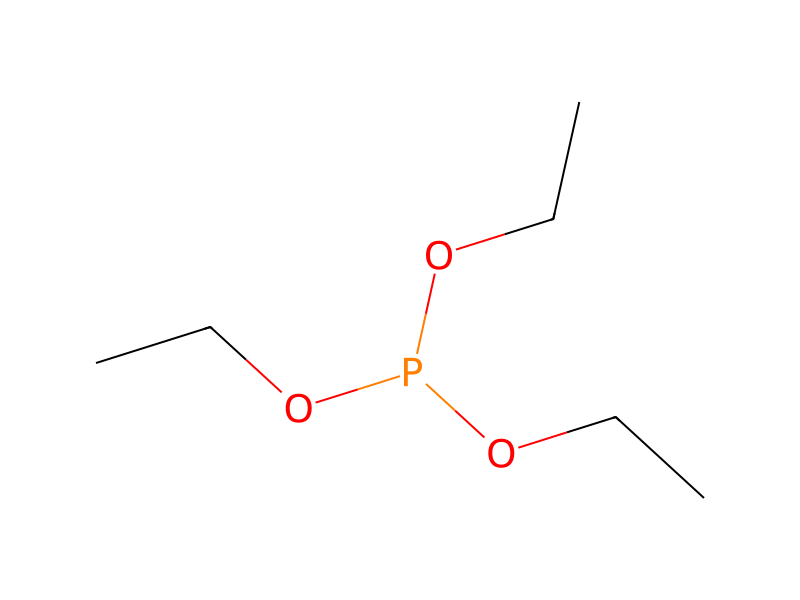
Triethyl phosphite → Diethyl 3-chloro-4-nitrobenzylphosphonate
Reaction equation

Br[CH2:2][C:3]1[CH:8]=[CH:7][C:6]([N+:9]([O-:11])=[O:10])=[C:5]([Cl:12])[CH:4]=1.[P:13]([O:20]CC)([O:17][CH2:18][CH3:19])[O:14][CH2:15][CH3:16]>>[Cl:12][C:5]1[CH:4]=[C:3]([CH:8]=[CH:7][C:6]=1[N+:9]([O-:11])=[O:10])[CH2:2][P:13](=[O:20])([O:17][CH2:18][CH3:19])[O:14][CH2:15][CH3:16]Participants
3


Procedure
A solution of 4-(bromomethyl)-2-chloro-1-nitrobenzene (Compound 104D, 2.9 g, 12 mmol) in triethyl phosphite (2.6 mL, 15 mmol) was stirred at 120° C. for 16 h under nitrogen. The reaction mixture was concentrated in vacuo and the residue was purified on an Isco Combiflash eluting with 50 to 90% EtOAc in heptane to afford the title compound. MS (ES+): m/z: 308.0416 [MH+]. HPLC: tR=1.33 min (UPLC TOF MS: polar—3 min).
Workup
- concentrationThe reaction mixture was concentrated in vacuo
- customthe residue was purified on an Isco Combiflash
- washeluting with 50 to 90% EtOAc in heptane
Sources & evidence
- ORD record
- ord-5fe10d04729d4626a27a7b8d5ce9829f
- Source dataset
- uspto-grants-2013_03
- Patent number
- US08399433B2
Reaction notes
Loading…