Chloroacetyl chloride → 1-(5-Bromo-2-hydroxyphenyl)-2-chloroethanone
Reaction equation

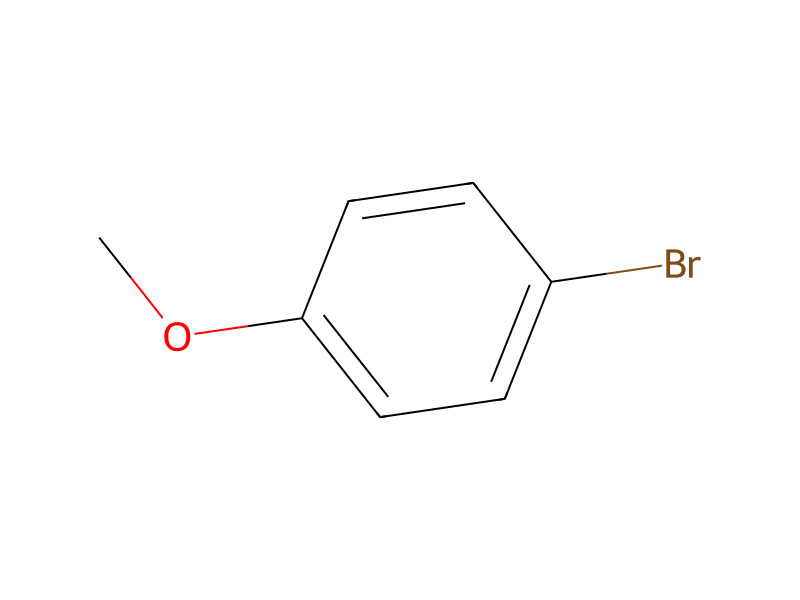
[Cl-].[Cl-].[Cl-].[Al+3].[Br:5][C:6]1[CH:11]=[CH:10][C:9]([O:12]C)=[CH:8][CH:7]=1.[Cl:14][CH2:15][C:16](Cl)=[O:17]>C(Cl)Cl>[Br:5][C:6]1[CH:7]=[CH:8][C:9]([OH:12])=[C:10]([C:16](=[O:17])[CH2:15][Cl:14])[CH:11]=1Participants
Reactant 3


Product 1

Reagents, catalysts & solvents 1

Procedure
35.3 g (264.6 mmol) of aluminium trichloride are added in portions to a solution of 10 ml (80.2 mmol) of 4-bromoanisole and 18.5 ml (232.6 mmol) of chloroacetyl chloride in 90 ml of methylene chloride at a temperature less than 30° C., and the resultant reaction mixture is heated under reflux for six hours. 100 ml of ice-water are subsequently carefully added to the reaction mixture with ice-cooling, the organic phase is separated, the aqueous phase is washed twice with 50 ml of methylene chloride each time, the combined organic phases are then washed with 50 ml of water and dried over sodium sulfate. Filtering-off of the desiccant and stripping-off of the solvent gives 11.7 g of 1-(5-bromo-2-hydroxyphenyl)-2-chloroethanone as beige solid; m.p. 79° C. (lit. m.p. 80-82° C.).
Workup
- customthe resultant reaction mixture
- temperatureis heated
- temperatureunder reflux for six hours
- temperaturecooling
- customthe organic phase is separated
- washthe aqueous phase is washed twice with 50 ml of methylene chloride each time
- washthe combined organic phases are then washed with 50 ml of water
- dry with materialdried over sodium sulfate
Sources & evidence
- ORD record
- ord-01c5cc87d2cb4d98bb13178a7728c689
- Source dataset
- uspto-grants-2013_03
- Patent number
- US08399509B2
Reaction notes
Loading…