Bromide ion → (6-Phenylhexyl)phosphonic acid
Reaction equation

Br[CH2:2][CH2:3][CH2:4][CH2:5][CH2:6][CH2:7][C:8]1[CH:13]=[CH:12][CH:11]=[CH:10][CH:9]=1.[P:14]([O:21]CC)([O:18]CC)[O:15]CC.[Br-]>>[C:8]1([CH2:7][CH2:6][CH2:5][CH2:4][CH2:3][CH2:2][P:14](=[O:15])([OH:21])[OH:18])[CH:13]=[CH:12][CH:11]=[CH:10][CH:9]=1Participants
4



Procedure
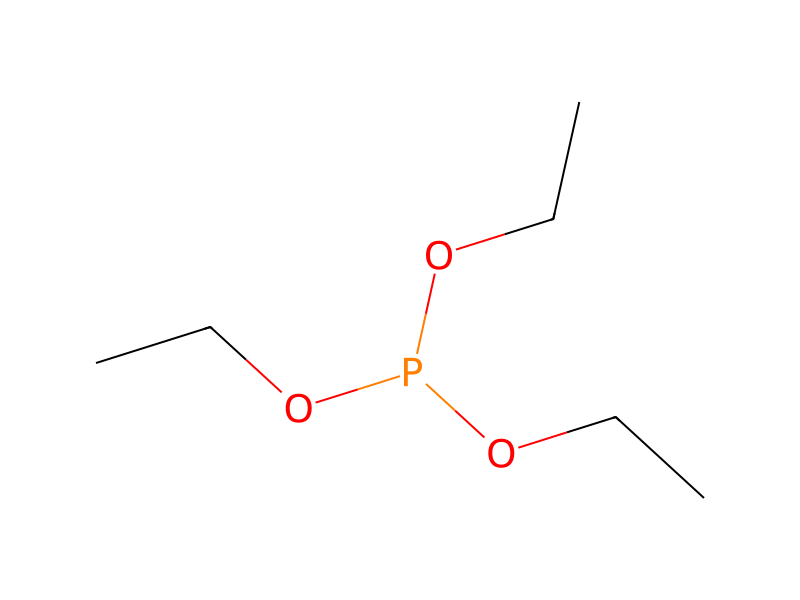
The 1-bromo-6-phenylhexane (˜7.304 g, ˜30 mmol) from the previous step was then added to triethyl phosphite (25 mL, 143.7 mmol) in a round bottom flask fixed with a condenser and under Argon pressure. This was allowed to reflux overnight. GCMS (PJH-I-37b) showed no starting bromide left and the reaction was stopped. A distillation was performed to remove the excess triethyl phosphate and then a column in 2:1 hexane:ethyl acetate. The desired product had an Rf=0.55. The desired product was obtained with only a trace impurity of the bisphenyl substituted hexane. The product was be purified further as it is a new compound, but some of it was used in the next step.
Workup
- customfixed with a condenser and under Argon
- temperatureto reflux overnight
- waitleft
- distillationA distillation
- customto remove the excess triethyl phosphate
Sources & evidence
- ORD record
- ord-cc64b4a047c54856a1a36a1b68bf0c03
- Source dataset
- uspto-grants-2013_03
- Patent number
- US08405069B2
Reaction notes
Loading…