Sulfuric Acid → N2 (1(S)-carboxy-3-phenylpropyl)-L-lysyl-L-proline dihydrate
Reaction equation

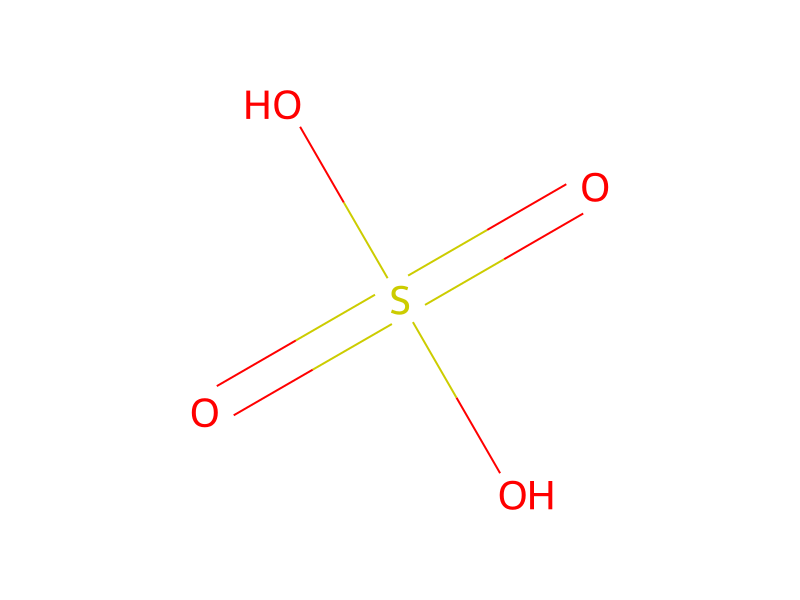
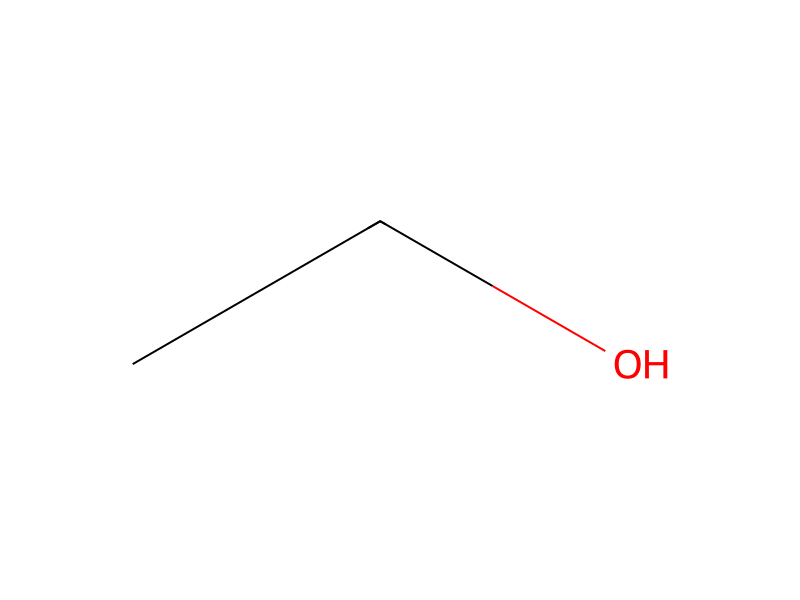
[N:1]#[N:2].C([O:5]C(C(N[C@H](C(N1CCC[C@H]1C(O)=O)=O)CCCCNC(=O)C(F)(F)F)CC(=O)C1C=CC=CC=1)=O)C.S(=O)(=O)(O)[OH:42].N#N.C([O:50][C:51]([CH:53]([NH:62][C@H:63]([C:75]([N:77]1[CH2:84][CH2:83][CH2:82][C@H:78]1[C:79]([OH:81])=[O:80])=[O:76])[CH2:64][CH2:65][CH2:66][CH2:67][NH:68]C(=O)C(F)(F)F)[CH2:54][CH2:55][CH:56]1[CH2:61][CH2:60][CH2:59][CH2:58][CH2:57]1)=[O:52])C.N#N.C(C(N[C@H](C(N1CCC[C@H]1C(O)=O)=O)CCCCNC(=O)C(F)(F)F)CCC1C=CC=CC=1)(O)=O>C(O)C.O>[N:1]#[N:2].[OH2:5].[OH2:42].[C:51]([C@@H:53]([NH:62][C@H:63]([C:75]([N:77]1[CH2:84][CH2:83][CH2:82][C@H:78]1[C:79]([OH:81])=[O:80])=[O:76])[CH2:64][CH2:65][CH2:66][CH2:67][NH2:68])[CH2:54][CH2:55][C:56]1[CH:57]=[CH:58][CH:59]=[CH:60][CH:61]=1)([OH:52])=[O:50]Participants
Reactant 4


Product 1

Reagents, catalysts & solvents 2
Conditions
- Temperature
- 10 °C
Procedure
Using N2 -(1-ethoxycarbonyl-3-oxo-3-phenylpropyl)-N6 -trifluoroacetyl-L-lysyl-L-proline [(1S/1R)=2] (5.0 g, 9.4 mmoles), the catalytic reduction was conducted in 70 ml of 7% (w/w) water-containing ethanol containing 1.4 N sulfuric acid according to the same manner as that described in Example 1 (amount of sulfuric acid based on substrate: 5 equivalents). Pd--C was removed by filtration and the Pd--C cake was washed with 20 ml of 7% (w/w) water-containing ethanol. Water (10 ml) was added to the resulting filtrate which was neutralized (pH 4.6) by slowly adding dropwise an aqueous 30% (w/w) sodium hydroxide solution. The filtrate was concentrated under reduced pressure at the inner temperature of 20° C. to remove ethanol. After cooling to 10° C., 50 ml of cold water was added, followed by extracting three times with 50 ml of methylene chloride at a range from 5° to 15° C. The resulting methylene chloride layer was washed with 20 ml of cold water at a range from 5° to 15 ° C., and then kept in a freezer for 2 days. After ice is removed, the layer was concentrated under reduced pressure at an inner temperature of at most 20° C. to give a concentrate containing N2 -(1-ethoxycarbonyl-3-phenylpropyl)-N6 -trifluoroacetyl-L-lysyl-L-proline [(1S/1R)=2]. The yield was 80%. The content of N2 -(1-ethoxycarbonyl-3-cyclohexylpropyl)-N6 -trifluoroacetyl-L-lysyl-L-proline was 0.2% (w/w) and the content of N2 -(1-carboxy-3-phenylpropyl)-N6 -trifluoroacetyl-L-lysyl-L-proline was 0.1% (w/w). The resulting concentrate was completely concentrated to dryness and, after dissolving it in 20 ml of methyl t-butyl ether, the solution was concentrated using an evaporator (bath temperature: 20° C.) to reduce the volume to half. A seed crystal of N2 -(1(S)-ethoxycarbonyl-3-phenylpropyl)-N6 -trifluoroacetyl-L-lysyl-L-proline was added and the solution was crystallized by allowing to stand in a refrigerator. The resulting crystal was rapidly filtered, and then washed with 2 ml of cooled methyl t-butyl ether/methylcyclohexane (7/3 (v/v)) immediately after filtration. The resulting wet crystal was dissolved in 10 ml of methyl t-butyl ether and the solution was crystallized by allowing to stand in a refrigerator. With vigorously stirring the slurry at 10° C., 3 ml of methylcyclohexane was slowly added. The resulting crystal was rapidly filtered, and then washed with 2 ml of cooled methyl t-butyl ether/methylcyclohexane (7/3 (v/v)) immediately after filtration. The resulting crystal was vacuum-dried (30 mmHg to 1 mmHg) at a range from 20° to 45° C. and mixed with a mixture of 10 ml of water and 0.24 g of sodium carbonate. An aqueous 10% (w/w) sodium hydroxide solution was slowly added at 40° C. to maintain the pH not less than 12.5. Four hours after the addition, the pH was adjusted to 8 with 35% (w/w) hydrochloric acid, 10 ml of methylene chloride was added, and then the pH was adjusted to 5 by adding 35% (w/w) hydrochloric acid. The methylene chloride layer was separated and the aqueous layer was concentrated under reduced pressure by using an evaporator (bath temperature: 45° C.). The aqueous layer was concentrated to reduce the volume to quarter, and then stirred at room temperature for 4 hours to give a thick slurry. The resulting crystal was filtered and washed with 2 ml of water. The resulting wet crystal was vacuum-dried (30 mmHg to 1 mmHg) at 5 0° C. to give N2 -(1(S)-carboxy-3-phenylpropyl)-L-lysyl-L-proline dihydrate (lysinoprildihydrate) (0.9 g, 2.1 mmoles). The yield was 33%. HPLC purity: 98% (w/w), the content of a diketopiperazine derivative: less than 0.1% (w/w).
Workup
- customPd--C was removed by filtration
- washthe Pd--C cake was washed with 20 ml of 7% (w/w) water-
- additioncontaining ethanol
- additionWater (10 ml) was added to the resulting filtrate which
- additionby slowly adding dropwise an aqueous 30% (w/w) sodium hydroxide solution
- concentrationThe filtrate was concentrated under reduced pressure at the inner temperature of 20° C.
- customto remove ethanol
- addition50 ml of cold water was added
- extractionby extracting three times with 50 ml of methylene chloride at a range from 5° to 15° C
- washThe resulting methylene chloride layer was washed with 20 ml of cold water at a range from 5° to 15 ° C.
- customAfter ice is removed
- concentrationthe layer was concentrated under reduced pressure at an inner temperature of at most 20° C.
- customto give a concentrate
- concentrationThe resulting concentrate
- concentrationwas completely concentrated to dryness
- dissolutionafter dissolving it in 20 ml of methyl t-butyl ether
- concentrationthe solution was concentrated
- customan evaporator (bath temperature: 20° C.)
- additionA seed crystal of N2 -(1(S)-ethoxycarbonyl-3-phenylpropyl)-N6 -trifluoroacetyl-L-lysyl-L-proline was added
- customthe solution was crystallized
- filtrationThe resulting crystal was rapidly filtered
- washwashed with 2 ml of cooled methyl t-butyl ether/methylcyclohexane (7/3 (v/v))
- filtrationimmediately after filtration
- dissolutionThe resulting wet crystal was dissolved in 10 ml of methyl t-butyl ether
- customthe solution was crystallized
- addition3 ml of methylcyclohexane was slowly added
- filtrationThe resulting crystal was rapidly filtered
- washwashed with 2 ml of cooled methyl t-butyl ether/methylcyclohexane (7/3 (v/v))
- filtrationimmediately after filtration
- customThe resulting crystal was vacuum-dried (30 mmHg to 1 mmHg) at a range from 20° to 45° C.
- additionmixed with a mixture of 10 ml of water and 0.24 g of sodium carbonate
- additionAn aqueous 10% (w/w) sodium hydroxide solution was slowly added at 40° C.
- temperatureto maintain the pH not less than 12.5
- additionFour hours after the addition
- additionwas added
- additionby adding 35% (w/w) hydrochloric acid
- customThe methylene chloride layer was separated
- concentrationthe aqueous layer was concentrated under reduced pressure
- customan evaporator (bath temperature: 45° C.)
- concentrationThe aqueous layer was concentrated
- stirringstirred at room temperature for 4 hours
- customto give a thick slurry
- filtrationThe resulting crystal was filtered
- washwashed with 2 ml of water
- customThe resulting wet crystal was vacuum-dried (30 mmHg to 1 mmHg) at 5 0° C.
Sources & evidence
- ORD record
- ord-0edac2ae38af4d67a592976a304bdc7f
- Source dataset
- uspto-grants-2000_09
- Patent number
- US06118010
Reaction notes
Loading…