Ammonia → 6-Aminohexanoic Acid
Reaction equation

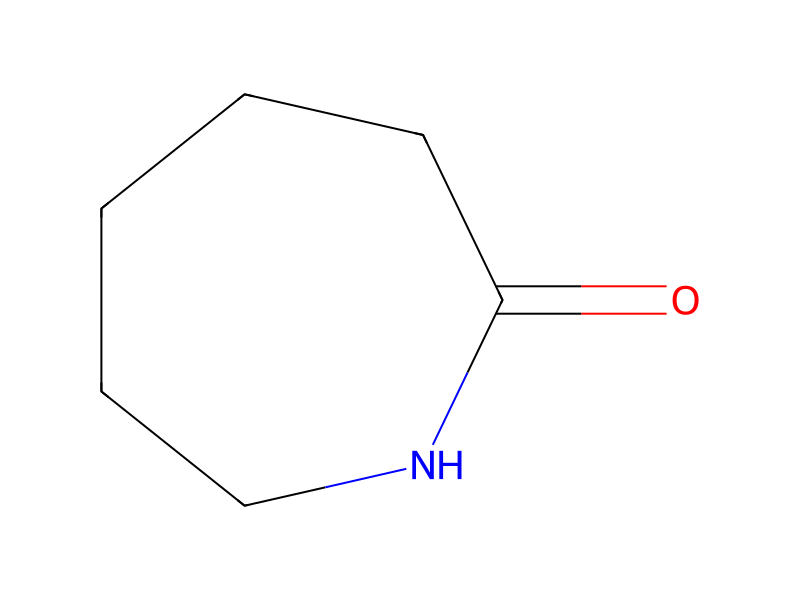
[CH:1]([CH2:3][CH2:4][CH2:5][CH2:6][C:7]([O:9]C)=[O:8])=O.[CH:11]([CH2:13][CH2:14][CH2:15][CH2:16][C:17](O)=O)=[O:12].[NH3:20].[H][H]>CO>[NH2:20][CH2:1][CH2:3][CH2:4][CH2:5][CH2:6][C:7]([OH:9])=[O:8].[C:11]1(=[O:12])[NH:20][CH2:17][CH2:16][CH2:15][CH2:14][CH2:13]1Participants
7
Reactant 4



Product 2

Reagents, catalysts & solvents 1

Procedure
Such a process is described in U.S. Pat. No. 4,730,040. This patent publication describes a process in which first methyl 5-formylvalerate is hydrolysed in an aqueous medium to methanol and 5formylvaleric acid. In a second step, the aqueous mixture obtained in the first step is contacted with ammonia and hydrogen in the presence of a hydrogenation catalyst. In this step 6-aminocaproic acid and a small amount of ε-caprolactam is obtained. The resulting aqueous mixture, which mixture will contain the methanol formed in the first step, is heated to a temperature between 150° and 370° C. at which temperature 6-aminocaproic acid reacts by cyclization to ε-caprolactam.
Workup
- customIn a second step, the aqueous mixture obtained in the first step
Sources & evidence
- ORD record
- ord-39c9cc6c4e72458ea63a193294503db9
- Source dataset
- uspto-grants-1998_07
- Patent number
- US05780623
Reaction notes
Loading…